
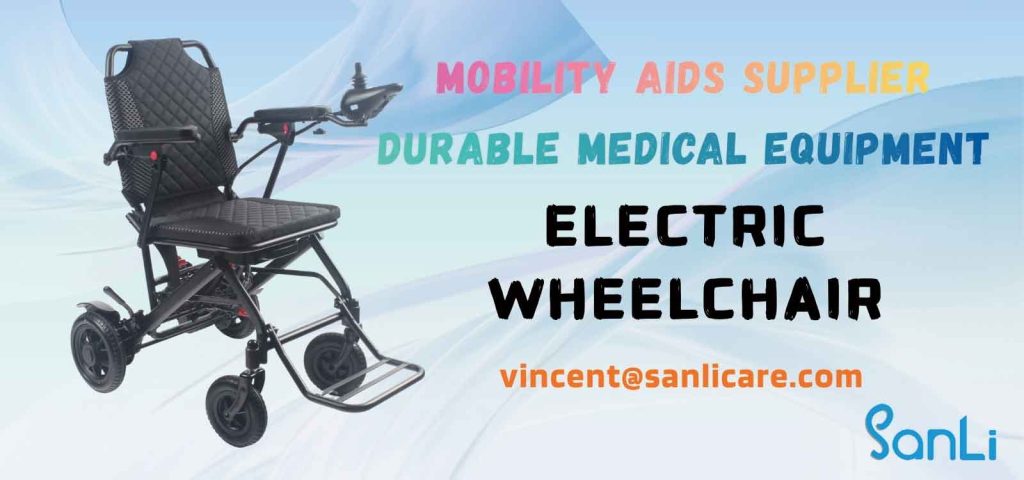
Every year the same pressure hits procurement teams, brand owners, and distributors who rely on electric wheelchairs. Raw-material costs shift, lithium battery prices move, regulatory files update, and a single delayed container can wipe out a quarter’s margin. You need reliable volume, predictable pricing, and products that clear customs without drama. That is exactly why annual contract negotiation tips for long-term electric wheelchair supply have become one of the highest-value conversations in the durable medical equipment sector.
At SanLi Care we sit on the factory side of these talks every day. We see the same patterns: buyers who arrive with only a unit-price target leave value on the table, while those who treat the contract as a living partnership walk away with stronger margins and fewer midnight calls. This guide walks you through the practical steps we use with our long-term partners so you can secure the same advantages.
Why Most Annual Electric Wheelchair Contracts Fail Before They Start
The root problem is rarely the price itself. It is incomplete preparation. Many buyers treat the annual renegotiation as a simple renewal. They look at last year’s unit cost, add a small inflation factor, and sign. Six months later battery cells spike or a new ISO 7176 test requirement appears and the “fixed” price no longer holds.
From the factory floor we watch the same sequence. A buyer commits to 800 units across four models. The first two containers ship on time. Then a controller supplier changes a firmware version and the third container needs re-validation. Without clear change-management language in the contract, both sides argue about who pays for the extra testing days. Trust erodes.
Another common failure is ignoring total cost of ownership. A chair that is $40 cheaper per unit but carries a 12-month motor warranty and limited spare-part stock will cost more over three years than a slightly higher-priced model with a 24-month comprehensive warranty and guaranteed parts availability. We have seen distributors calculate this gap only after the second year of returns.
Regulatory drift adds another layer. In February 2026 the FDA’s Quality Management System Regulation fully incorporated ISO 13485 by reference. Factories that cannot demonstrate current, accredited ISO 13485 status now face higher scrutiny on 510(k) support. Contracts signed without explicit certification maintenance clauses leave the importer exposed.
These pain points are solvable. The rest of this article gives you the exact levers we negotiate every year so your long-term electric wheelchair supply stays stable and profitable.
Build Your Data-Driven Negotiation Framework Before the First Call
Answer-first principle: the side that arrives with better data usually sets the agenda. Start three to four months before the current contract expires.
Pull your own shipment history for the past 24 months. Break it down by model, monthly volume, average defect rate, and actual versus promised lead time. Add the landed cost of every claim or warranty repair. This internal baseline becomes your BATNA—best alternative to a negotiated agreement.
Next, request a full cost-structure disclosure from the manufacturer. Legitimate factories will share the approximate percentage of frame, motor, controller, battery, and overhead. They will not reveal exact supplier names, but the percentages let you model the impact of a 10 % lithium-cell increase.
Benchmark external market data. Global electric wheelchair market size reached roughly USD 4.28 billion in 2026 and is projected to grow at about 9.5 % CAGR through 2031 (Mordor Intelligence, 2026). Battery pack prices fell to a record low of USD 108 per kWh in late 2025 despite some metal-price pressure (BloombergNEF, 2025). Use these numbers to separate genuine cost increases from opportunistic ones.
Finally, list your non-negotiables in priority order. Typical ranking for our B2B partners is: (1) certification continuity, (2) lead-time reliability, (3) spare-part availability for five years, (4) price, (5) payment terms. Knowing your order prevents you from trading a critical item for a small discount.
We once worked with a European distributor who arrived with only a price target. After we walked them through the data exercise they shifted focus to a 36-month warranty and dual-source battery cells. The final unit price moved only 2 %, yet their three-year TCO dropped 11 %.
Master Volume Commitments and Tiered Pricing Structures
The strongest commercial lever in any long-term electric wheelchair supply agreement is committed annual volume translated into transparent tiers.
Instead of a single flat price, negotiate a graduated schedule. A practical structure we use looks like this:
| Annual Volume Band (units) | Unit Price Adjustment | Additional Benefits |
|---|---|---|
| 0–499 | Base price | Standard lead time |
| 500–999 | –4 % | Priority production slot |
| 1,000–1,999 | –7 % | Free spare-part kit per 100 units |
| 2,000+ | –10 % | Dedicated account engineer + quarterly forecast review |
Include a look-back rebate. At year-end the actual volume is calculated. If you crossed into a higher tier, the manufacturer issues a credit note for the difference. This protects both sides: you are not forced to over-order early, and the factory still sees the volume incentive.
Be honest about realistic volumes. Factories can detect inflated forecasts. We prefer a conservative base commitment with upside options. The option language can read: “Buyer may increase any quarterly call-off by up to 25 % with 45 days’ notice at the same tier price.”
For OEM and private-label work the volume discussion also covers tooling amortization. If new molds or jigs are required, amortize them over the first 1,500–2,000 units rather than demanding full payment upfront. This lowers your cash outlay while giving the factory confidence the program will run.
Lock in Fair Price Adjustment and Cost Transparency Clauses
Fixed prices for three years sound attractive until raw-material indices move. The better approach is a controlled price-adjustment clause tied to public indices.
Define a collar—typically ±8 % or ±10 % on the battery-cell or aluminum-alloy index over a full quarter. Only when the index stays outside the collar for the entire quarter does a price review trigger. The formula should be pre-agreed: for example, 40 % of the percentage change in the London Metal Exchange aluminum price plus 30 % of the lithium-carbonate index, applied only to the material portion of the unit cost.
Require 60 days’ written notice and supporting documentation before any increase takes effect. Equally important, the clause must work in both directions. When indices fall, the unit price adjusts downward on the next quarterly call-off.
We also insist on open-book elements for major components. The factory shares the current purchase invoice (with supplier name redacted) for motors or controllers. This transparency prevents “black-box” cost claims and builds trust. In one 2025 renewal a partner used this clause to verify a claimed 12 % motor increase; the actual invoice showed only 6 %. The difference stayed in their margin.
Embed Quality, Certification, and Compliance Guarantees That Survive Audits
Certifications are not paperwork; they are the license to sell. Your annual contract must treat them as living obligations.
Require the manufacturer to maintain current ISO 13485:2016 issued by an IAF-MLA accredited body, CE MDR technical files, and FDA establishment registration plus any 510(k) clearances relevant to the models. The contract should state that loss of any of these certifications constitutes a material breach with 30-day cure rights and the right to cancel remaining orders without penalty.
Add a change-control process. Any modification to critical components—battery chemistry, controller firmware, frame alloy—must be notified 90 days in advance and accompanied by updated risk-management files under ISO 14971 and, where required, new test reports under the ISO 7176 series. You retain the right to reject the change or demand additional validation at the manufacturer’s cost.
On the factory floor we run 100 % incoming inspection on battery cells and motors, ultrasonic weld testing on every frame, and fatigue cycling to 100,000 cycles on sample chairs. These process details should appear in the quality annex of the contract so that acceptance criteria are objective rather than subjective.
Include a right to audit. Once per year, with 15 days’ notice, you or your appointed third party may inspect production records, calibration logs, and finished-goods quarantine areas. Most professional factories welcome this because it demonstrates seriousness.
For deeper guidance on the certification landscape itself, our detailed electric wheelchairs export CE FDA ISO certification guide walks through the exact documents you should request.
Negotiate Realistic Lead Times, Logistics, and Buffer Inventory
Lead time is often the hidden cost driver. A quoted 35-day production cycle becomes 55 days when a component shortage hits. Convert soft promises into hard commitments with consequences.
Define standard lead time from confirmed purchase order to ready-for-shipment date. Typical ranges for electric wheelchairs are 30–45 days for standard configurations and 45–60 days for full OEM custom. Attach a liquidated-damages clause: 0.5 % of the delayed order value per week after a five-day grace period, capped at 5 %.
Agree on safety-stock levels for critical SKUs. Many of our partners keep 60–90 days of high-runners in our bonded warehouse under a vendor-managed inventory arrangement. You pay only when stock is drawn; we replenish automatically against an agreed min-max. This smooths seasonal spikes without locking your capital.
Shipping terms matter. FOB Shenzhen or Ningbo is common, but CIF destination can simplify your logistics if the manufacturer has strong forwarder relationships. Spell out who books the vessel, who pays demurrage, and how container space is reserved during peak Chinese New Year periods. We routinely pre-book space in November for January–February shipments so long-term partners avoid the annual rate surge.
Protect Long-Term Value with Warranty, Spare Parts, and Service Commitments
A three-year supply contract is only as good as the product’s reliability after the first year. Warranty language must be specific.
Standard industry practice is 24 months on frame and motors, 12 months on batteries and controllers. Push for 36 months on the structural frame and 24 months on electronics when annual volume exceeds 1,000 units. Clarify labor coverage: on-site repair versus return-to-base. For international buyers, remote video diagnosis plus next-day air shipment of parts usually resolves 80 % of issues.
Spare-parts availability is non-negotiable. Require the manufacturer to hold, or guarantee access to, critical spares (joysticks, controllers, motors, batteries) for a minimum of five years after the last shipment of that model. Price the spares at a fixed multiple of the original component cost or at a published list that can only increase with the same material-index formula used for finished goods.
Training and documentation complete the package. Demand digital service manuals, exploded views, and short video guides in your language. We provide these as standard for every long-term partner because they reduce your after-sales burden and protect brand reputation.
Design Risk-Mitigation Clauses That Actually Work When Trouble Hits
Force-majeure language written in 2019 failed many contracts in 2020–2022. Update it. List specific events—port closures, pandemic-related factory lockdowns, export-control changes, major raw-material export bans—and require the affected party to notify within 48 hours and provide weekly recovery plans. Allow termination without penalty if the force-majeure event continues beyond 90 consecutive days.
Add a dual-sourcing requirement for the highest-risk components. Battery cells and motor controllers are the usual candidates. The contract can state that no single supplier may account for more than 60 % of annual purchases of those items. This is an insider factory insight: even when a primary cell brand is preferred for performance, we keep a second qualified source validated and ready. The dual-source clause costs almost nothing in normal times and prevents total stoppage when one supplier has a quality hold.
Performance metrics should be simple and measurable: on-time delivery rate ≥95 %, defect rate ≤1.5 % measured by pre-shipment inspection, response time to quality claims ≤24 hours. Miss three consecutive months on any metric and a formal improvement plan is triggered; miss six and you gain the right to reduce future volume commitments by 20 % without penalty.
Exit clauses protect both parties. A 90-day notice period for termination without cause after the first 12 months is reasonable. Include a wind-down provision: the manufacturer must continue to supply spare parts and honor warranties for all previously shipped units.
Real-World Case Studies That Show the Difference
Case Study 1 – European Distributor, 2025 Renewal A mid-sized distributor in Germany had been renewing a flat-price contract for three years. Battery costs rose 14 % mid-contract and the manufacturer absorbed part of the increase, eroding their margin. For the 2025–2027 agreement we introduced tiered pricing linked to a lithium-carbonate index with an 8 % collar and a look-back rebate. We also added a dual-source battery clause and extended the frame warranty to 36 months. Result: the distributor’s average unit cost rose only 3.2 % while their warranty claims dropped 22 % and they gained priority production slots during the 2026 Chinese New Year period. Their net margin improved 4.1 points.
Case Study 2 – North American Brand Owner, 2026 OEM Launch A U.S. brand wanted to launch a private-label mid-range power wheelchair. They initially sought the lowest possible unit price. After walking through TCO modeling and the new FDA QMSR requirements, they shifted priority to ISO 13485 continuity and five-year spare-parts guarantee. We structured a three-year contract with volume tiers starting at 1,200 units, amortized tooling over the first 1,800 units, and included quarterly technical reviews. The product cleared FDA listing without delay, and the brand secured preferred-supplier status with two regional DME chains because of the documented quality system. First-year volume reached 1,650 units—above the original forecast.
These outcomes are repeatable when both sides treat the contract as a partnership rather than a one-time transaction.
Supplier Evaluation Framework You Can Apply Immediately
Before you sit down to negotiate, score potential or existing manufacturers on these weighted criteria:
Certification status and audit history (25 %)
Historical on-time delivery and defect data (20 %)
Transparency of cost structure and willingness to share indices (15 %)
Spare-parts and after-sales infrastructure (15 %)
Capacity headroom and dual-sourcing practices (15 %)
Cultural fit and communication responsiveness (10 %)
Visit the factory if possible, or at least conduct a live video walk-through of welding, assembly, and final test stations. Ask to see the incoming-inspection records for the last three months of battery cells. The answers reveal more than any brochure.
For a broader view of how to select and work with Chinese manufacturers, see our practical guide on how to cooperate with Chinese electric wheelchair manufacturers.
If you are still building the overall wholesale business model, the step-by-step resource how to start durable medical equipment wholesale business covers the commercial foundations that make annual contracts successful.
Common B2B Pain Points and Practical Solutions
Pain point: Sudden price increases mid-contract. Solution: Pre-agreed material-index collar with notice period and look-back rebate.
Pain point: Certification lapses that block imports. Solution: Explicit maintenance obligation plus audit rights and material-breach language.
Pain point: Long lead times during peak season. Solution: Reserved capacity slots and vendor-managed inventory for high-runners.
Pain point: Spare-parts shortages two years after launch. Solution: Contractual five-year availability commitment with fixed pricing formula.
Pain point: Quality drift across batches. Solution: Defined acceptance criteria, right to third-party pre-shipment inspection, and process-change notification rules.
Pain point: Currency or logistics cost spikes. Solution: Clear Incoterms, shared risk on freight beyond a stated threshold, and option to switch shipping modes.
Addressing these items one by one turns a fragile annual renewal into a resilient multi-year partnership.
Frequently Asked Questions on Annual Contract Negotiation for Long-term Electric Wheelchair Supply
What is the ideal length for a long-term electric wheelchair supply agreement? Three years with an optional two-year extension is the most common and balanced structure. It gives both sides planning certainty while allowing a formal renegotiation point.
How much volume discount can I realistically expect? Depending on starting volume, 4–10 % is typical once annual quantity crosses 500–1,000 units. Larger commitments or multi-model bundling can reach 12–15 % when combined with other value elements.
Should price be fixed or indexed? A hybrid is best: fixed for the first 12 months, then index-linked within a collar for subsequent years. Pure fixed prices often lead to mid-term disputes.
What certifications must appear in the contract? ISO 13485 from an accredited body, CE MDR technical files (or UKCA where relevant), and FDA registration/510(k) status for the specific models. Require continuous maintenance.
How do I protect against battery supply disruption? Dual-source clauses, safety stock, and the right to approve alternative cells that meet the same performance and safety standards.
Can I negotiate payment terms beyond the standard 30/70? Yes. Long-term partners often move to 20 % deposit, 50 % against shipping documents, and 30 % after successful pre-shipment inspection or even open-account terms after the first successful year.
What happens if the manufacturer loses a key certification? Treat it as a material breach with short cure period. You should have the right to cancel remaining orders and source elsewhere without penalty.
Turning Negotiation into Partnership Advantage
The difference between a stressful annual renewal and a stable, profitable supply relationship is preparation, transparency, and the willingness to treat the other side as a partner rather than an adversary. Use the framework above: data first, volume tiers, controlled price adjustment, living certification obligations, realistic logistics, strong after-sales language, and clear risk allocation.
When you do this well, the contract stops being a legal document and becomes an operating system for growth. You gain predictable costs, reliable delivery, and products that continue to satisfy end users year after year. The manufacturer gains the volume visibility needed to invest in capacity and quality. Both sides win.
At SanLi Care we have spent more than two decades refining exactly these processes inside our vertically integrated factory. Our teams handle OEM and ODM customization, rigorous quality systems under ISO 13485, CE MDR and FDA pathways, and flexible logistics for distributors and brand owners worldwide. Whether you need standard models or fully private-label designs, we are ready to structure a long-term agreement that protects your margins and your reputation.
Explore our latest electric wheelchair range and customization options at our electric wheelchairs manufacturer page. For a wider selection of mobility solutions that can accelerate your wholesale launch, visit our durable medical equipments manufacturer page.
To expand your knowledge, check these related resources:
Visit our blog for more practical insights, our about page to learn about our factory capabilities, or our contact page to start a conversation. For a quick quote or specific questions on long-term supply terms, email inquiry@sanlicare.com.