
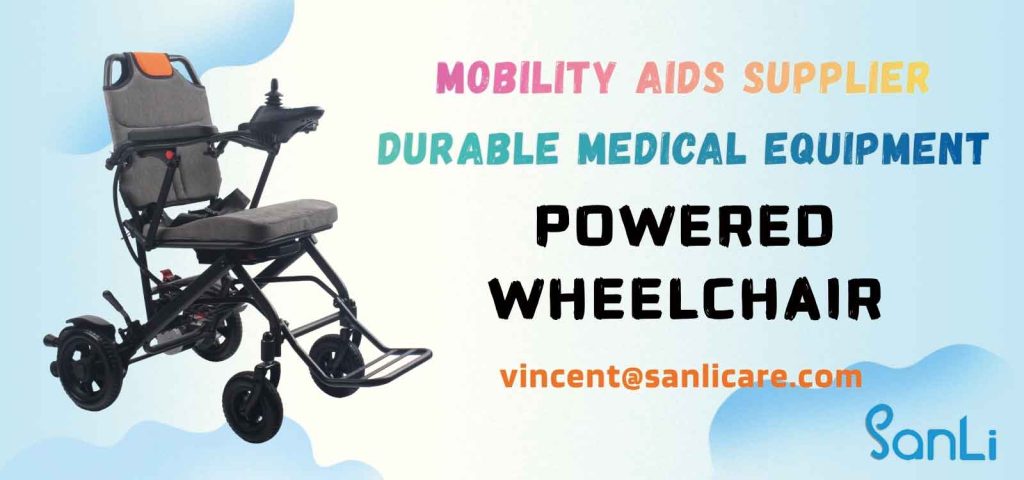
You open the quotation email and the number jumps off the screen. A Chinese factory offers electric wheelchairs at a unit price thirty to fifty percent lower than your current suppliers. The product photos look professional. The sample arrives quickly and feels reasonably solid when you push it around the warehouse. You run the margin model and begin planning how this deal will help you win more tenders, expand your SKU range, or simply protect profit in a price-sensitive market.
Then the first full container arrives. Or the first wave of warranty claims hits your customer-service desk. Or customs holds the shipment because a technical file is incomplete. Or your largest distributor calls to report that three chairs rolled backward on a modest clinic ramp within two weeks of delivery. Suddenly the bargain has become the single most expensive decision on your books for the year.
We have watched this exact sequence unfold for more than twenty years on the factory floor and across export negotiations with brand owners, CEOs, product managers, R&D directors, technological engineers, purchasers, sourcing managers, traders, distributors, procurement teams, and wholesalers. The hidden costs of low-price electric wheelchairs from China are not abstract risks. They are concrete, measurable, and frequently larger than the initial unit-price savings. This article maps every major category in detail so you can protect your margins, your customers, and your long-term reputation before any purchase order is signed.
The allure of the low FOB is understandable. China hosts the densest mobility-aid supply chain on the planet. Within a short radius of many plants in Guangdong, Zhejiang, and Jiangsu you can source aluminum extrusions, motors, controllers, batteries, upholstery, and packaging materials. That density creates genuine cost advantages that no other region can currently match at scale. Yet those advantages only translate into lasting profit when the factory invests properly in materials, testing protocols, regulatory documentation, and after-sales infrastructure. When the quote is driven purely by the lowest possible number, the trade-offs surface later as quality failures, compliance delays, logistics overruns, spare-parts shortages, and liability exposure.
Independent benchmarking of more than three hundred wheelchair shipments across North America, the European Union, and ASEAN markets in 2024–2025 found that sixty-eight percent of buyers who chased the lowest FOB ultimately experienced final landed costs nineteen to thirty-seven percent higher once freight surcharges, retesting fees, returns, and warranty reserves were included. Those figures come from real procurement cases, not theoretical models. The rest of this article breaks the hidden costs into clear categories, shows exactly how they compound, and gives you practical, field-tested steps to avoid them.
Why the Low Price Looks So Attractive at First Glance
The first element most buyers notice is the FOB number itself. A mid-range folding power chair that might cost seven hundred to nine hundred dollars from a mid-tier supplier can appear at four hundred fifty to six hundred dollars from a pure price-focused workshop. The difference looks decisive on a spreadsheet. What the spreadsheet rarely captures is the full commercial impact of the manufacturing decisions that made the lower number possible.
Low-price production almost always means thinner-wall aluminum or lower-grade alloys that contain higher levels of impurities. Welds may be single-sided rather than continuous multi-pass. Motors are frequently brushed designs with lower continuous-duty ratings. Controllers are generic boards that have never been subjected to full electromagnetic-compatibility testing under the relevant parts of ISO 7176. Electromagnetic brakes—the safety feature that locks the wheels the moment the joystick is released—may be single rather than dual, or built with lower-grade solenoids. Battery packs may use cells of uncertain provenance or recycled modules without sophisticated battery-management systems. Final testing is often limited to basic power-on checks rather than the full suite of static stability, dynamic stability, brake effectiveness, and fatigue protocols required by the ISO 7176 series.
On the factory floor we see these choices every single day. A properly engineered frame shows controlled flex under load on the double-drum tester and returns to its original geometry once the load is removed. A cost-cut frame shows permanent deformation or micro-cracks after only a few hundred cycles. Those cracks do not appear in the first week of use. They appear after the chair has been sold, delivered, and put into daily service by an end user who may weigh near the rated capacity or travel over uneven pavement or modest ramps. One cracked seat tube or rear-frame joint creates a safety incident, a product return, a possible injury claim, and a damaged relationship with the retailer or clinic that sold the chair. The cost of a single such event can easily exceed the savings realized on an entire container.
The same pattern appears in motors and controllers. A brushed motor that costs thirty to forty dollars less per unit will typically run hotter and wear brushes faster, shortening service life. A generic controller without proper EMC testing can glitch when exposed to common hospital or home electromagnetic environments. Dual electromagnetic brakes that lock the wheels the instant the joystick is released form a core safety feature. Single or lower-quality brakes increase the probability of rollback on even modest slopes. These are not rare edge cases. They are the predictable commercial consequences of the decisions that produce the lowest possible FOB price.
Buyers who focus only on the unit price therefore systematically underestimate the true cost of ownership. The initial savings look large on paper. The later costs arrive in the form of higher return rates, higher warranty reserves, higher insurance premiums, and lost future business. That is why experienced procurement teams now insist on total-cost-of-ownership models rather than simple FOB comparisons. If you want a practical starting point for building that model, our detailed complete B2B electric wheelchair wholesale procurement guide walks through the exact cost categories you should track from the first quotation onward.
Quality and Safety Failures That Multiply Your True Cost
Frame and Structural Weaknesses That Surface Months Later
Frame integrity is the absolute foundation of every electric wheelchair. Low-price production frequently uses thinner aluminum tubing or alloys that contain higher levels of impurities. The difference is visible under magnification and measurable on hardness testers and fatigue machines. Welds that look acceptable to the naked eye may be incomplete or inconsistent in penetration depth. On our production lines we require multi-pass welding on every critical load-bearing joint and full penetration verification before the frame moves to the next station. Many price-focused workshops skip those steps to save both time and material.
When a chair reaches an end user, the consequences appear gradually. Micro-cracks propagate under repeated cyclic loading. A seat tube or rear-frame joint that looked solid at the moment of delivery can fail after several months of daily use. The commercial impact is immediate and multi-layered: product returns, potential personal-injury claims, higher insurance premiums, and a damaged reputation with the retailer or institutional buyer who placed the original order. One serious incident can erase the margin on dozens of units and trigger higher underwriting costs for the entire product line going forward.
We have seen this pattern repeatedly across multiple markets. A European distributor who switched to a lower-priced source in 2025 reported frame-related returns of nearly eight percent within the first six months. The original FOB savings disappeared within the first quarter once returns, replacements, customer-service time, and lost goodwill were fully accounted for. The same distributor later moved back to a higher-specification supplier and saw return rates drop below two percent within two quarters. The difference was not marketing. It was material specification and process control.
Motor, Controller, and Brake Shortcuts That Create Safety Exposure
Motors and controllers form the functional heart of any powered mobility device. Budget motors are commonly brushed designs that carry lower continuous-duty ratings. They generate more heat under sustained load and wear brushes faster, reducing overall service life. Controllers may be generic boards that have never undergone full electromagnetic-compatibility testing. Electromagnetic brakes—the feature that locks the wheels the moment the joystick is released—may be single rather than dual or built with lower-quality solenoids that lose holding force over time.
The ISO 7176 series of tests exists precisely because these systems must perform reliably under real-world conditions. Static stability, dynamic stability, brake effectiveness, and electromagnetic compatibility are not optional checkboxes for medical devices. Chairs that skip rigorous versions of these tests can roll backward on a modest slope or lose control when exposed to common electromagnetic interference from nearby equipment. The commercial result is higher return rates, higher product-liability insurance costs, and potential exclusion from institutional tenders that demand documented compliance with current standards.
On the factory floor we insist on dual electromagnetic brakes and controllers that have passed full EMC protocols under the latest versions of the relevant ISO 7176 parts. The incremental cost is modest when measured against the downstream risk of a single safety incident. Buyers who accept single-brake or untested controller designs are consciously accepting a higher probability of field failures and warranty claims. That is why our detailed page on electric wheelchair testing and quality control standards emphasizes full ISO 7176 documentation as a non-negotiable requirement for any serious wholesale program.
Battery and Electrical Risks That Compound Over Time
Battery systems present yet another layer of hidden cost. Cheap lithium packs sometimes use cells of uncertain origin or recycled modules that lack adequate thermal management or sophisticated battery-management-system protection. Lead-acid alternatives are heavier and deliver shorter cycle life. Either path increases the probability of early capacity loss, thermal events, or complete failure. Replacement batteries and the labor required to install them become recurring costs that the original low FOB never anticipated in the margin model.
We have inspected containers where eight to twelve percent of units arrived with controllers or batteries that failed basic power-on checks. Each failed unit triggers inspection time, potential quarantine of the entire shipment, and either expensive air-freight replacements or prolonged credit negotiations that can stretch for weeks. The cumulative cost of these failures routinely exceeds the original unit-price advantage within the first year of the program.
Compliance and Certification Costs That Appear After the Purchase Order Is Signed
The 2026 FDA QMSR Transition and Its Practical Impact
On 2 February 2026 the U.S. Food and Drug Administration’s Quality Management System Regulation became fully effective. The regulation incorporates ISO 13485:2016 by reference into 21 CFR Part 820. Factories that previously operated under older quality-system assumptions now face tighter expectations around design controls, supplier controls, risk management, and the records that FDA inspectors are entitled to review. A low-price supplier without a mature, device-specific ISO 13485 system creates real shipment risk into the United States. Incomplete documentation can lead to detention, mandatory retesting, or the need for additional 510(k) information. Those delays and fees can erase months of projected margin in a single event.
Buyers who treat certification as a one-time paperwork exercise rather than an ongoing quality-system commitment discover the true cost only when the first shipment is held at the port. The practical solution is to demand current, scope-specific ISO 13485 certificates and recent third-party audit reports before any production begins. Our comprehensive electric wheelchairs export CE FDA ISO certification guide outlines the exact documentation package you should request and the questions you should ask the factory quality team.
EU MDR and CE Marking Realities in 2026
Under the European Medical Device Regulation, powered wheelchairs are classified as active medical devices. Self-declared CE marks that lack proper Notified Body involvement or up-to-date technical files are increasingly rejected at the border. Multiple independent audits conducted in 2025 found a significant percentage of Chinese supplier CE claims invalid when examined against current MDR documentation requirements. Re-testing, preparation of new technical files, and Authorized Representative fees routinely add thousands of dollars and weeks or months of delay to the program.
The Cumulative Burden Across Multiple Target Markets
Australia’s TGA, Canada’s Health Canada, and various Middle East and Asian regulators each maintain their own listing or registration pathways. A factory that treats certification as a simple checkbox rather than a living quality system leaves the importer carrying the full cost of every new market entry. The cumulative administrative and testing burden can transform a low FOB into a high total cost of ownership within a single sales cycle.
Logistics, Packaging, and Landed-Cost Surprises That Erode Margin
Low-price chairs are frequently bulkier or less efficiently foldable than higher-specification designs. That characteristic reduces the number of units that fit inside a standard 40HQ container. Freight rates that looked acceptable on a per-unit basis climb sharply when density is lower. Ocean surcharges, port congestion, and last-mile delivery of heavy, awkwardly shaped cartons add further layers of cost. One detailed 2024–2025 benchmarking exercise covering hundreds of wheelchair shipments found average freight and clearance overruns of more than one hundred dollars per unit on many low-cost programs once all variables were included. Damaged units resulting from inadequate packaging design add still more cost that never appeared in the original quotation.
Experienced buyers now demand packaging drawings and verified container-loading calculations before signing any purchase order. The incremental engineering cost is small when measured against the savings realized in freight and damage rates. If you are evaluating container economics as part of a larger wholesale strategy, the complete roadmap for launching a durable medical equipment wholesale business includes practical loading templates and landed-cost calculators that many of our partners use daily.
After-Sales Support and Spare-Parts Nightmares That Destroy Customer Relationships
A low FOB almost always correlates with limited spare-parts inventory and slow response times. When a joystick fails six months after delivery, the buyer may wait weeks for a replacement while the end user is immobilized. Local service partners frequently refuse to support unbranded or poorly documented products. The importer is left absorbing the cost of loaner units, air-freight parts, and the irreversible loss of customer goodwill.
We have watched distributors lose major retail accounts after repeated delays on warranty parts. The original price advantage disappears the moment the customer experiences downtime and cannot obtain a rapid resolution. The practical solution is to negotiate a complete spare-parts kit with every container and written maximum response times that are contractually enforceable. Prefer suppliers who already maintain regional stock or can demonstrate reliable international parts logistics with measurable service levels.
Reputation, Liability, and Long-Term Margin Damage That Compound Year After Year
Safety incidents travel extremely fast in the digital age. A single viral video of a chair rolling backward on a ramp or a frame failure in daily use can damage a brand for years. Product-liability insurance premiums rise. Institutional buyers and government tenders begin to exclude the supplier from approved vendor lists. The commercial cost of lost future business often dwarfs the original unit-price savings by an order of magnitude.
Experienced brand owners therefore treat quality systems and complete regulatory documentation as brand-protection investments rather than optional expenses. The factories that invest seriously in those systems deliver lower total cost of ownership even when the initial FOB is moderately higher.
Real-World Case Studies Drawn from Actual Procurement Events
Case Study 1 – European Distributor, Mid-2025 A mid-sized European distributor switched to a new low-price Chinese source for a folding power chair. The FOB was twenty-eight percent lower than their previous long-term supplier. Within four months, eleven percent of units showed controller or brake issues in the field. Spare parts required six to eight weeks to arrive. Two chairs were involved in minor tip-over incidents on modest slopes inside clinical environments. The distributor spent more on returns, replacements, emergency air freight, and customer-service recovery than the original savings. They then spent another six months rebuilding retailer confidence after moving back to a higher-specification supplier. The net result was a full year of margin erosion and the permanent loss of two key retail accounts that had previously been stable.
Case Study 2 – North American Importer, Early 2026 An importer ordered a full container of mid-range power chairs at an aggressive price from a new source. Documentation for FDA listing proved incomplete under the new QMSR expectations that took effect on 2 February 2026. The shipment was held at the port. Retesting and corrected technical files added more than forty thousand dollars in direct costs and eight weeks of delay. During that time the importer’s largest customer shifted substantial volume to a competitor who could deliver fully compliant stock immediately. The original unit-price advantage was completely erased, and the relationship with the key customer was permanently damaged.
These cases are not rare outliers. They are the predictable commercial outcome of prioritizing unit price over total cost of ownership and rigorous risk management.
A Practical Supplier Evaluation Framework You Can Apply Immediately
Use this checklist before placing any significant order:
| Evaluation Category | Key Questions to Ask | Red Flags | Preferred Evidence |
|---|---|---|---|
| Quality System | Current ISO 13485 certificate scoped to wheelchairs? Recent audit reports? | Certificate expired or scoped only to general manufacturing | Third-party certificate + last two audit summaries |
| Testing | Full ISO 7176 reports for the exact model? | Only basic power-on tests or no reports | Complete test reports with serial numbers |
| Regulatory | FDA registration + 510(k) if applicable? CE MDR technical file? | Self-declared CE only or missing Notified Body | Valid certificates and technical-file index |
| Components | Traceable sources for motors, controllers, batteries? | “Generic” or “in-house” with no data | Bill of materials with supplier names |
| Logistics | Packaging drawings + container loading density? | No drawings or optimistic density claims | Actual loading photos and calculations |
| After-Sales | Spare-parts kit + max response times in writing? | “We will support you” with no metrics | Written SLA and sample parts list |
Factories that cannot answer these points clearly and with documentation are signaling higher hidden costs. For a deeper walkthrough of quality evaluation criteria, see our dedicated page on how to evaluate electric wheelchairs quality for wholesale.
How Experienced Manufacturers Systematically Remove the Hidden Costs
At SanLi Care we design and manufacture under a full ISO 13485 quality system with CE MDR, FDA registration, and supporting international certifications. Our Foshan facility includes the complete suite of testing equipment required for drop, impact, fatigue, hardness, and electromagnetic-compatibility verification. We treat every chair as a regulated medical device from the first design review through final packing and serial-number traceability.
We maintain transparent cost structures so you see the real landed cost early in the discussion. Our OEM and ODM programs support controlled customization without the surprise tooling charges or inflated minimum-order traps that are common with pure price players. Spare parts are stocked and response times are measured in days rather than weeks. For buyers who want to move quickly into wholesale, our range of electric and durable medical equipment models is ready for private-label or branded programs.
You can review current options on our electric wheelchairs manufacturer page and the broader durable medical equipments manufacturer catalog. Many of our partners begin with a mixed container that allows them to test multiple models while keeping inventory risk low. If you are exploring OEM or private-label routes, our practical guide on how to choose OEM ODM electric wheelchairs customization explains the typical timelines, tooling considerations, and documentation requirements.
We also publish ongoing market analysis. The latest overview of what electric wheelchair trends and opportunities 2026-2030 can help you align product selection with demand shifts. For teams evaluating cooperation models, the operational advice in how cooperate with Chinese electric wheelchair manufacturers and how to sourcing electric wheelchairs from China manufacturer covers the practical details that protect both parties. If you are still comparing the broader competitive landscape, our independent ranking of the top 10 electric wheelchair manufacturers worldwide in 2026 provides context on capacity, certifications, and export track records. For teams weighing manual versus powered options within the same assortment, the side-by-side analysis in comparing manual and electric wheelchair B2B procurement clarifies total-cost differences.
Finally, if you are building or expanding a wholesale operation from the ground up, the complete guide to starting a durable medical equipment wholesale business walks through regulatory, logistics, and commercial steps. Many readers also find value in the practical frameworks for building a successful mobility aids wholesale company, the complete roadmap for DME wholesale success, the step-by-step path to entering the DME wholesale market, and the practical checklist for launching your DME wholesale operation.
Common B2B Pain Points and Field-Tested Solutions
Pain point: The sample looked good but production units failed in the field after a few months. Solution: Require production-sample approval against the exact same test protocol that will be used for the final batch. Insist on batch-level traceability and random third-party inspection at the factory before shipment. Document the acceptance criteria clearly inside the purchase order so there is no ambiguity later.
Pain point: Certification papers arrived incomplete or were rejected at the border. Solution: Demand the full technical-file index, Notified Body certificates where required, and FDA documentation before production begins. Build formal compliance review gates into the purchase-order milestones with clear go/no-go decision points.
Pain point: Spare parts take forever and destroy customer satisfaction scores. Solution: Negotiate a complete spare-parts kit with every container and written maximum response times that are contractually binding. Prefer suppliers who already support your target markets with local or regional stock. Track parts lead times as a formal key performance indicator in quarterly business reviews.
Pain point: Freight and duties erased the unit-price savings that looked so attractive. Solution: Calculate true container density and all-in landed cost before signing any agreement. Ask the factory for optimized packaging drawings and verified loading plans. Include realistic freight-volatility buffers in your cost model from day one.
Pain point: After-sales support disappears once the order is paid and the container has sailed. Solution: Select partners who maintain dedicated account managers, documented escalation paths, and measurable response-time commitments. Review their after-sales performance with existing customers before committing significant volume.
These steps convert the sourcing process from a high-risk gamble into a controlled business decision. The factories that welcome this level of scrutiny are the ones that deliver lower total cost of ownership over the full life of the program.
FAQ: Hidden Costs of Low-Price Electric Wheelchairs from China
What are the most common hidden costs when buying low-price electric wheelchairs from China? Quality failures in frames, motors, brakes, and batteries; incomplete or invalid compliance documentation; higher freight costs caused by poor packing density; slow or non-existent spare-parts support; and reputation or liability costs arising from safety incidents in the field.
How much can total landed cost exceed the quoted FOB price? Independent 2024–2025 benchmarking of hundreds of real shipments found nineteen to thirty-seven percent overruns for many low-cost programs once freight, duties, retesting, and warranty reserves were fully included.
Does the 2026 FDA QMSR change anything for Chinese-sourced power wheelchairs? Yes. The regulation incorporates ISO 13485:2016 by reference. Suppliers without a robust, device-specific quality system create higher risk of detention or additional documentation demands for any U.S. importer.
Are all low-price Chinese electric wheelchairs unsafe? No. Price alone is never the sole determinant. Risk rises sharply when the low price is achieved by systematically cutting materials, testing, documentation, and after-sales infrastructure. Properly managed factories can still deliver competitive pricing without those cuts.
How can I protect myself when evaluating a new Chinese supplier? Demand current ISO 13485 scope certificates, full ISO 7176 test reports for the exact model, component-level traceability, packaging and loading calculations, and a written spare-parts policy. Conduct or hire a medical-device-focused factory audit rather than a general manufacturing audit.
What is a realistic warranty reserve for electric wheelchairs in a wholesale program? Experienced importers budget a minimum of three to five percent, and often higher depending on the product tier and target market. Low-price chairs frequently require higher reserves because field failure rates are elevated.
Should I still consider Chinese factories for electric wheelchair wholesale? Yes—provided you select partners who treat the product as a regulated medical device rather than a simple commodity. The supply-chain density and manufacturing scale available in China remain unmatched when quality systems are solid and transparent. For practical next steps, visit our about page to understand our manufacturing history and certifications, our contact page to start a direct conversation, and our main blog for ongoing technical guidance and market updates.
Conclusion: Choose Total Cost of Ownership Over Headline Price Every Time
The hidden costs of low-price electric wheelchairs from China are not theoretical. They appear as cracked frames, failed brakes, held shipments, delayed parts, angry customers, and eroded margins. The buyers who consistently thrive are those who evaluate the full equation—quality systems, compliance readiness, logistics reality, and long-term support—before any purchase order is signed.
We built SanLi Care around that full equation. Our processes, testing equipment, certifications, and after-sales structure exist specifically to remove the surprises that destroy profit. If you are ready to move from pure price-chasing to controlled, profitable sourcing, explore our electric wheelchair and durable medical equipment ranges, review the resources linked throughout this article, or start a conversation about OEM and private-label programs that protect both parties.
For a rapid quotation or technical discussion, email inquiry@sanlicare.com. We look forward to helping you build a mobility line that protects both your customers and your bottom line over the long term.
Related Resources To expand your knowledge, check these related resources: