
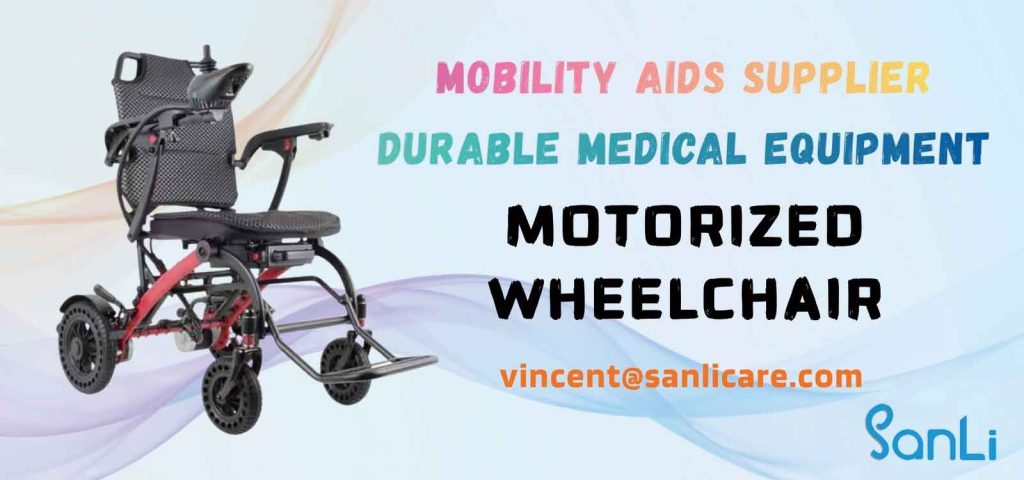
As a distributor or wholesaler in the durable medical equipment and rehabilitation therapy market, you face important choices every day. One of the most significant decisions involves selecting the right mix of electric wheelchairs, power wheelchairs, motorized wheelchairs, and manual wheelchairs for your inventory. The year 2026 brings new opportunities driven by an aging global population, advances in assistive technology, and rising demand for mobility solutions that truly restore independence.
At SanLi Care, we have spent more than twenty years manufacturing high-quality mobility aids. We understand the pressures you face: balancing upfront costs with long-term margins, meeting strict import regulations, maintaining consistent quality, and delivering products that satisfy both rehabilitation centers and individual end users. This guide offers a clear decision matrix to help you choose wisely between electric and manual options while highlighting practical solutions tailored to B2B wholesale needs.
The Growing Opportunity in Mobility Solutions for 2026 and Beyond
Global demand for wheelchairs continues to rise steadily. Market analyses project robust expansion, with the overall wheelchair market expected to grow at a compound annual rate above 10 percent through the early 2030s, reaching well over 13 billion dollars. Electric models show even stronger momentum, with forecasts indicating a CAGR exceeding 12 percent in the coming years.
Behind these numbers lies a deeper human story. Millions of people worldwide still lack access to appropriate mobility devices. The World Health Organization highlights that of the roughly 80 million individuals who need a wheelchair, only 5 to 35 percent actually have one, depending on their country. This gap represents both a responsibility and a genuine business opportunity for forward-thinking distributors.
Electric wheelchairs, power wheelchairs, and motorized wheelchairs allow users with limited upper-body strength or severe mobility challenges to move independently. Manual wheelchairs remain essential for active users, budget-conscious buyers, and short-term rehabilitation needs. Understanding where each type fits in your portfolio helps you serve diverse markets while protecting your profitability.
To explore broader market dynamics and emerging opportunities, distributors often consult insights on electric wheelchair trends and opportunities from 2026 to 2030. These resources provide valuable context for long-term planning.
Core Differences: Electric versus Manual Wheelchairs
Making the right wholesale choice starts with a clear comparison. The table below outlines the key factors that matter most to distributors and their customers.
| Factor | Electric / Power / Motorized Wheelchairs | Manual Wheelchairs |
|---|---|---|
| Wholesale Price Range | Higher initial investment per unit | Significantly lower per unit cost |
| Weight & Shipping | Heavier; batteries may require special handling and documentation | Lighter and easier to ship in volume |
| Maintenance Needs | Batteries, motors, controllers, and chargers require ongoing support | Simpler mechanics; lower after-sales service demands |
| User Independence | High; suitable for users with limited arm strength | Depends on user’s physical capability |
| Target End Users | Elderly with limited mobility, individuals with progressive conditions, long-term rehabilitation | Active users, temporary rehab, budget markets, caregivers who push |
| Profit Margin Potential | Often higher per unit; recurring revenue from accessories and service | Strong volume sales; faster inventory turnover |
| Regulatory Scrutiny | Stricter (FDA 510(k) for powered devices, CE MDR) | Generally lighter regulatory pathway |
| Customization Ease | Excellent for OEM/ODM branding and feature additions | Good, though fewer electronic options |
Electric models deliver clear advantages in rehabilitation settings where preserving user dignity and reducing caregiver strain are priorities. Manual models excel in scenarios where cost sensitivity or portability takes precedence. Many successful distributors maintain a balanced portfolio that includes both categories.
For a more detailed side-by-side analysis focused specifically on procurement considerations, you may find value in in-depth comparison for B2B procurement of manual and electric wheelchairs.
Cost Analysis and Profitability Considerations
Price is only the beginning. Distributors must evaluate total cost of ownership across the supply chain. Electric wheelchairs typically command higher wholesale prices, yet they often yield stronger margins when positioned correctly. Shipping costs rise with heavier units and lithium battery regulations, while manual wheelchairs allow higher container density and lower freight per piece.
Maintenance and warranty support represent another critical layer. Power wheelchairs require reliable access to batteries and spare parts. At SanLi Care, we maintain full traceability and offer comprehensive spare parts programs because we know that your reputation depends on after-sales performance.
Many distributors discover that a strategic mix—offering premium electric models alongside reliable manual options—creates multiple revenue streams. Electric units attract higher-ticket sales and service contracts, while manual models drive volume and faster turnover.
Our vertical integration and optimized production processes allow us to pass meaningful savings to partners. You can expect competitive pricing combined with consistent quality that reduces returns and protects your brand.
To understand proven approaches to managing total procurement costs, many B2B buyers review step-by-step guide to B2B electric wheelchairs wholesale procurement.
Regulatory Compliance and International Certifications
Importing medical devices demands strict attention to regulations. Powered wheelchairs generally fall under Class II classification in major markets and require premarket notification or equivalent documentation.
The European Union’s Medical Device Regulation (MDR) and the U.S. FDA impose rigorous requirements for safety, labeling, and clinical evidence. ISO 13485 certification demonstrates that a manufacturer maintains a robust quality management system specifically designed for medical devices.
At SanLi Care, every electric wheelchair, power wheelchair, and motorized wheelchair we produce meets or exceeds these standards. Our products carry CE MDR marking, FDA registration where applicable, and full ISO 13485, ISO 9001, ISO 14001, and ISO 27001 certifications. We also maintain SFDA approval and successful audits by TUV and SGS.
Distributors who source from certified manufacturers reduce risk and accelerate market entry. For a complete overview of export requirements, we recommend our export certification guide covering CE, FDA, and ISO for electric wheelchairs.
Quality Control and Testing Standards That Build Trust
Quality failures damage distributor relationships and end-user safety. That is why we invest heavily in rigorous processes. Our dedicated team of quality control technicians performs incoming material inspections, in-process checks, and final functional testing on 100 percent of units.
We conduct destructive and fatigue testing, environmental simulation, electromagnetic compatibility verification, and brake performance evaluations in accordance with international standards such as the ISO 7176 series. Every serial number is traceable back to raw materials.
When you evaluate potential suppliers, ask about their testing protocols, failure rates, and continuous improvement systems. Strong manufacturers welcome these questions because they have nothing to hide.
For practical frameworks to assess supplier quality before placing orders, distributors frequently consult how to evaluate electric wheelchairs quality for wholesale and rigorous testing and quality control standards for electric wheelchairs.
2026 Trends and Strategic Opportunities
Several trends are reshaping the wholesale landscape. Lightweight yet durable materials, longer-lasting lithium batteries, smart controllers with app integration, and improved all-terrain capabilities are becoming standard expectations. Pediatric and bariatric configurations continue to grow in demand as manufacturers address previously underserved segments.
Customization through OEM and ODM services allows distributors to differentiate their brand with unique colors, logos, seating systems, and feature packages. This capability turns commodity products into proprietary offerings that command stronger loyalty and margins.
Understanding where the market is heading helps you avoid overstocking outdated models and positions you ahead of competitors. For the latest perspectives, we encourage you to review insights on electric wheelchair trends and opportunities from 2026 to 2030.
Building Your 2026 Decision Matrix
Use the following framework when planning your next procurement cycle:
Define your primary customer segments. Rehabilitation centers and long-term care facilities often prioritize electric models. Retail and home-care channels may favor a balanced mix or manual options for cost-sensitive buyers.
Assess logistics and regulatory pathways. Factor in shipping weight, battery documentation, and destination-country registration timelines.
Calculate total landed cost and margin scenarios. Include duties, testing, warranty reserves, and expected service revenue.
Evaluate supplier capabilities. Look for manufacturers with proven OEM/ODM experience, flexible MOQs, reliable lead times (typically 35–60 days for production orders), and responsive communication.
Plan for after-sales support. Reliable spare parts availability and technical training resources protect your reputation.
Consider brand-building potential. OEM/ODM customization can transform standard products into your exclusive line.
When these factors align, you can confidently scale the categories that best fit your market position and growth goals.
Practical guidance on selecting the right customization approach appears in guide on choosing OEM/ODM electric wheelchairs customization.
Common Distributor Pain Points and Proven Solutions
Many wholesalers encounter similar challenges: inconsistent product quality, long and unpredictable lead times, limited customization options, complex regulatory navigation, and communication gaps with overseas factories.
At SanLi Care, we address these issues directly through vertical integration, dedicated account managers, real-time production updates with photos and videos, and a genuine commitment to long-term partnership. Our minimum order quantity of 100 units per item remains accessible for growing distributors, while our production capacity supports larger container loads efficiently.
We also provide regulatory support and sample evaluation programs so you can verify fit and performance before committing to volume. These practices have helped us earn the trust of international brands and smaller distributors alike.
For deeper insights into successful collaboration models, many partners explore how to successfully cooperate with Chinese electric wheelchair manufacturers and best practices for sourcing electric wheelchairs from a China manufacturer.
Why SanLi Care Stands Out as Your Strategic Partner
With more than two decades of focused experience in durable medical equipment and rehabilitation therapy, we bring both technical depth and practical understanding of global wholesale dynamics. Our factory features advanced CNC machining, robotic welding, automated powder coating, and comprehensive ERP traceability.
We offer one-stop support from initial design consultation through logistics and after-sales service. Whether you need new launched electric wheelchair models with the latest features or proven hot-selling manual and mobility scooter options to launch or expand your business quickly, we deliver consistent quality at competitive prices.
To discover our newest 2026 electric wheelchair innovations and customization possibilities, we invite you to explore our electric wheelchairs manufacturer page.
If you want to begin wholesale operations with fast-moving, reliable products, browse our hot selling durable medical equipment lineup to identify strong starting SKUs.
For additional educational content on market trends, quality evaluation, and procurement strategies, visit our blog regularly.
Frequently Asked Questions
What is the typical wholesale price difference between electric and manual wheelchairs? Electric models generally carry a higher per-unit wholesale cost due to motors, batteries, and controllers. However, the higher selling price to end customers or institutions often results in stronger gross margins per sale. Manual wheelchairs offer lower entry pricing and faster turnover, making them ideal for volume-driven strategies.
How do I verify that imported wheelchairs meet FDA or CE requirements? Request full technical documentation, including test reports aligned with ISO 7176 standards, risk management files per ISO 14971, and valid certificates. Working with an ISO 13485-certified manufacturer that already holds CE MDR marking and FDA registration significantly simplifies compliance. Our team provides complete regulatory packages to support your import process.
What ongoing maintenance costs should distributors anticipate for power wheelchairs? Battery replacement every 18–36 months represents the largest recurring expense, along with occasional controller or motor servicing. Building relationships with local service partners and stocking common spares helps control costs and improves customer satisfaction. We supply genuine parts and technical guidance to support your after-sales network.
Which wheelchair type offers better long-term profitability for most distributors in 2026? Profitability depends on your target segment and support capabilities. Electric wheelchairs frequently deliver higher per-unit margins and service revenue, while manual models provide volume and lower risk. A balanced inventory that includes both categories, supported by strong supplier partnerships, tends to deliver the most resilient results.
How long does production and shipping typically take from a China-based manufacturer? After deposit and order confirmation, production usually requires 35 to 60 days depending on volume and customization level. Shipping adds another 15 to 40 days by sea, varying by destination. We provide accurate timelines and production progress updates throughout the process.
Can I customize wheelchairs with my own branding and features? Yes. OEM and ODM services allow you to specify colors, logos, seating systems, control interfaces, and packaging. This capability helps you create differentiated products that strengthen your brand identity and customer loyalty. Our engineering team works closely with partners to turn ideas into production-ready models.
What minimum order quantities should I expect when starting wholesale? Many manufacturers set MOQs around 100 units per model. This threshold remains achievable for growing distributors while allowing meaningful container utilization. We work flexibly with partners to phase orders and support business scaling.
How important is after-sales support when choosing a supplier? Extremely important. Reliable spare parts availability, technical documentation, and responsive communication protect your reputation and reduce returns. We maintain dedicated support channels and training resources because we view every shipment as the beginning of a long-term relationship.
Moving Forward with Confidence
Choosing between electric and manual wheelchairs is not simply a product decision; it is a strategic choice that shapes your inventory, customer relationships, and contribution to rehabilitation outcomes. By applying the decision matrix outlined above—considering total costs, regulatory pathways, quality systems, market trends, and supplier capabilities—you position your business for sustainable growth in 2026 and beyond.
At SanLi Care, we are committed to being more than a supplier. We aim to serve as a reliable extension of your team, helping you deliver mobility solutions that truly improve lives while strengthening your wholesale operations.
When you are ready to discuss your specific requirements, request samples, or receive a personalized quotation, please contact us at inquiry@sanlicare.com. We respond promptly and provide dedicated support throughout the partnership journey.
To expand your knowledge, check these related resources as below:
We look forward to supporting your success in the durable medical equipment and rehabilitation therapy market.