
, and SanLi Care offer options for every lifestyle. Think about your daily routines, where you spend time, and what features help you stay active. The right choice gives you more independence and supports your goals for independent living.
Key Takeaways
Choose a mobility device that fits your daily activities and where you spend most of your time, whether indoors, outdoors, or both.
Consider key features like turning radius, weight capacity, battery range, and portability to match your lifestyle and mobility needs.
Test different types of power wheelchairs and scooters to find the most comfortable and easy-to-use option for you.
Look for devices with adjustable seating and smart features to improve comfort and support your independence.
Consult healthcare professionals and explore funding options to get expert advice and make your purchase affordable.
Quick Comparison
Main Types
When you start looking at mobility options, you will see many different types. Each one has its own strengths. Here’s a quick table to help you compare the major types of power wheelchair scooter, electric wheelchair, and mobility scooter models:
| Type | Turning Radius | Weight Capacity | Range per Charge | Portability | Best For | Special Features |
|---|---|---|---|---|---|---|
| Front-Wheel Drive | Tight | High | Long | Moderate | Indoor/Outdoor | Good for rough terrain |
| Mid-Wheel Drive | Very Tight | Medium | Moderate | Moderate | Indoor | Great maneuverability |
| Rear-Wheel Drive | Wide | Medium | Moderate | Moderate | Outdoor | Stable at higher speeds |
| Folding/Travel | Tight | Low/Medium | Short/Moderate | Excellent | Travel/Indoor | Lightweight, easy to fold |
| Heavy-Duty | Wide | Very High | Long | Low | Outdoor/All-Terrain | Handles hills and rough surfaces |
| Mobility Scooter (3-wheel) | Very Tight | Medium | Moderate | Good | Indoor/Short Trips | Compact, easy to steer |
| Mobility Scooter (4-wheel) | Moderate | High | Long | Moderate | Outdoor/Long Distances | Stable, handles bumps |
| SanLi Care Model S300 | Tightest | High | Long | Excellent | All-Terrain/Travel/Indoor | 3-in-1, smart tech, folding, all-terrain |
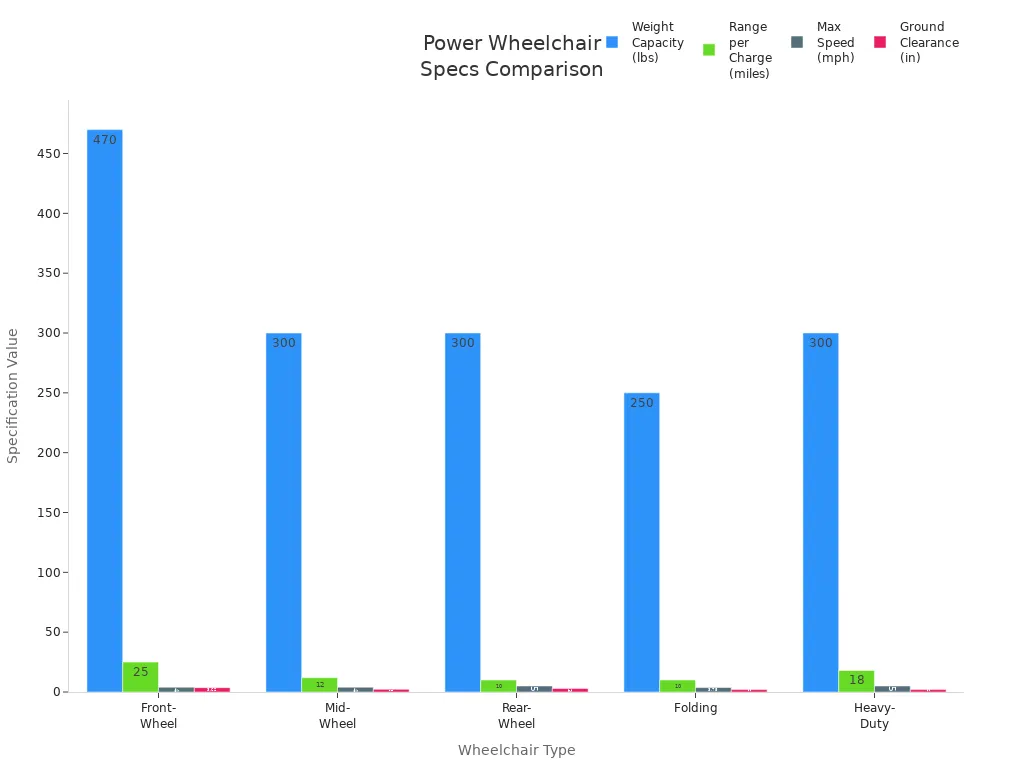
Tip: If you want a device that does it all, check out innovative models like the SanLi Care Model S300. It combines the best features of electric wheelchairs, powerchairs, and mobility scooters.
Best Uses
You want your mobility device to fit your lifestyle. Here’s how the major types of mobility scooters and power chairs work best:
Front-Wheel Drive Powerchairs: Great for both . They handle bumps and uneven ground well.
Mid-Wheel Drive Powerchairs: Perfect for tight indoor spaces. You can turn easily in hallways or small rooms.
Rear-Wheel Drive Powerchairs: Best for outdoor use. They feel stable at higher speeds and on longer trips.
Folding and Travel Powerchairs: Ideal for travel. You can fold them up and take them in a car or on a plane.
: Built for outdoor adventures. They support higher weight and handle rough terrain.
Three-Wheel Mobility Scooters: Best for indoor use. They turn sharply and fit through narrow spaces.
Four-Wheel Mobility Scooters: Great for outdoor use. They offer more stability and can go over grass or gravel.
SanLi Care Model S300: Works everywhere. Use it at home, outside, or while traveling. It folds, climbs hills, and even helps you walk with support.
You have many types of mobility scooters and power chairs to choose from. Think about where you will use your device most. Some electric wheelchairs and powered wheelchairs work better indoors, while others shine outside. The right choice gives you more freedom and fits your daily mobility needs.
Assessing Mobility Needs
Choosing the right mobility device starts with understanding your unique needs. You want a solution that fits your lifestyle, supports your independence, and helps you move with confidence. Let’s break down the main factors you should consider before making your decision.
Indoor vs Outdoor
Think about where you spend most of your time. Do you need a device for home, work, or outdoor adventures? The environment shapes your choice.
| Environment | Best Device Features | Example Devices |
|---|---|---|
| Indoor | Tight turning radius, joystick controls, compact size | Mid-wheel drive powerchairs, portable lightweight power wheelchairs |
| Outdoor | Larger wheels, strong suspension, longer battery range, weather protection | Rear-wheel drive powerchairs, heavy-duty scooters, all-terrain models |
| Both | Foldable, portable, adaptable to different surfaces | Folding powerchairs, hybrid models like SanLi Care Model S300 |
Power wheelchairs shine indoors. They turn easily in small spaces and offer . Mobility scooters work well outdoors. They have for rough terrain and longer trips. Some lightweight portable power wheelchair models bridge the gap, letting you move smoothly from home to the park.
Tip: If you want to use your device everywhere, look for a model that combines indoor maneuverability with outdoor durability.
Portability
If you travel often or need to store your device in tight spaces, matters. Portable mobility devices make life easier, especially if you value independent living.
| Feature | Mobility Scooters | Power Wheelchairs |
|---|---|---|
| Portability Options | Disassemble or fold; fit in cars; travel-friendly | Some fold or disassemble; heavier overall |
| Transport & Storage | Compact, easy to move and store | May need help due to weight |
| Physical Abilities | Need some upper body strength | Joystick controls for limited strength |
Portable lightweight power wheelchairs and scooters can . This makes them perfect for car trunks or airplane travel. The SanLi Care Model S300, for example, folds in two steps and fits in most vehicles. You can take it almost anywhere, supporting your independence and active lifestyle.
Comfort
You will spend a lot of time in your mobility device, so comfort is key. Look for features that keep you relaxed and supported.
Reclining seats and padded cushions
These features help you avoid pressure sores, improve posture, and make daily activities easier. Many power wheelchairs offer custom configurations for better comfort. Mobility scooters usually have simpler seats, which may not work for long-term use. If you need extra support, choose a device with adjustable seating and back support.
Terrain & Capacity
Where you go and what you do affects the type of device you need. Some models handle smooth floors, while others tackle hills, gravel, or grass.
| Model Name | Weight Capacity (lbs) | Terrain Capability Features | Drive Range (miles) | Top Speed (mph) |
|---|---|---|---|---|
| Victory LX Sport | 400 | Premium suspension, LED headlights | 13 – 19.7 | 8.0 |
| Baja® Wrangler 2 | 450 | Full suspension, high back seat | Up to 26.6 | 11.4 |
| PX4 | 500 | Full suspension, key fob | 23.4 | 9.3 |
| SanLi Care Model S300 | 253 | Omni-directional wheels, all-terrain, incline detection | Up to 18.6 | 4.0 |
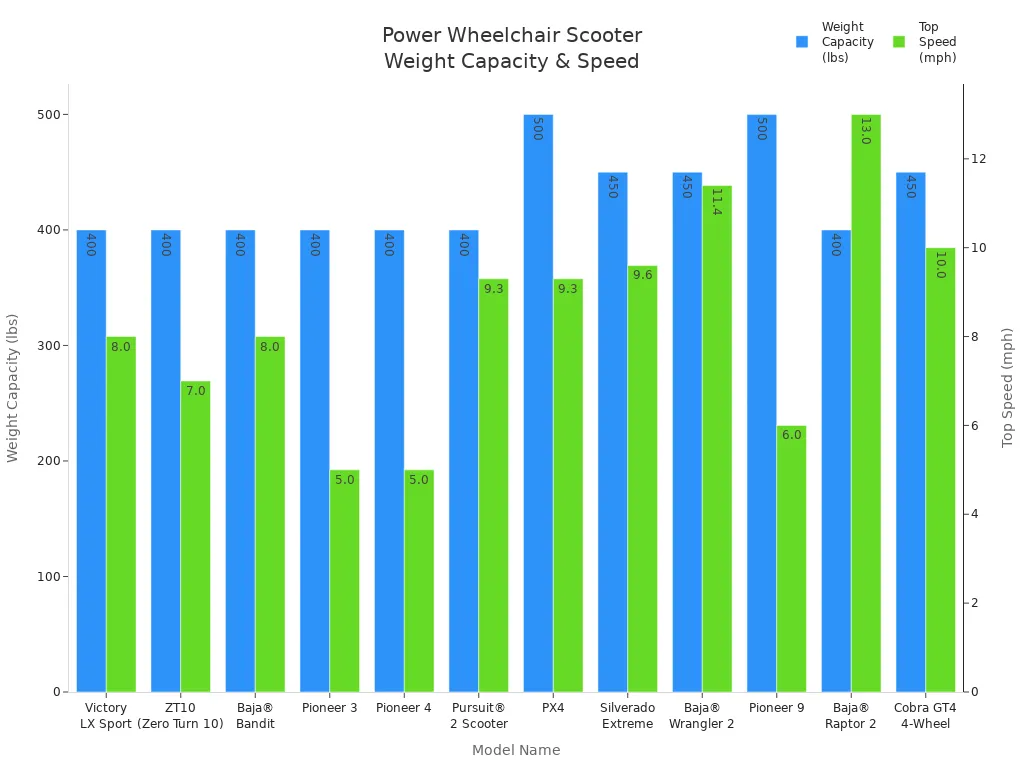
Check the weight capacity to make sure the device supports your body safely. Heavy-duty models work best for higher weight and rough terrain. If you want to go off-road or climb hills, look for features like suspension, larger wheels, and incline detection. The SanLi Care Model S300, for example, handles slopes up to 15 degrees and obstacles up to 6 cm high, making it a great choice for all-terrain use.
Budget
Your budget plays a big role in your decision. , technology, and brand.
| Price Range Category | Price Range (USD) | Key Features / Factors Influencing Cost |
|---|---|---|
| Low-End Models | $1,000 – $3,000 | Basic, indoor use, short distances |
| Mid-Range Models | $3,000 – $7,000 | Better battery, comfort, more features |
| High-End Models | $7,000 – $20,000+ | Customization, heavy-duty, smart tech |
Factors that affect cost include:
Weight capacity and reinforced frames
Adjustable seating and custom features
Battery type and range
Advanced controls and smart technology
Brand reputation and warranty
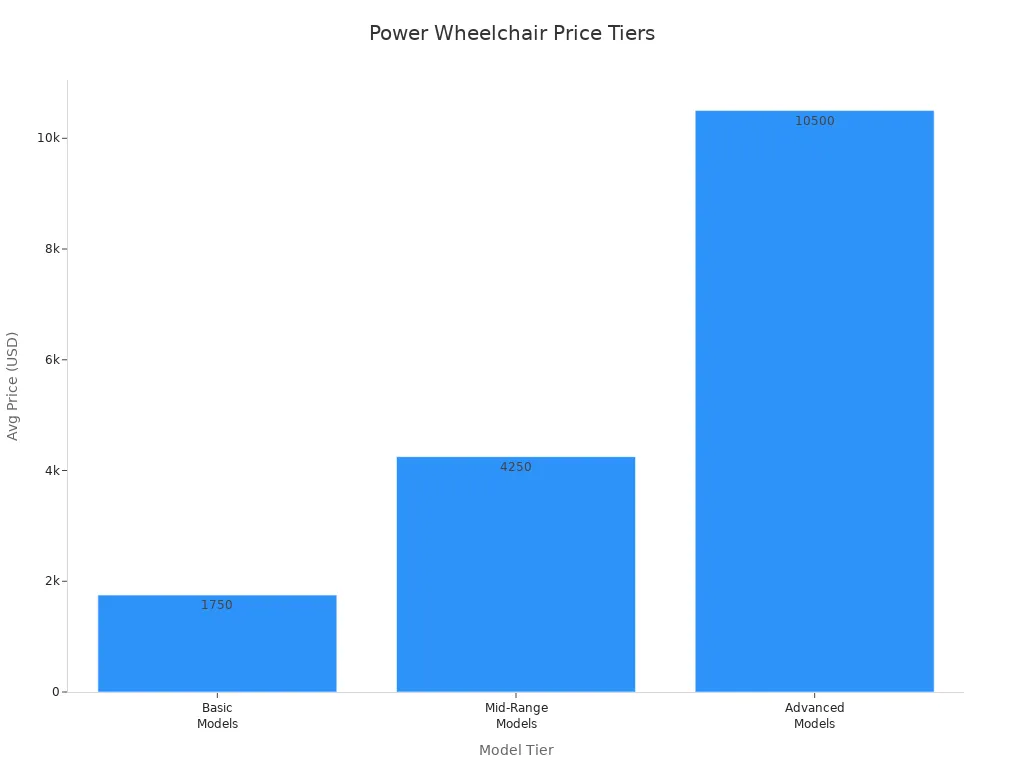
Don’t forget about extra expenses like batteries, maintenance, and accessories. Insurance or Medicare may help cover some costs. Always balance your needs, comfort, and independence with your budget.
Note: Talk to a healthcare professional or therapist. They can help you match your abilities and needs to the right device for your lifestyle and mobility goals.
Types of Power Wheelchair

Image Source:
Choosing the right can feel like a big decision. You want something that fits your lifestyle, supports your mobility, and keeps you comfortable. Let’s look at the main types of electric wheelchairs and mobility scooters so you can see which one matches your needs.
Front-Wheel Drive
powerchairs have their motors and large wheels in the front. This design helps you climb over small obstacles and gives you great traction on rough ground. You can use these power chairs both indoors and outdoors, but they really shine when you need to go over grass, gravel, or uneven sidewalks.
Key Features:
.
.
Lets you tuck your feet back, which helps if you have tight hamstrings.
Pros:
Smooth ride over rough terrain.
Good for outdoor use and climbing small obstacles.
Stable and comfortable for longer trips.
Cons:
Turning radius is wider than mid-wheel drive.
Takes some practice to get used to steering.
.
Best For: You’ll like this type if you spend time outdoors or need to cross uneven ground. It’s also a good choice if you want a stable ride and need to approach counters or sinks closely.
Mid-Wheel Drive
Mid-wheel drive electric wheelchairs put the drive wheels right under your seat. This setup gives you the , so you can spin around in small spaces. If you live in an apartment or need to move through narrow hallways, this type makes life easier.
Key Features:
.
Turns in place, making it easy to get around furniture.
Feels natural to drive because the wheels sit under your center of gravity.
Pros:
Best for indoor maneuverability.
Very stable, less likely to tip.
Easy to learn for beginners.
Cons:
Can get stuck on soft ground or big bumps.
Ride may feel bumpier on rough surfaces.
Footrests may be harder to position.
Best For: If you spend most of your time indoors or in tight spaces, mid-wheel drive powerchairs are a great fit. They work well for anyone who needs easy, intuitive control.
Rear-Wheel Drive
Rear-wheel drive powerchairs have their motors and big wheels at the back. This design gives you more power and speed, making it perfect for outdoor adventures. You get a smooth, stable ride, even on hills or rough paths.
Key Features:
.
Handles slopes and uneven ground well.
Offers higher speeds for longer trips.
Pros:
.
Tracks straight, so you don’t have to correct your direction often.
Good weight capacity for heavier users.
Cons:
Larger turning radius, not ideal for tight indoor spaces.
May feel less nimble indoors.
Best For: Choose this type if you love being outside, need to travel longer distances, or want a power wheelchair that feels steady and strong.
Folding & Travel
Folding and travel electric wheelchairs focus on portability. You can fold them up or take them apart quickly, so they fit in car trunks or airplane cargo. These types of electric wheelchairs are perfect if you’re always on the go.
Key Features:
.
Quick folding or easy disassembly.
Compact size for storage and travel.
Pros:
Super portable, fits in small spaces.
Saves time and effort when traveling.
Many models are airline-approved.
Cons:
Shorter battery range than larger models.
May not handle rough terrain as well.
Less padding or support for long-term sitting.
Best For: If you travel often or need a portable power wheelchair scooter for errands, . They work well for city trips, vacations, or anyone who values convenience.
Tip: The SanLi Care Model S300 stands out here. It folds in two steps, fits in most cars, and is airline-approved. You get portability without giving up comfort or features.
Heavy-Duty
. They have reinforced frames, bigger motors, and higher weight limits. These power chairs handle hills, grass, and gravel with ease.
Key Features:
.
Strong suspension and large wheels.
Designed for rough terrain and long use.
Pros:
Handles outdoor adventures and tough surfaces.
Durable and stable, even for larger users.
Offers extra comfort with padded seats and shock absorbers.
Cons:
Heavier and less portable.
Bulkier, so harder to fit in small spaces.
Best For: If you need a power wheelchair for outdoor use, have a higher weight requirement, or want something that lasts, heavy-duty models are the way to go.
Electric Wheelchairs
Electric wheelchairs cover all motorized types, from basic models to high-tech powerchairs. Modern electric wheelchairs come packed with smart features that make your life easier.
Key Features:
.
.
Adjustable seating for comfort.
Smart technology like health monitoring and navigation.
Pros:
Easy to drive, even with limited hand strength.
Customizable for your needs.
Some models offer self-navigation and remote control.
Cons:
Some models can be expensive.
Heavier than manual chairs.
Best For: Electric wheelchairs work for anyone who needs powered mobility. They fit users with limited upper body strength, those who want smart features, or anyone looking for comfort and independence.
Note: The SanLi Care Model S300 is a great example of innovation in this category. It combines electric wheelchair, smart walker, and e-push assist chair functions. You get Bluetooth controls, a mobile app, and all-terrain wheels in one portable package.
Power Wheelchair Scooter
Power wheelchair scooters, also called mobility scooters, offer a different experience from traditional electric wheelchairs. They use tiller steering (like handlebars) and often have three or four wheels. You sit upright and steer with your hands, which feels more like driving a small vehicle.
| Aspect | Mobility Scooter | Electric Wheelchair |
|---|---|---|
| Control Mechanism | Tiller steering (handlebars) | Joystick control |
| Seating Position | Swivel seat, step-through entry | Fixed seat, side/front transfer |
| Turning Radius | Larger | Tighter |
| Portability | Disassembles into parts | Some fold, often heavier |
| Customization | Simpler, less adjustable | Highly customizable |
| Typical Use | Outdoor, longer distances | Indoor, complex mobility needs |
Key Features:
Larger wheels for outdoor use.
Easy to disassemble for transport.
Simple controls, but needs some upper body strength.
Pros:
Great for outdoor trips and errands.
Portable and easy to take apart.
Usually less expensive than powerchairs.
Cons:
Needs more upper body strength to steer.
Not as maneuverable indoors.
Fewer comfort options.
Best For: Mobility scooters work well if you have some walking ability and want a portable device for shopping, parks, or travel. They’re popular with users who want independence for longer outdoor trips.
Callout: If you want the best of both worlds, look at hybrid models like the SanLi Care Model S300. It gives you the power of an electric wheelchair, the support of a smart walker, and the convenience of a portable mobility scooter—all in one device.
Table: Comparing Types of Electric Wheelchairs and Mobility Scooters
| Type | Defining Characteristics | Best For |
|---|---|---|
| Front-Wheel Drive | Large front wheels, stable, climbs obstacles | Outdoor use, uneven terrain |
| Mid-Wheel Drive | Center drive, tight turning, stable | Indoor use, tight spaces |
| Rear-Wheel Drive | Rear motor, stable, higher speed | Outdoor, longer distances |
| Folding & Travel | Lightweight, folds/disassembles, portable | Travel, city trips, small storage |
| Heavy-Duty | Reinforced, high weight limit, rugged | Outdoor, heavy use, larger users |
| Electric Wheelchairs | Powered, smart controls, customizable | All users needing powered mobility |
| Mobility Scooter | Tiller steering, larger wheels, portable | Outdoor, errands, users with some mobility |
Remember: The right power wheelchair scooter or mobility scooter depends on your daily routine, where you go, and what feels comfortable. Try different types of electric wheelchairs and powerchairs to see what works best for your mobility needs.
Key Factors
Maneuverability
When you choose a mobility device, maneuverability matters a lot. You want to move easily in your home, at the store, or outside. Turning radius tells you how tightly your device can turn. Most mobility scooters have a . A smaller turning radius helps you get around tight corners and crowded places. , making them perfect for small rooms or narrow hallways. Front-wheel and rear-wheel drive models need more space to turn, so they work better in open areas. If you plan to use your device indoors, look for one with a tight turning radius for better mobility.
Battery & Range
Battery life and range decide how far you can go on a single charge. You want a device that keeps up with your daily mobility needs. Here’s a quick look at battery types and what they mean for you:
| Battery Type | Lifespan (years) | Range per Charge (miles) | Notes |
|---|---|---|---|
| Sealed Lead Acid | 1 – 2 | 8 – 20 | Heavier, less expensive |
| Gel | 2 – 3 | 8 – 20 | Handles bumps, lasts longer |
| Lithium-ion | 3 – 5+ | 8 – 20 | Light, fast charging, costly |
Your weight, the terrain, and how you use features like lights or recline can change your range. If you travel a lot or spend time outdoors, pick a model with a and a battery that fits your lifestyle.
Customization
You want your mobility device to feel like it was made just for you. Many electric wheelchair and scooter models let you . You can pick ergonomic seats, armrests, and footrests for extra comfort. Some devices offer . You can also choose colors and patterns to match your style. Customization helps you stay comfortable, safe, and happy with your mobility device.
Cost & Funding
Mobility devices can be a big investment, but you have options to help with the cost. if your doctor says you need a device for home mobility. , depending on your state. Private insurance, the VA, and charities also offer help. Some stores let you pay over time with financing plans. You can even look for used devices or ask for help from local programs. Always check what your insurance covers before you buy.
Tip: . Test drives help you find the right fit for your mobility and comfort. . This step makes sure you get a device that matches your needs and supports your independence.
Making a Choice
Step-by-Step Guide
Choosing the right mobility device can feel like a big step, but you can break it down into simple actions. Here’s a clear process to help you match your mobility needs to the best power wheelchair scooter or electric wheelchair:
| Step | What to Do | Why It Matters |
|---|---|---|
| 1. Assess Your Daily Life | Think about your daily activities and where you need mobility support. | Helps you find a device that fits your routine. |
| 2. Check Your Abilities | Look at your strength, grip, and how you transfer in and out of seats. | Makes sure you pick a device you can use safely. |
| 3. Review Your Home & Travel | Measure doorways, check for ramps, and think about storage and transport. | Ensures your device fits your space and travel. |
| 4. Explore Device Types | Compare scooters, standard power wheelchairs, and complex rehab chairs. | Lets you see which features match your needs. |
| 5. Try Devices | Test drive different models for comfort and maneuverability. | You feel the difference and find your favorite. |
| 6. Consult Professionals | Talk to a doctor or therapist about your mobility and independence goals. | Experts help you make the best choice. |
| 7. Consider Funding | Look into insurance, Medicare, or payment plans. | Helps you plan for costs and coverage. |
Tip: of your daily mobility challenges. This helps you and your healthcare team find the best portable solution for your lifestyle.
Checklist
Before you decide, use this to make sure you cover all the important points for selecting the right mobility scooter or power wheelchair:
Comfort: Try out seats, backrests, and armrests. Make sure you feel good sitting for long periods.
Mobility Needs: Check if you can get in and out easily. Look for adjustable features.
Terrain: Think about where you’ll use your device—indoors, outdoors, or both. Make sure it handles your local terrain.
Portable Options: Choose a portable model if you travel or need easy storage.
Storage: Plan for a safe, dry place to charge and store your device.
Customization: Look for adjustable seating, belts, or extra padding.
Cost: Compare prices, ongoing costs, and funding options.
Training: Learn how to use your device safely and legally.
Remember: Trying devices and talking to professionals can boost your user independence. Innovative models like the SanLi Care Model S300 offer portable, all-in-one mobility for active lifestyles. If you want to know how to get a mobility scooter that fits your needs, start with this checklist and reach out for expert advice.
Choosing the right power wheelchair scooter or electric wheelchair can change your daily mobility and boost your confidence. You want a device that fits your mobility needs, supports your lifestyle, and helps you stay active. show that matching features to your mobility makes a big difference in comfort, safety, and independence. , like and foldable frames, let you enjoy mobility at home, outdoors, or while traveling. Use the checklist to guide your mobility decisions and talk with professionals who understand your mobility goals. Many resources offer answers about mobility, from . Explore new models like the SanLi Care Model S300 to find the best mobility solution for you.
FAQ
What is the difference between a power wheelchair and a mobility scooter?
You use a power wheelchair with a joystick. It works well indoors and outdoors. A mobility scooter has handlebars and feels like a small vehicle. You steer it with your hands. Both help you with mobility, but each fits different needs.
Can I travel with my mobility device on an airplane?
Yes, you can take many mobility devices on airplanes. Folding models and lightweight power wheelchairs make travel easier. Always check with your airline before your trip. Some devices, like the SanLi Care Model S300, are airline-approved for safe and easy mobility during travel.
How do I know which mobility device is best for my daily routine?
Think about where you go each day. Do you need help indoors, outdoors, or both? Try different devices to see what feels right. Your comfort and mobility matter most. Ask a professional for advice if you feel unsure.
What features should I look for in a mobility device for outdoor use?
Look for strong wheels, good suspension, and a long battery range. These features help you enjoy mobility on grass, gravel, or hills. Some devices, like all-terrain models, give you more freedom to explore outside.
Can I customize my mobility device for better comfort?