
. These include canes, walkers, or wheelchairs. Modern dme has special designs and new technology. Some have smart features and are easy to carry. This makes daily life much simpler. Many families trust dme for stability, comfort, and freedom. Good dme helps people feel confident again. It lets them join in daily activities.
Category Percentage (%) Chronically disabled seniors (65+) relying at least partially on assistive technologies (including DME) by 2004 90 Chronically disabled seniors relying solely on assistive devices (no human help) by 2004 26 Chronically disabled seniors using mobility devices (canes, walkers, crutches, wheelchairs, scooters) 73
Key Takeaways
Durable medical equipment like power wheelchairs and scooters help people move safely. These devices let people stay independent at home. Power wheelchairs use joysticks to move. They work best inside the house. Mobility scooters use handlebars to steer. They are better for trips outside. The SanLi Care Model S300 is a smart, foldable hybrid device. It mixes features of wheelchairs, walkers, and scooters. This gives people more freedom. Medicare pays for DME only if a doctor says it is needed. The doctor must see the patient in person and fill out paperwork. Patients must use suppliers approved by Medicare. They need to follow steps like getting a prescription and prior approval. Out-of-pocket costs usually include a yearly deductible. Patients also pay 20% coinsurance. Medigap plans can help lower these costs. Regular maintenance and warranties keep power wheelchairs and scooters safe. They also help the equipment work well for a long time. Good after-sales support and community resources help users fix problems. These services also give advice so people can use their equipment with confidence.
Durable Medical Equipment Overview
What is DME?
Durable medical equipment is very important for care at home. Medicare says DME is strong, used for health reasons, and helps people who are sick or hurt. This equipment is made for home use and . A doctor must write a prescription for DME. Only approved suppliers can give it to patients. These rules help keep people safe and make sure the equipment works well.
DME helps people move around at home and do daily tasks. Many people use DME to get back their freedom after being sick or hurt. The right equipment can make home life safer and more comfortable.
Note: DME is not just for hospitals. Most devices are for home use. They help people stay active and safe at home.
Types of DME for Mobility
There are many kinds of DME for moving around. Some common types are:
: These are light and easy to carry. You need arm strength or help to use them.
Power wheelchairs: These run on batteries. They are good for people with weak arms. They can be changed to fit the user’s needs.
Mobility scooters: These are for outside and longer trips. You must sit up and steer to use them.
Walkers: These help people stand and keep their balance.
Canes: These are simple tools for balance. They help with small walking problems.
Crutches: These move weight from the legs to the arms. They are good for injuries or disabilities.
Specialized mobility devices: These are custom-made or have special electronics for people with big movement problems.
Both custom and regular aids count as DME. How often you can get a new device depends on the type. Power mobility devices like the SanLi Care Model S300 are new and advanced. The S300 is a mix of a power wheelchair, a smart walker, and an e-push assist chair. This device uses smart technology to give users more freedom and ease.
Who Needs DME?
DME for moving is needed by people who have trouble with daily tasks. People who , have bad balance, or weak muscles may need these devices. Some reasons for needing DME are:
Trouble walking because of sickness, injury, or disability
Problems with bathing, dressing, or making food
Older adults with long-term health problems often need DME to stay independent and avoid falls. Doctors check each person’s strength, balance, and safety before giving DME. Devices like wheelchairs and scooters help people move safely at home and outside. New models, like the SanLi Care Model S300, give more choices for people who want more freedom and a better life.
Power Mobility Devices
Power Wheelchairs
. These use electric motors and a joystick to move. Users do not need to use much strength. Many have seats that can tilt or recline. Some have armrests you can move. Many can fold up for travel or storage. They are small, so they work well inside. Users can turn in tight places like hallways or elevators. People with weak arms or who need support all day often pick these.
| Aspect | Power Wheelchairs | Mobility Scooters |
|---|---|---|
| Intended Users | Individuals with significant mobility impairments, limited upper body strength | Users with some mobility and upper body strength |
| Control Mechanism | Joystick controls allowing precise indoor maneuvering | Tiller steering, simpler controls |
| Usage Environment | Primarily indoor, compact and maneuverable for narrow spaces | Primarily outdoor, larger wheels and durable frame for sidewalks/paths |
| Seating Comfort | Advanced seating adjustability (tilt, recline, adjustable armrests and headrests) | Basic seating, often 360° rotatable but less adjustable |
| Duration of Use | Suitable for long-duration, all-day use | Better for shorter trips and less frequent use |
| Size and Weight | Generally lighter, more compact | Larger and heavier, more stable but harder to transport |
| Speed | Typically slower | Generally faster |
| Portability | Often foldable or easier to transport | Less portable, but batteries last longer and cover longer distances |
| Maneuverability | High precision, suitable for tight indoor spaces | Less maneuverable indoors, better for outdoor navigation |
| User Control Complexity | More complex joystick controls, may require more skill | Easier to operate, suitable for users with limited hand function |
Mobility Scooters
Mobility scooters help people who can walk a little but not far. They use a tiller to steer, which is easy to use. Most scooters have three or four wheels for balance. They work well on sidewalks, streets, and grass. . They are best for outside use. People use them for shopping, going to parks, or doing errands. Scooters are bigger and heavier than wheelchairs. This makes them harder to carry. Many people like scooters for their speed and how they handle rough ground.
Mobility scooters are good for people who need a dme power operated vehicle outside.
Scooters have easy controls and simple seats, so they are simple to use.
These devices can go far on one battery charge.
3-in-1 and Hybrid Devices
Hybrid power mobility devices mix features from wheelchairs and scooters. The SanLi Care Model S300 is a top example. This 3-in-1 device works as a power wheelchair, smart walker, and e-push assist chair. The S300 has Bluetooth and a mobile app for remote control. Its special omni-wheels help it turn in small spaces. The frame is light and folds up, so it fits in cars or small places.
The S300 has seats you can adjust and safety features that use AI. It works on many types of ground. It can sense hills, slow down if going too fast, and help with walking. The device holds up to 115 kg and is comfy for daily use. It has GPS, video calls, and USB charging for modern needs. This hybrid device helps people stay safe, free, and comfortable inside and outside.
Eligibility and Medical Necessity
Who Qualifies for DME?
Medicare has rules for who can get durable medical equipment like power wheelchairs and scooters. To get dme coverage, a person must really need help moving at home. There are a few steps to follow:
The patient must see their main doctor in person .
The doctor must decide the equipment is needed and write a signed order.
The order must show that the person:
Has a hard time moving at home, even with things like canes or walkers.
Has trouble with daily things like bathing or getting dressed.
Cannot use a manual wheelchair or scooter, but can use a power wheelchair or scooter safely.
Needs the equipment for a certain health problem or injury at home.
Medicare pays for only one piece of equipment for moving at home.
The equipment must come from a supplier that Medicare approves.
Medicare Advantage plans give at least the same help, but some rules may be different.
Tip: Always ask the supplier if they are approved by Medicare before you order any dme.
Medical Conditions and Criteria
Many people get dme because health problems make walking or moving hard. Medicare pays for power wheelchairs and scooters when a doctor says the patient has trouble moving because of a health problem. The patient must have . The device must help the person move better at home and make daily life easier.
Some health problems that may qualify are:
.
Heart or lung diseases, like COPD or heart failure, that make walking hard.
Nerve problems like Multiple Sclerosis, Parkinson’s disease, stroke effects, or spinal cord injuries.
These health problems must make it hard for the person to move around their home and do daily things, even with other aids.
Role of Healthcare Providers
Healthcare providers are very important in getting dme. They must do an . This exam should explain how the patient’s movement problems affect daily life. Providers must also show why other aids, like canes or manual wheelchairs, do not work for the patient.
For some power wheelchairs, a specialist like a physical therapist or occupational therapist may need to do another check. This check looks at the patient’s strength, balance, posture, and if they can use the equipment safely. The provider must write down all findings in the medical record. Medicare does not accept notes from the supplier as proof.
A certified Assistive Technology Professional may also visit the home to see if the space fits the new equipment. This step helps make sure the patient can use the device safely and easily.
Note: Good notes from healthcare providers help get approval faster and make sure the patient gets the right equipment.
Coverage of Power Wheelchairs and Scooters
Medicare Part B Rules
. These devices are called durable medical equipment. A doctor must prescribe them for use at home. Medicare only pays if someone really needs help moving at home. The person must have trouble moving, even with a cane or walker. The doctor must see the person in person and write a prescription. The doctor also sends in a Certificate of Medical Necessity.
The supplier must be signed up with Medicare and agree to their prices. This helps keep costs lower for patients. Certified professionals check if the device fits the home and meets the user’s needs. Medicare Advantage plans may have different rules and suppliers.
| Aspect | Medicare Part B Coverage Rules for Power Wheelchairs and Mobility Scooters |
|---|---|
| Coverage Category | Durable Medical Equipment prescribed by a doctor for home use |
| Medical Necessity | Must be medically necessary; needs a face-to-face exam and written prescription from treating provider |
| Prior Authorization | Needed for some power wheelchairs; supplier sends request and paperwork to Medicare |
| Costs to Beneficiary | After Part B deductible, patient pays 20% if supplier accepts assignment |
| Equipment Acquisition | Can rent, buy, or choose rent/buy depending on equipment type |
| Supplier Requirements | Must be Medicare-enrolled and accept assignment to limit out-of-pocket costs |
| Additional Requirements | Home checks may be needed; rules on how often you can get new equipment; new coverage for things like power seat elevation |
| Medicare Advantage | Has its own rules and supplier networks |
People can rent or buy equipment through Medicare. After 13 months of renting, the person usually owns it. To get coverage, all rules must be met. Medicare also covers new features, like power seat elevation, if needed for health.
Note: Medicare only pays for medical equipment medicare covers when it is needed at home, not just for trips or convenience.
Prior Authorization
. Medicare uses this step to make sure the device is really needed. The doctor or supplier checks if prior authorization is needed for the device. If yes, they send a request to the Durable Medical Equipment Medicare Administrative Contractor (DME MAC).
The DME MAC looks at the request and answers in 10 business days. If the patient’s health is in danger, the answer comes faster. The request must have a face-to-face exam and medical records showing the patient’s needs. If approved, the supplier gives the equipment and the patient pays their share. If denied, the doctor or supplier can try again with more information. If denied again, Medicare will not pay. The patient can still get the device but must sign an Advance Beneficiary Notice (ABN) and pay the full price. The patient can also ask the supplier to send a claim to Medicare and can appeal if denied.
Doctor or supplier checks if prior authorization is needed.
Doctor or supplier sends request to DME MAC.
DME MAC reviews and answers in 10 business days.
If approved, supplier gives equipment and patient pays their share.
If denied, one more request can be sent.
If denied again, Medicare will not pay.
Patient can sign ABN and pay full price if they still want the device.
Patient can ask for a claim and appeal if denied.
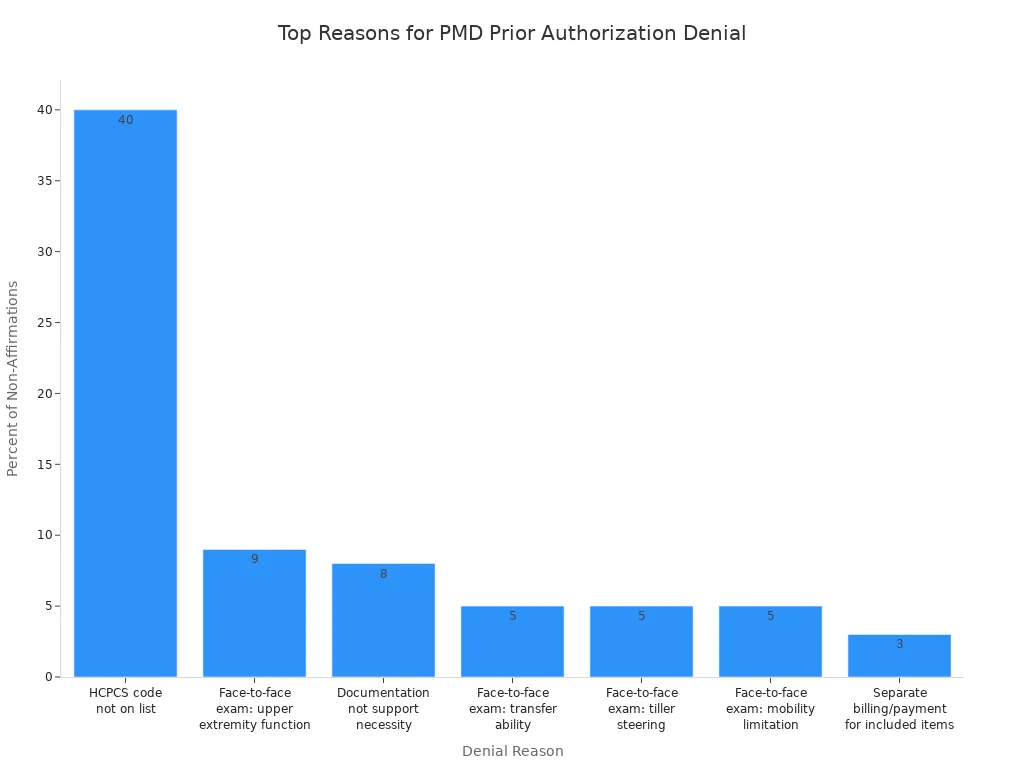
Denials happen if the exam does not show a real need. The exam must prove the person cannot use a manual wheelchair, cannot be helped by a cane or walker, and can use the device safely. Other reasons for denial are missing paperwork or asking for things not on the approved list.
| Category | Reason for Denial | Percentage of Non-Affirmations |
|---|---|---|
| PMD Base Device Denials | Exam does not show weak enough arms to use a manual wheelchair | 9% |
| Exam does not show ability to safely get on or off the device | 5% | |
| Exam does not show ability to use tiller steering | 5% | |
| Exam does not show mobility problem not fixed by cane or walker | 5% | |
| PMD Options/Accessories Denials | Requested code not on the approved accessory list | 40% |
| Paperwork does not show medical need for item(s) | 8% | |
| Separate billing/payment for items already included | 3% |
Out-of-Pocket Costs
The cost for a power wheelchair or scooter with Medicare depends on a few things. First, the person must pay the . After that, . The person pays the other 20%. This only works if the supplier is approved by Medicare and agrees to their prices.
For example, if a power wheelchair costs $4,000, the patient pays the deductible and then 20% of what is left. and lower costs after the deductible. Medicare Advantage plans may have different costs, like set copays or different coinsurance. , so people should check with their plan for details.
| Plan Type | Coverage Characteristics | Estimated Out-of-Pocket Cost for $4,000 Wheelchair |
|---|---|---|
| Original Medicare | 20% coinsurance after $240 deductible | $992 |
| Medicare Advantage | Costs depend on the plan; may have set copays or coinsurance; costs can be higher or lower than Original Medicare | Varies (could be less than $880) |
| Medigap Plan A | Pays deductible but not coinsurance | $640 |
| Medigap Plan G | Pays both deductible and coinsurance | $0 |

People should always check coverage with their plan and supplier. Picking a Medicare-approved supplier helps avoid surprise bills. Knowing about original medicare dme costs and coverage helps families plan for the money needed for a power wheelchair or scooter.
Getting DME
Step-by-Step Process
Getting a power wheelchair or scooter with medicare has many steps. Each step helps make sure the equipment is right for the user and follows the rules.
Medical Evaluation
First, a doctor does a . The doctor checks the patient’s strength, balance, and vision. This helps decide if the patient can use a power wheelchair or scooter safely.
The doctor writes down what they find. The doctor also decides if a mobility device is needed for daily life.
Prescription and Documentation
The doctor gives a written order called a Certificate of Necessity. This paper says why the patient needs the equipment and that they can use it safely.
The patient and doctor send all papers to a medicare-approved supplier within . If they wait too long, they may need to start over.
Choosing a Supplier
The patient picks a supplier that works with medicare. The supplier helps choose the best equipment, like a , or a hybrid device such as the SanLi Care Model S300.
The supplier sends in the paperwork and asks medicare for approval. Some suppliers may check the home to make sure the equipment fits.
Approval and Delivery
When medicare says yes, the supplier brings the equipment. The supplier makes sure it fits the user and teaches them how to use it safely.
If medicare says no, the patient can appeal within 120 days. The Medicare Summary Notice explains how to do this.
Note: Medicare pays 80% of the approved cost after the Part B deductible. The patient pays the other 20%.
Tips for a Smooth Process
Patients and caregivers can do some things to make getting DME easier and safer:
Pick for good equipment.
Talk to healthcare workers to find the right device for the patient.
Ask for the equipment to be set up the right way to stop accidents.
Get training on how to use and fix the equipment for both the patient and caregiver.
Plan for regular checks and maintenance to keep the equipment working.
Watch the order and talk to the supplier to stop .
Check all papers for mistakes before sending them to medicare.
Keep up with new medicare rules and supplier changes.
🛡️ Tip: Talk early with the doctor and supplier to avoid delays and get the equipment on time.
Support and Resources
After-Sales Service
Good after-sales service helps people use their power wheelchair or scooter better. DME suppliers give different kinds of help to keep equipment working well.
. Labor warranties often pay for these repairs.
Rentals: Some users need a device for a short time or while theirs is being fixed. Suppliers offer rentals for both short and long times.
Customer Support: Users can call support teams or visit stores for help. They get answers fast.
Product Trials: Some stores let users try equipment before buying. This helps them find what fits and feels best.
SanLi Care gives 24/7 after-sales help and a one-year warranty for the Model S300 frame and battery. This service helps users feel safe and keeps them moving.
Maintenance and Warranty
Regular care keeps power wheelchairs and scooters safe and working well. Users should . They should make sure caster wheels turn easily and check tire pressure. Testing brakes and looking at the joystick, seat, and armrests can stop problems before they start.
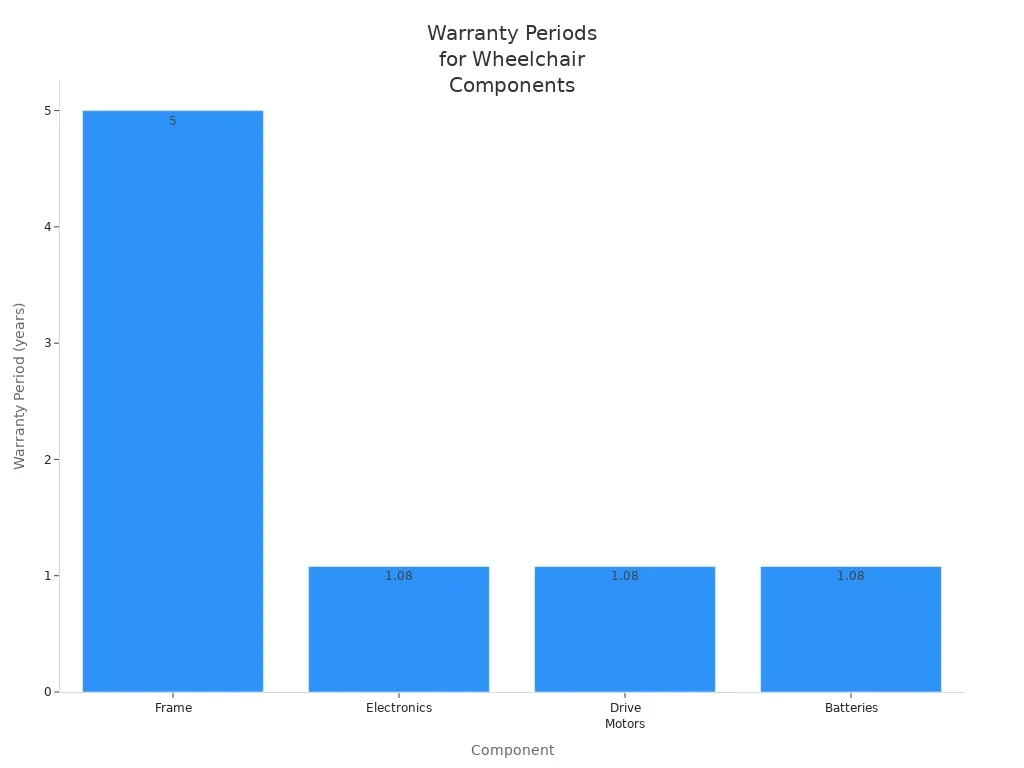
Warranties from makers protect important parts of the device. Most brands cover batteries, frames, and electronics for a set time. Dealers may offer extra service plans, but these do not cover normal use or misuse. For example, . Service workers usually come in 3 to 10 business days. Parts under warranty are replaced for free. Users pay for parts not covered by warranty.
| Component | Warranty Period |
|---|---|
| Frame | 5 years (limited) |
| Electronics | 13 months (limited) |
| Drive Motors | 13 months (limited) |
| Batteries | 13 months (limited) |
Where to Get Help
When problems happen, users can try easy steps before calling for help. They should check if the battery is charged and plugged in right. They should also check the key and look at the for tips. For power chairs, pressing the reset button and checking fuses can fix small problems.
If these steps do not work, users should call their supplier or a trained technician. Many dealers, like , give 24-hour help and fix equipment at home. Keeping the technician’s phone number close helps users get help fast.
Community and nonprofit groups also help users. Groups like the give free or cheap equipment, repairs, and advice. offer help all over the country.
| Category | Description | Examples and Locations |
|---|---|---|
| National Foundations | Condition-specific programs with local chapters. | ALS Association, Muscular Dystrophy Association |
| Local Non-Profits | Regional programs that refurbish and distribute DME. | Free Foundation (VA), Project Mend (TX), DME Exchange (Dallas, TX), Medical Angels (NJ) |
| Lost Limb Organizations | Programs for individuals with limb loss. | Barr Foundation, Limbs for Life Foundation, National Amputation Foundation |
🛠️ Tip: Users should keep manuals and support phone numbers nearby. Community groups can help with repairs, advice, and equipment needs.
Power wheelchairs and scooters help people move on their own. They make life better for those who have trouble walking. Many people . They also feel better about themselves after using these devices. Some people need their equipment to go places they could not go before.
To pick the best device, people should:
.
Ask doctors or nurses for advice that fits them.
Think about where they will use it and what they do each day.
For more help, or go to their website. You can also get advice from State Health Insurance Assistance Programs or companies like ProMed DME.
FAQ
What is the difference between a power wheelchair and a mobility scooter?
A power wheelchair moves with a joystick. It is good for inside use. A mobility scooter uses handlebars to steer. Scooters work best outside. Power wheelchairs help people who cannot move much. Scooters are for people who can sit up and steer.
Who can get a power wheelchair or scooter through Medicare?
Medicare pays for these if you have big trouble moving at home. A doctor must say you need it for health reasons. You must show that canes or walkers do not help enough.
How does the SanLi Care Model S300 stand out from other devices?
The SanLi Care Model S300 is three devices in one. It is a power wheelchair, smart walker, and e-push assist chair. It has Bluetooth, a phone app, omni-wheels, and AI safety. The frame folds up and is safe for planes, so it is easy to carry.
How long does it take to receive a power wheelchair or scooter after approval?
Most people get their device two to four weeks after Medicare says yes. The time may change if the supplier or device is not ready.
What maintenance does a power wheelchair or scooter require?
Users should look at tires, brakes, and batteries often. Cleaning and checking the frame and controls helps stop problems. Many suppliers give plans and warranties for repairs.
Can users travel with the SanLi Care Model S300?
Yes. The Model S300 folds up fast and is safe for planes. It is light and fits in car trunks and small spaces. This makes it great for trips.
What should users do if their equipment stops working?
First, check the battery and wires. If it still does not work, call your supplier or a trained technician. Many brands, like SanLi Care, have 24/7 help and warranty service.
Are accessories like GPS or video calls available for all power wheelchairs?