
Key Takeaways
Choose a transport method that fits your wheelchair’s size, weight, and your vehicle type for safe and easy travel.
Lightweight, foldable scooters like the SanLi Care Model S300 work well with trunk storage and portable ramps for quick trips.
Use vehicle lifts or trailer carriers for heavier or non-folding wheelchairs to reduce lifting effort and protect your device.
Always secure your wheelchair with tie-down straps or docking systems and engage wheel locks before transport to prevent movement.
Plan your route, maintain your equipment, and consider professional or community transport services to support your mobility needs.
Power Wheelchair Scooter Transport Methods
When you need to move a power wheelchair scooter from one place to another, you have several reliable options. Each method has its own benefits and works best for different types of wheelchairs and user needs. Let’s look at the main ways you can transport mobility chairs safely and efficiently.
Trunk Storage
Trunk storage is a popular choice for lightweight and foldable power wheelchair scooters. If you use a model like the SanLi Care Model S300, you can fold it quickly and fit it into the trunk of many cars. This method works best for scooters that and can break down into smaller parts. You should before you try to load your wheelchair. Many standard car trunks cannot fit large or heavy scooters unless you remove the seats or use special equipment. , so if your scooter is heavier, you may need help or a different transport method.
Tip: Always measure your trunk space before buying a new power wheelchair scooter. Make sure you can lift the parts safely.
Portable Ramps
make loading and unloading a power wheelchair scooter much easier. You can use folding ramps, roll-up ramps, or threshold ramps, depending on your needs. Folding ramps are easy to carry and store. Roll-up ramps are lightweight and support heavy loads. Threshold ramps help you cross small steps or doorways. Many ramps can hold up to 800 pounds, so they work well for most scooters.
| Ramp Type | Description | Key Features & Suitability |
|---|---|---|
| Folding Ramps | Fold for easy storage and transport | 2-6 ft long, 600-800 lbs capacity, portable |
| Threshold Ramps | For small height differences | 1-4 ft long, up to 1,000 lbs, more permanent |
| Roll-up Ramps | Roll up like a rug, very portable | Up to 1,650 lbs, various lengths, easy to carry |
| Adjustable Threshold | Change height for minor differences | Multiple sizes, portable, best for home or patio use |
You can see how compare across brands:
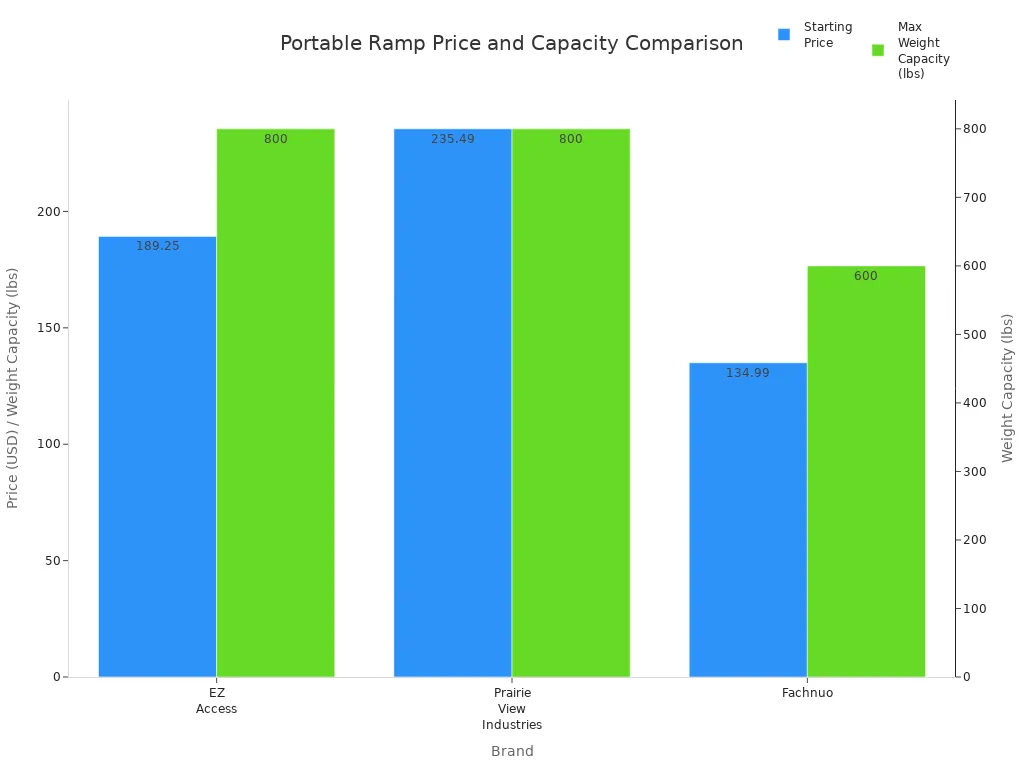
If you use a lightweight, foldable scooter like the S300, you can easily use a ramp to load it into your car or home. Heavier scooters may need longer or stronger ramps.
Vehicle Lifts
help you move heavy or non-folding power wheelchair scooters. You can choose from different types, such as platform lifts, hoist lifts, and hitch-mounted lifts. Platform lifts store the scooter inside your van or truck. Hoist lifts use a crane-like arm to lift the scooter. Hitch-mounted lifts attach to the back of your car and carry the scooter outside the vehicle. These lifts reduce the need for manual lifting and make transporting a wheelchair much safer.
| Lift Type | Description | Vehicle Compatibility | Key Features |
|---|---|---|---|
| Platform Lifts (Interior) | Stores scooter inside vehicle | Vans, trucks | Easy to use, trusted brands |
| Hoist Lifts | Lifts scooter with a crane arm | Various vehicles | Professional installation |
| Exterior Scooter Carriers | Mounts outside, often hitch-mounted | SUVs, vans, cars | Saves space, swing-away options |
| Truck Wheelchair Lifts | Lifts into truck bed | Pickup trucks | Fits different cab lengths |
The , including installation. Micro or light-duty lifts work well for most power wheelchair scooters.
Trailer Carriers
offer another way to transport power wheelchair scooters, especially if you have a large or heavy device. Hitch-mounted carriers attach to your vehicle’s trailer hitch and provide a strong platform for your scooter. Many carriers include ramps, locking systems, and shock absorption to keep your scooter safe during travel. You can choose between steel and aluminum carriers. Steel is strong and durable, while aluminum is lighter and resists rust.
| Feature Category | Key Features | Benefits |
|---|---|---|
| Compatibility | Matches vehicle hitch classes; size compatibility with scooter | Ensures secure fit and stability during transport |
| Weight Capacity | Supports weight of power wheelchairs and scooters; complies with vehicle hitch tongue weight | Prevents overloading, enhances safety and performance |
| Materials | Steel (strong, heavy, durable but requires maintenance); Aluminum (lightweight, corrosion-resistant) | Offers durability, ease of handling, and longevity |
| Ease of Use | Loading ramps, foldable platforms, quick-release mechanisms | Simplifies loading/unloading, reduces physical strain, saves space when not in use |
| Security Features | Locking mechanisms, anti-theft devices, tie-down straps | Protects scooter from theft and damage during transport |
| Suspension System | Shock and vibration absorption | Provides smoother travel, protects scooter from road jolts |
Note: Trailer carriers let you transport mobility chairs without lifting them into your car. They also keep your vehicle’s interior free for passengers or cargo.
Summary
You have many options for transporting a wheelchair. Lightweight, foldable models like the SanLi Care Model S300 fit well in trunks and work with portable ramps. Heavier or non-folding scooters often need a vehicle lift or trailer carrier. Always match your transport method to your scooter’s size and weight for safe and easy power wheelchair transportation.
Using Ramps for Transport
Ramp Types
You have several options when choosing a wheelchair ramp for your power wheelchair scooter. The most common types include portable ramps, suitcase ramps, and tilt system ramps. Portable ramps are lightweight and foldable, so you can carry them in your car or store them at home. These ramps work well for travel or temporary use. Suitcase ramps fold in half and have handles, making them easy to move from place to place. Tilt system ramps attach to vehicles and provide a gradual incline for safe loading.
Van ramps are another popular choice. These ramps are designed for vehicle entry and exit. They offer a sturdy, gradual incline that meets safety standards, such as the . Important features to look for in a wheelchair ramp include the right length, a slip-resistant surface, and enough weight capacity for your wheelchair. Some ramps also have handrails for extra safety.
If you use a lightweight, foldable model like the SanLi Care Model S300, you will find it easy to use with a portable wheelchair ramp or a portable mobility ramp. The S300’s compact design lets you load and unload it without much effort.
Safe Loading
You should always follow safety steps when using wheelchair ramps. Start by parking your vehicle on a flat surface. Make sure the ramp is secure before you begin. Align your wheelchair with the ramp and keep it in a neutral position. Move slowly and avoid sudden movements.
Tip: Engage the before transport to prevent rolling.
After loading, secure your wheelchair inside the vehicle with or locking systems. Check that all fastenings are tight. Regularly maintain your wheelchair and ramp to keep them safe and functional. Never overload your vehicle, and always use ramps designed for your wheelchair’s weight and size. These steps help you avoid tipping or accidents during transport.
Vehicle Lifts for Power Wheelchairs
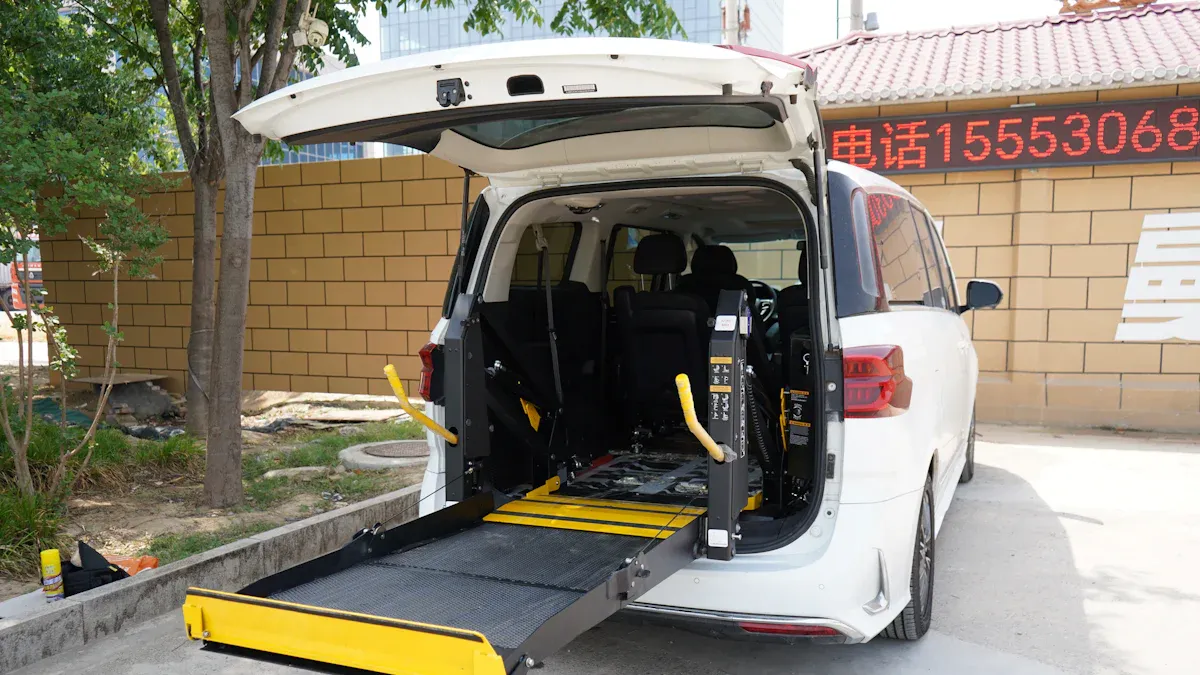
Image Source:
Lift Types
You can choose from several types of vehicle lifts to help you transport your power wheelchair. Each type has unique features and fits different needs. Here is a :
| Type of Vehicle Lift | Installation Location | Functionality & Features |
|---|---|---|
| Inside Vehicle Lift | Inside the vehicle | Lifts and stores the wheelchair or scooter inside, protecting it from weather and securing it during travel. |
| Outside Manual Vehicle Lift | Outside the vehicle | Mounted externally; you roll the wheelchair onto the platform and lock it in place. Cost-effective but less automated. |
| Outside Power Vehicle Lift | Outside the vehicle | Externally mounted with powered operation; lifts and lowers the device at the push of a button. Convenient for users who want less physical effort. |
. These lifts save space inside your vehicle. Manual exterior lifts require you to roll your wheelchair onto the platform and secure it. Power exterior lifts use buttons to lift your device automatically. Interior lifts store your wheelchair inside the vehicle, keeping it safe from rain and snow.
Installation
You must . Not all lifts fit every vehicle. . Many lifts draw power from your car’s battery. Professional installation is important for safety and warranty coverage. Here are some key steps:
Check that the lift works with your vehicle and wheelchair.
Decide between a platform lift (easy operation, powered) or a hoist lift (compact, fits smaller vehicles).
Choose interior placement (protects your device) or exterior (saves interior space).
Make sure the lift can handle your wheelchair’s weight.
Look for features like powered operation for easier use.
Ask a certified technician to install your lift for best results.
Tip: Always ask about warranty and service support before you buy a wheelchair lift.
Pros and Cons
Vehicle lifts offer many benefits, but you should know the trade-offs. Here is a :
| Lift Type | Pros | Cons |
|---|---|---|
| Interior Platform Lift | Protects wheelchair from weather | Uses up most cargo space |
| Exterior Platform Lift | Keeps interior space free, easy loading | Exposes device to rain and snow, may block rear view |
| Interior Arm Lift | Quiet, uses vehicle power | Takes up space, can be awkward with large wheelchairs |
| Exterior Arm Lift | Saves interior space | Exposes device to weather, adds weight to vehicle |
for passengers or bags. Interior lifts protect your wheelchair from the elements. Hoist lifts fit smaller vehicles but need more manual work. Automatic lifts make loading easy but cost more. Manual lifts save money but require more effort.
Vehicle lifts reduce physical strain and help you move heavy or non-folding wheelchairs safely. You can choose the best lift by thinking about your car, your wheelchair, and your daily needs.
Trailer Options for Power Wheelchair Transportation
Trailer Types
You have several trailer options when you want to transport your power wheelchair. Many people choose pull-behind trailers made just for mobility scooters and wheelchairs. These trailers, like the Bruno Chariot or ScootaTrailer, work with cars, minivans, SUVs, trucks, and full-size vans. Most trailers use a 2-inch hitch receiver, which fits many vehicles. You will find that these trailers have , so you can attach or remove them easily.
Key features of these trailers include:
Ramps for easy rolling of your wheelchair onto the trailer
, matching most power wheelchair needs
Construction from lightweight aluminum, steel joints, and mesh for safety and durability
Oversized tires with aggressive tread patterns for smooth travel on different roads
Weather-resistant materials to protect your wheelchair from rain or dust
Some trailers come with covers or canopies. These protect your wheelchair from bad weather during transport. Always check that your trailer matches your vehicle’s hitch and can handle the weight of your wheelchair.
Tip: Make sure your trailer is legal in your state. Some places require lights, license plates, or special reflectors.
Loading and Securing
When you load your wheelchair onto a trailer, use the built-in ramp or a vehicle lift designed for power wheelchairs. Move the wheelchair slowly and keep it centered on the trailer. Always engage the wheel locks before you secure the chair.
To keep your wheelchair safe during travel, use or retractable ratchet straps. Secure all four corners of the wheelchair to prevent movement. Remove or secure any loose items on the chair. Pad any parts that might get scratched or damaged. If you have a cover, use it to shield your wheelchair from rain or dust.
Check all straps and locks before you start driving. Label your wheelchair with your contact information in case it gets lost. Regularly inspect your trailer and straps for wear and tear. These steps help you keep your wheelchair safe and ready to use.
Public Transport and Electric Wheelchairs
Public transportation systems in many cities make it possible for you to transport an electric wheelchair safely and comfortably. Buses, trains, and other wheelchair-accessible vehicles now include features that support your mobility and independence. Knowing what to expect helps you plan your trip and use accessible transport options with confidence.
Accessibility Features
Most public transit vehicles must meet strict accessibility standards. These features help you board, ride, and exit safely:
Lifts or ramps support at least , making it easy to board with your wheelchair.
Securement areas provide enough space for your wheelchair, usually at least .
Vehicles over 22 feet long have at least two securement spots for wheelchairs.
Handrails on lifts and ramps help you steady yourself during boarding.
Ramps have gentle slopes, never steeper than 1:4, for safe entry and exit.
Drivers and staff receive training to assist you with lifts, ramps, and securement devices.
Accessibility features must work at all times. If a lift or ramp breaks, the transit company must repair it quickly or offer another accessible van or bus.
Many cities, such as , offer accessible transport options like paratransit, accessible taxis, and priority seating. These services make it easier for you to travel with your electric wheelchair.
Boarding Tips
You can use these tips to board and exit public transportation safely:
Plan your trip by checking which vehicles have ramps or lifts.
Wait for the vehicle to stop and the ramp or lift to deploy fully.
Position your wheelchair facing forward when boarding.
Engage your parking brakes before the vehicle moves.
Use tie-down straps or securement systems to keep your wheelchair stable.
if available.
When exiting, release the brakes and tie-downs, then move off the ramp slowly.
Bring a companion if you need extra help, or ask the driver for assistance.
Tip: Always know your rights under the ADA. You have the right to remain in your wheelchair and receive help from transit staff if needed.
With these features and tips, you can transport an electric wheelchair on public transit with greater safety and peace of mind.
Power Wheelchair Transportation Safety
Securing Devices
You must secure your wheelchair properly during every trip. This step prevents movement and keeps you safe. Use to lock the wheelchair in place. Always engage the wheel locks before transportation. If you use a , make sure the platform or hoist holds the wheelchair firmly. For , use a protective cover to shield your device from weather. After loading, check that all restraints are tight and compatible with your wheelchair and vehicle. Regular maintenance of both the wheelchair and securing equipment helps avoid problems.
Use manual tie-down straps or electronic docking systems.
Engage wheel locks before transport.
Check all restraints for tightness and compatibility.
Maintain securing equipment and the wheelchair regularly.
Tip: If you remain seated during transport, use lap and shoulder belts that meet safety standards.
Battery Care
Proper battery care supports both safety and the long life of your wheelchair. Avoid overcharging or letting the battery run completely empty. Charge the battery following the manufacturer’s instructions. Store batteries at about half charge in a cool, dry place if you will not use the wheelchair for a while. Before transportation, make sure the battery is fully charged and securely attached. For air travel, check . Protect battery terminals from short circuits. If you need to remove the battery, carry it in a safe container.
Do not overcharge or fully discharge the battery.
Store batteries at in a cool, dry place.
Secure the battery before transportation.
Follow airline and manufacturer guidelines for battery transport.
User Safety
User safety matters most during power wheelchair transportation. Many users face risks like . You can reduce these risks by staying alert and planning your route. Slow down when you see hazards and wait for them to clear. Make yourself visible to others, especially at crossings. Position your wheelchair carefully and use safe routes when possible. Training in hazard awareness can help you feel more confident and independent.
Watch for obstacles and traffic.
Adjust your speed for safety.
Plan your route and choose safe paths.
Take if available.
Note: Always double-check that you have secured the wheelchair and followed all safety steps before starting your journey.
Choosing How to Transport a Power Wheelchair
Key Factors
When you decide how to transport a power wheelchair, you need to look at several important factors. Each one can affect your choice of reliable transportation and help you find the best long-term transportation solution for your needs.
Size and weight of your wheelchair: , like the SanLi Care Model S300, are easier to fold and lift. Heavy-duty wheelchairs may need .
: Minivans, SUVs, pickup trucks, and wheelchair-accessible vehicles all offer different cargo space and loading options.
: If you travel daily, you may want a more permanent or automated solution. Occasional users might prefer portable ramps or manual carriers.
Budget: Manual carriers and ramps cost less but require more effort. Electric lifts and custom trailers cost more but offer convenience.
Compatibility: Make sure your chosen method fits both your vehicle and your wheelchair.
Ease of loading and unloading: Choose a method that matches your strength and comfort level.
Storage space: Think about where you will keep ramps, lifts, or carriers when not in use.
: Always secure your wheelchair during transport and never ride in it while the vehicle is moving.
Tip: Plan your route and stops to keep your wheelchair safe and secure throughout your journey.
Matching Needs
You should match your transport method to your lifestyle and mobility needs. The table below can help you compare some key considerations:
| Consideration | What to Look For |
|---|---|
| Frequency of Use | Daily use needs durable, reliable transportation; occasional use needs portability. |
| Indoor vs. Outdoor | Indoor use needs compact, nimble wheelchairs; outdoor use needs stability. |
| Travel Distance | Long trips need strong batteries and a long-term transportation solution. |
| Budget | Choose between basic ramps or advanced lifts based on your budget. |
Lightweight, foldable models like the S300 give you more flexibility. You can use ramps, trunk storage, or even public transport. Heavier wheelchairs may need lifts or trailers. If you feel unsure, talk to a mobility expert or a professional dealer. They can help you find the safest and most reliable transportation for your wheelchair.
Professional and Community Transport Services
Mobility Services
You may find that professional wheelchair transportation services offer a reliable way to get to medical appointments, social events, or daily activities. These services use specially equipped vehicles with ramps or lifts, making it easy for you to board with your mobility device. Drivers receive training to assist you safely and respectfully. Many companies provide door-to-door service, so you do not need to worry about getting from your home to the vehicle. Some services work with insurance or local agencies to reduce costs for eligible users.
If you need regular rides, ask your healthcare provider or local government about available wheelchair transportation services in your area. These services can help you maintain independence and stay connected to your community.
Community Resources
You can also turn to nonprofit organizations and community groups for help with mobility needs. Many groups accept donations of wheelchairs, power scooters, and other equipment. They refurbish these items and give them to people who need them at little or no cost. For example, the , providing refurbished mobility devices to individuals in need.
Here are some organizations and resources that may help you:
.
Wheel to Walk Foundation: Provides financial help for medical devices to disabled youth.
Local charities and service clubs, such as Lions Clubs or Rotary Clubs, may have programs for mobility device assistance.
State Assistive Technology Programs: Offer device loans, refurbished equipment, and funding help for residents.
Fundraising platforms and community events can help you raise money for mobility equipment.
You may also find groups like . These organizations match donated wheelchairs with people who need them. Community resources can make a big difference in your daily life by improving access to mobility solutions.
When transporting a wheelchair, you have many options. You can use trunk storage, ramps, lifts, or trailers. :
| Scooter Type | Portability | Ideal Use | Stability | Maneuverability |
|---|---|---|---|---|
| Portable | Yes | Travel, short trips | Moderate | High |
| Full-size | No | Outdoor, long trips | High | Moderate |
Think about your needs, safety, and the type of wheelchair you use. Modern designs, like the SanLi Care Model S300, fold easily and help you travel with less effort. If you need help, reach out to mobility services or community groups. You can find a solution that supports your independence.
FAQ
How do you fold and store the SanLi Care Model S300 in your car?
You can fold the S300 in two steps without removing any parts. The lightweight frame fits in most car trunks. Always check your trunk size before you travel.
Can you take a power wheelchair scooter on an airplane?
Yes, you can take many power wheelchair scooters, including the S300, on airplanes. Make sure you check airline rules for battery type and size. Notify the airline before your trip.
What is the safest way to secure your wheelchair during transport?
Use tie-down straps or docking systems to keep your wheelchair from moving. Always lock the wheels. Double-check all straps before you start driving.
Do you need a special license to use a trailer carrier for your wheelchair?
You do not need a special license for most trailer carriers. You must follow local laws for trailer use. Check for requirements like lights or license plates.
What should you do if your wheelchair battery runs low while traveling?
Charge your battery before every trip. Carry your charger with you. If your battery runs low, find a safe place to stop and recharge. Some public places offer charging stations.