
for your life:
| Factor | Why It Matters |
|---|---|
| Price | Pick choices that fit your money plan. |
| Usage Needs | Choose a scooter for inside, outside, or both places. |
| Functionality | Check if the scooter folds and is easy to use. |
| Weight Capacity | Make sure the device can hold your weight. |
| Portability | Pick light models for trips and easy storage. |
| Stability | Choose between easy turning or better balance outside. |
| Safety Features | Look for hill help, locks, and a strong frame. |
| Comfort | Find seats that feel good and can be changed. |
| Battery Range | Think about how far you need to go each day. |
| Ease of Operation | Easy controls help you use the scooter simply. |
| Terrain Compatibility | Pick a scooter that works on your usual paths. |
| Additional Features | Look for extras like key locks or places to store things. |
The right power wheelchair or power mobility device can help you move better and enjoy life more.
Key Takeaways
Pick a power wheelchair scooter that matches your daily needs. Use it indoors, outdoors, or both. Three-wheel scooters turn easily. They work best on smooth indoor floors. Four-wheel scooters are more stable outside. Heavy-duty scooters hold more weight and handle rough ground. They give more power and comfort for active seniors. and fold up fast. They use strong lithium-ion batteries. This makes travel and storage easy. Think about your body and what feels good. Adjustable seats and good support stop pain and help you stay safe. Check for safety features like strong brakes and bright lights. Anti-tip wheels help you stay steady and avoid falls. Try out scooters before you buy one. Make sure it feels good and is easy to move. Check the battery life and see if it fits your home and life. Take care of your scooter often. Look after the battery and check the tires. This keeps your scooter safe and working for a long time.
Power Wheelchair Scooter Types
Three-Wheel Models
Three-wheel power wheelchair scooters let you . They work well in small spaces like hallways or busy stores. These scooters have one wheel in front and two in the back. This setup helps you turn quickly indoors.
Three-wheel scooters are lighter and simple to move.
Many adults use them at home, in apartments, or at work.
These scooters are best for flat, smooth floors.
But, three-wheel models have a smaller base. This can make them feel less steady on bumpy ground. Some have anti-tip wheels for extra safety. If you mostly use your scooter inside, a three-wheel electric mobility scooter is a good pick.
Tip: If you need to get around tight corners or small doors, a three-wheel motorized scooter for elderly adults can help you every day.
Four-Wheel Models
Four-wheel power wheelchair scooters give you more balance. They have a wider base to stop tipping. These scooters are great for outside and rough ground. You can ride them on grass, gravel, or bumpy sidewalks.
Four-wheel scooters hold more weight.
They ride smoother on rough ground.
They turn wider, so they are not as quick in small spots.
Here is a :
| Feature | Three-Wheel Scooters | Four-Wheel Scooters |
|---|---|---|
| Stability | Smaller base, less steady, tips easier | Wider base, more steady, safer outside |
| Maneuverability | Turns tighter, best for inside | Turns wider, better for outside |
| Terrain | Best for smooth, indoor floors | Good on grass, gravel, rough pavement |
| Portability | Lighter, easy to move | Heavier, harder to carry |
If you want to use your scooter outside, a four-wheel electric mobility scooter gives you safety and confidence. Many adults like this type for trips or errands.
Heavy-Duty Options
Heavy-duty power wheelchair scooters are strong and tough. You can trust these scooters if you need to carry more weight or go over rough ground. These models hold up to 700 pounds and can go on rocky paths, trails, and bumpy ground.
Heavy-duty scooters have strong motors and good suspension.
They have bigger seats and more comfort.
These scooters often go farther and faster.
See this chart to compare :
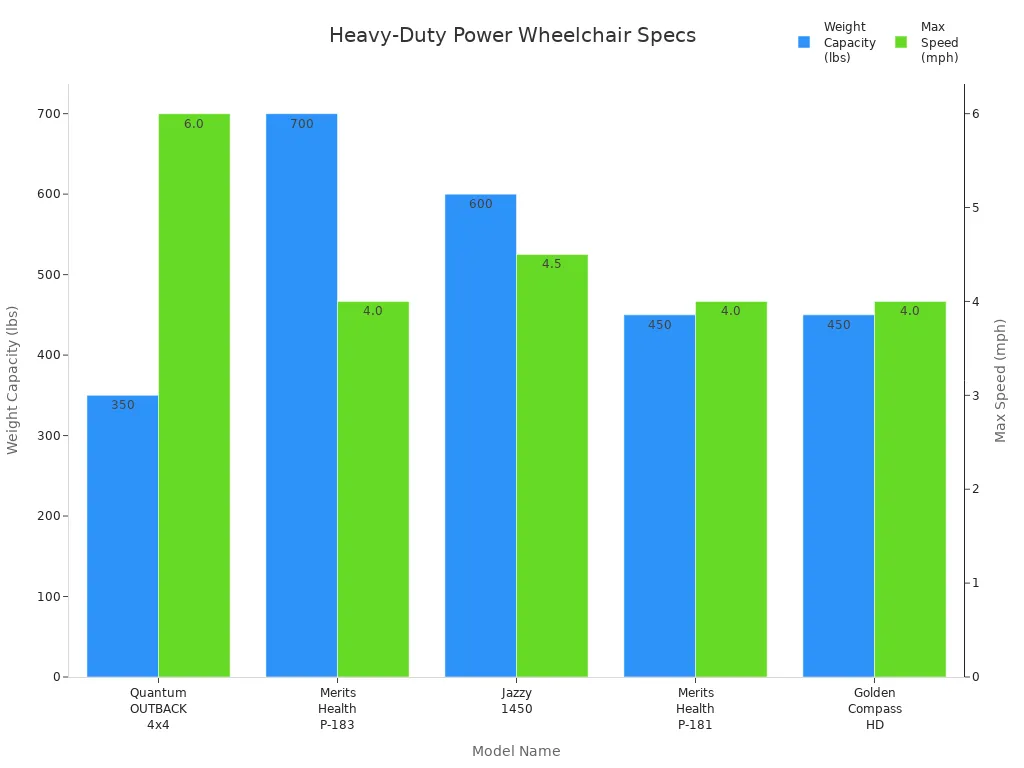
You may want a heavy-duty electric mobility scooter if you like being outside or need more support. These scooters are some of the best motorized scooters for adults who want power and comfort. When you pick a heavy-duty model, you get a motorized scooter that can handle almost anything.
Note: Always look at the features of each power wheelchair scooter to make sure it fits your needs for comfort, safety, and daily use.
Portable Scooters
Portable scooters help you go places without heavy gear. You can fold them fast, so they fit in your car, closet, or on a plane. Many seniors pick a portable mobility scooter because it is light and easy to use.
When you shop for a , look for these things:
Foldability: The best models fold in one step. They get much smaller, so you can store or travel with them.
Battery Technology: Most top scooters use lithium-ion batteries. These batteries last long, charge fast, and let you ride up to 20 miles.
Weight Capacity: Good models hold . This means they are strong and safe.
Speed and Range: You can go 4–6 mph and travel over 15 miles. This is good for daily trips and easy to carry.
Climbing Ability: Many portable scooters go up slopes of 8–10 degrees. You can use them outside or on ramps.
Here is a :
| Model Name | Weight (lbs) | Weight Capacity (lbs) | Battery Range (miles) | Foldability & Portability | Key Features |
|---|---|---|---|---|---|
| Journey Zoomer Power Chair | ~50 | Up to 275 | 15-20 | Splits into two pieces; heaviest part 30 lbs | Lightweight, foldable, user-friendly controls, sleek design, powerful battery for travel |
| ComfyGo Phoenix | 35 | Up to 240 | Not specified | Foldable frame for easy transport and storage | Very lightweight, foldable, convenient for transport, strong weight capacity |
| Vive Health Folding Chair | 68 | Up to 260 | 15-20 | Compact folding design for transport | Durable build, intuitive controls, robust battery system, good for travel and independence |
You can see these models have things in common. They use lithium-ion batteries, fold up easily, have small frames, and are built strong. These features make them great for seniors who want a scooter for trips or daily use.
The SanLi Care Model S300 is special. It is a 3-in-1 portable electric scooter for elderly people. It works as an electric wheelchair, a smart scooter, and an e-push assist chair. The S300 folds in four steps and fits in small spaces or car trunks. Its omni-wheels help you turn in tight spots, like elevators or busy rooms. The S300 also has Bluetooth app control, seats you can adjust, and AI-powered safety features. You can use it inside, outside, or even .
Tip: If you want a scooter that fits your life, pick one with smart tech, good safety, and easy to carry. The right electric mobility scooter helps you stay active, independent, and confident wherever you go.
Assessing Seniors’ Needs
Indoor vs Outdoor Use
Think about where you will use your scooter most. Some scooters work best inside. Others are better for outside paths. If you spend lots of time at home, pick a scooter that turns easily. These scooters help you move in tight halls and crowded rooms. For outside, choose a scooter with big wheels and a strong frame. These features help you ride on grass or bumpy sidewalks. Many seniors like to visit parks or shops outside. If you want to use your scooter both inside and outside, pick one that is stable and easy to turn. Always match your scooter to your daily life.
Physical Abilities
Your body’s abilities matter when picking a scooter. Many seniors have health issues that affect how they use scooters. Think about your strength, energy, and how well you move. that shows how different health problems can change how you use a scooter:
| Physical Condition / Limitation | Impact on Safe Operation of Power Wheelchair Scooters |
|---|---|
| Strength | Weak muscles make it hard to steer and keep steady. |
| Endurance | Low energy means you cannot ride for long. |
| Range of Motion | Stiff joints make steering and using controls tough. |
| Coordination | Poor control makes driving the scooter hard. |
| Upper Extremity Function | Arm pain or weakness lowers your control. |
| Postural Stability | Trouble sitting up can make riding unsafe. |
| Cognitive and Judgment Impairments | Memory or thinking problems can cause unsafe driving. |
| Vision Problems | Bad eyesight makes it hard to see things. |
| Environmental Factors | Small spaces or rough ground limit where you can go. |
Talk to your doctor before you pick a scooter. A doctor or therapist can help you know what you need. . Many seniors do not get enough practice, which can cause accidents. Learn how to use your scooter safely and practice before going out.
Tip: The right scooter helps you stay independent, but it must fit your body and needs for safe and easy use.
Comfort and Fit
Comfort is very important when you use a scooter every day. The right fit keeps you safe and stops pain. Look for scooters with seats, armrests, and headrests you can adjust. These features let you change the scooter to fit your body. Many seniors need extra support, so pick a seat with memory foam or gel. This padding shapes to your body and lowers pressure on your back and legs.
Check for seats that support your posture. An ergonomic seat helps you sit straight and stops sores. with back support feel good on long rides. If you have trouble moving, side armrests that swing out help you get in and out. Light frames make the scooter easier to handle, especially if you travel a lot. Good suspension smooths out bumps and protects your joints.
Pick scooters with:
Seats and armrests you can adjust
Seats that help you sit straight
Light frames for easy moving
A comfy scooter that fits you well lets you enjoy your day without pain or worry. Always try different scooters to find the best one for you.
Storage and Portability
When you choose a power wheelchair scooter, storage and portability play a big role in your daily routine. Many seniors need a scooter that fits easily in small spaces at home or in a car trunk. You want a model that you can move without help and store safely indoors.
make life easier. You can lift or roll them into a closet, garage, or vehicle. Many models fold or break down into smaller parts. This feature helps you when you travel or need to store your scooter in tight spots. Always check the scooter’s weight and size before you buy. Heavier scooters can be hard to lift alone, especially if you travel often.
Tip: give you more freedom. You can take your scooter on trips, cruises, or even airplanes.
Here are important things to look for when you think about storage and portability:
Foldability lets you store your scooter in a car trunk or small closet.
Lightweight frames help you move the scooter without strain.
Check the scooter’s dimensions to make sure it fits in your vehicle or storage space.
Some scooters break down into smaller pieces for easy lifting.
Storage compartments, like baskets or rear boxes, let you carry daily items or medical supplies.
matter. You want to avoid charging too often during trips.
Indoor storage protects your scooter from weather and keeps it in good shape.
Many scooters offer . These features add comfort and make it easier to use your scooter every day. When you travel, you want a scooter that gives you both comfort and ease of transport. Portable models help you stay independent and active, no matter where you go.
Key Mobility Scooter Features
Maneuverability
Maneuverability is very important for any power mobility device. You want a scooter that can turn easily and move well in small spaces. This helps seniors get around hallways, kitchens, or busy places without trouble. A scooter with a small turning radius helps you avoid hitting walls or furniture.
:
| Device Type | Minimum Turning Radius | Minimum Space Required for U-Turn | Notes on Suitability for Home Use |
|---|---|---|---|
| Manual Wheelchair | ~30 inches | 78″ x 60″ (length x width) | Tighter turning radius than most scooters |
| Electric Wheelchair | 20-30 inches | 40″ diameter minimum | Tightest turning radius, suitable for indoor use |
| Power Wheelchair/Scooter | 47 inches | 94″ diameter minimum | Requires more space; compact 3-wheel scooters preferred |
| WHILL Model C2 (Example) | 30 inches | N/A | Designed for indoor/outdoor use with tight turning radius |
If you want to use your scooter inside, look for one with a turning radius under 47 inches. The uses special omni-wheels. It can turn in a small space, about 31 inches. This makes it easy to use in elevators, apartments, and offices. Good maneuverability also helps you go up ramps, through doors, and on busy sidewalks.
Tip: Pick a scooter with smart steering and a small size. This gives you better movement and safety every day.
Battery and Range
Battery life and range are very important for electric mobility scooters. You need a scooter that fits how far you travel each day. The range tells you how many miles you can go before charging. Small scooters usually go , which is good for inside or short trips. Medium scooters can go 15 to 20 miles. Heavy-duty scooters can go 20 to 30 miles or even more.
| Scooter Type | Typical Battery Range (miles) |
|---|---|
| Compact Scooters | 8 – 15 |
| Medium-Sized Scooters | 15 – 20 |
| Heavy-Duty Scooters | 20 – 30+ |
Many things can change how far your scooter goes:
Battery type: Lithium-ion batteries last longer and charge faster than lead-acid ones.
Rider weight: Heavier people may not go as far.
Terrain: Flat ground helps you go farther, but hills or rough paths use more battery.
Speed and driving: Driving steady saves battery power.
Accessories: Things like lights or USB ports use more energy.
The SanLi Care Model S300 uses lithium-ion batteries. This gives you a good range for both inside and outside. Always check the range before you buy. Think about where you go each day. If you travel a lot or like being outside, pick a scooter with a bigger range and fast charging.
Note: Take care of your battery by charging it often and keeping it in a cool, dry place. This helps your scooter work well when you need it.
Weight Capacity
Weight capacity is very important for a safe and comfy power mobility device. Most scooters for seniors hold . This works for many adults. . These have bigger seats and more space for your legs, so you feel safe and comfy.
The SanLi Care Model S300 can hold up to about 253 lbs. This is good for most seniors. Always check the weight limit before you buy. If you use a scooter that cannot hold your weight, it may not be safe. It could tip over or not go as far.
Safety tip: Pick a scooter that can hold your weight. Add extra support if you carry bags or medical gear.
A scooter with the right weight limit helps you feel safe and ride smoothly. This is important for staying independent and moving around every day.
Safety Features
When you pick a power wheelchair scooter, you want to feel safe. Safety features help stop accidents and make you feel calm. Companies add these features for seniors. They focus on keeping you steady, easy to see, and in control.
Braking Systems
Good brakes are very important for your safety. Most scooters use electromagnetic brakes. These brakes stop the scooter fast when you let go of the controls. Some scooters, like the SanLi Care Model S300, have . This type of brake stops you smoothly and charges the battery a little when you slow down. You get more control, even on hills or rough ground.
Some scooters now have AI-powered brakes. These brakes notice when you get close to something or go too fast. The scooter will slow down or stop by itself. This helps stop crashes. uses sensors to find things in your way. It keeps you safe if you react slowly.
Tip: Always try the brakes before you ride. Make sure you can stop on all kinds of ground.
Lighting
Bright lights help you see and help others see you. Many scooters have LED headlights and tail lamps. These lights help you see in dark places like parking lots or halls. Some scooters have extra lights or shiny strips for more safety.
Lighting is very important if you have trouble seeing. Good lights help you spot things in your way. They also help you avoid bumps or falls. , like in bathrooms or on stairs, help you stay safe indoors.
Headlights help you see in the dark.
Tail lamps let people know you are there.
Reflective strips help you stand out at night.
Anti-Tip Wheels
Staying upright is very important when you use a scooter. Anti-tip wheels help keep you from falling over. These small wheels are on the back or sides. They stop the scooter from tipping on hills or bumpy ground. You can ride without worrying about falling.
Anti-tip wheels help hold up the scooter’s frame. They keep the scooter balanced. This is good for seniors who may not have strong balance. The SanLi Care Model S300 has anti-tip wheels and a strong, light frame made from aluminum alloy. You get both strength and easy carrying.
Note: Always look at your anti-tip wheels. Change them if they look worn or broken.
Safety features like smart brakes, bright lights, and anti-tip wheels work together. They help you stay steady, avoid crashes, and be more independent every day.
Cost and Insurance
Price Range
When you look for a power wheelchair scooter, you will see many prices. The price changes because of . Basic scooters start at $699. These are heavier and do not have many comfort choices. If you pay more, you get better features and higher quality.
| Price Range (USD) | Typical Features Included |
|---|---|
| $699 – $799 (Low) | Basic models, heavier weight, fewer comfort and mobility options |
| $1,499 – $1,950 (Medium) | More features, lighter weight, improved durability and quality |
| $1,995 and up (High) | Ultra-lightweight, higher weight capacity, durable materials, digital control dashboard, long-lasting |
Scooters with smart controls, Bluetooth, or apps cost more money. Aluminum alloy frames also make the price go up. If you want a travel scooter, look for . Heavy-duty scooters for outside can cost $2,000 to $7,000. The has smart features and is in the higher price group for portable scooters.

Tip: Paying more often means you get more comfort, longer battery life, and extra safety.
Insurance and Medicare
You might get help paying for your scooter. if your doctor says you need one at home. To get this help, you must:
.
Get a written prescription that says why you need it.
Have the exam within 45 days before the prescription.
Use a Medicare supplier who takes assignment.
Pay the Part B deductible, then 20% of the cost.
Know that some scooters need approval from Medicare first.
Remember, coverage is for one scooter to help you at home.
If you have a Medicare Advantage plan, check the rules. These plans must cover at least the same things.
Private insurance may help too, but rules are different. Always ask your insurance company about what they cover and what forms you need.
Note: If you do not meet Medicare’s rules, you may have to pay the full price.
Warranty and Support
A good warranty keeps your scooter safe if it breaks. Most companies give a if something goes wrong. Many plans cover the frame for a year or more. Electronics, motors, and batteries usually have a shorter warranty, about six to twelve months.
give you peace of mind. Service workers fix your scooter and send parts for free during the warranty. Some companies let you buy a longer warranty for more protection.
The has a one-year warranty for the frame and battery. You also get help any time, day or night, if you have questions or need service. Always keep your receipt and read the warranty before you buy.
Tip: Pick a scooter with a strong warranty and good support. This helps you stay active and worry less.
Choosing the Right Power Wheelchair Scooter
Test Before Buying
You should always try a power wheelchair scooter before you buy it. Testing different scooters helps you find what works best for you. First, think about where you will use your scooter most. Will you use it inside, outside, or both? When you test a scooter, check if the seat is soft and if your back feels good. Make sure your legs have enough space. Change the seat height and armrests to see if they fit you.
:
Decide if you want the scooter for inside, outside, or both.
Sit in the scooter and see if it feels comfy and gives you support.
Drive the scooter to check how it turns and how fast it goes.
Look at the battery and see if it lasts long enough for your trips.
Try both three-wheel and four-wheel scooters to see which one is easier to turn and more steady.
Fold or take apart the scooter to see if you can carry it easily.
Drive the scooter on carpet, tile, grass, and gravel to see how it works.
Test the lights, anti-tip wheels, and brakes to make sure you feel safe.
Check if the scooter fits through your doors at home.
Ask about how to fix the scooter and what kind of warranty it has.
A test drive lets you pick a scooter that fits your life and feels good to use. You want a scooter that is safe and simple for you every day.
Tip: Write down your daily activities and try the scooter doing those things. This helps you know if it works for your life.
Consult Mobility Experts
Talking to a mobility expert gives you advice that fits you. know how to match a scooter to your needs. They can help you pick the best scooter for your health and safety.
| Healthcare Professional | Expertise Area | Consultation Benefits |
|---|---|---|
| Occupational Therapist | Daily activities and accessibility | Custom recommendations for mobility aids |
| Physiotherapist | Physical rehabilitation | Improves mobility and safety |
| Mobility Specialist | Equipment selection and training | Expert guidance on features and adjustments |
These experts look at your strength, balance, and what makes you comfortable. They also teach you how to use your scooter safely. Always check if the expert is qualified and ask other seniors what they think. A good expert helps you pick a scooter that keeps you independent and happy.
Note: If you stay in touch with your mobility expert, you get help as your needs change.
Read Reviews
Reading reviews from other users helps you learn about each scooter. Reviews tell you how a scooter works in real life. People talk about how the scooter helps them move, feel free, and stay comfortable. Many users share if they feel safe, if the scooter is easy to use, and how it works in different places.
Some things people talk about in reviews are:
and enjoy trips.
Some people feel more free, but others miss walking.
Some worry about safety, like going too fast or being careful in crowds.
Users talk about the scooter’s size and if it fits at home or outside.
, since many are not waterproof.
Some people think there should be driving tests to use scooters safely.
How others treat them can change how confident they feel.
Look for reviews that talk about comfort, battery life, and customer service. Pay attention to what people say about fixing the scooter and getting help after buying. This helps you pick a scooter that works for you and avoids problems.
Tip: Read reviews from seniors who live like you or have the same needs. Their stories can help you choose the right scooter.
Maintenance Tips
Taking care of your keeps you safe. It also helps your device last for many years. Doing regular checks protects your money and helps you feel calm when you ride. You can use these easy tips to keep your scooter working well every day.
1. Follow Read the manual that comes with your scooter. Each scooter has its own rules for use and care. Follow these rules to stop problems and keep your warranty.
2. Inspect Your Scooter Regularly Look at the brakes, wheels, and frame often. Check for cracks, loose bolts, or worn tires. If you see something wrong, call a certified technician right away.
3. Maintain Battery Health Charge your battery after each ride, but do not overcharge it. Try to keep the battery . Do not let it go all the way down. Store the battery in a cool, dry place. Keep it away from sun and water. If you do not use your scooter much, charge the battery once a month.
4. Clean Your Scooter Wipe your scooter with a soft, wet cloth to clean dirt and dust. Clean the wheels and bottom to stop rust. Do not use strong cleaners or spray water on electric parts.
5. Check Tire Condition Look at your tires to see if they have enough air. Check for damage or flat spots. Bad tires can make your ride unsafe, especially outside. Change tires when they look worn out.
6. Avoid Overloading Do not carry more than your scooter’s weight limit. Too much weight can hurt the motor and frame. This can cause your scooter to break or have an accident.
7. Store Properly Keep your scooter inside or under a cover. Protect it from rain, snow, and hot or cold weather. A dry, cool place stops rust and battery problems.
8. Use Only Approved Parts If you need new parts, use ones the maker says are safe. This keeps your scooter working right and safe to use.
9. Avoid DIY Repairs Do not try to fix electric or moving parts by yourself. If you are not trained, you could make things worse. This might also cancel your warranty. Always call a certified technician for help.
Tip: Doing regular checks makes your scooter last longer and keeps you safe. Make a list and set reminders to check your scooter each month.
If you follow these steps, you will have smooth rides, fewer problems, and more freedom every day.
Daily Life Benefits
Independence
Using a gives you more control each day. Many seniors say these devices help them do things alone, like shopping or seeing friends. You do not have to wait for help to move around your house or town. This freedom makes you feel more confident and keeps you active.
You can visit family, go to events, and shop by yourself.
You feel safer and more at ease in busy places.
You get more freedom and feel more independent.
A study showed that older adults using power wheelchair scooters moved better and felt happier. They and felt part of their community. The SanLi Care Model S300 has features like easy turning, seats you can adjust, and smart controls. These features help you stay independent and make daily tasks simpler.
| Benefit | How It Helps You |
|---|---|
| Enhanced autonomy | Lets you make your own choices and move freely |
| Improved mobility | Enables you to travel farther and more safely |
| Community participation | Supports joining events and social gatherings |
Social Engagement
Staying close to others is good for your health. A mobility scooter helps you and keep friends. Many seniors use scooters to go to group events, parks, or meet friends for coffee. You can go to family parties and community events without worrying about getting tired or facing problems.
Studies show that seniors feel better when their scooters look nice and modern. The SanLi Care Model S300 looks stylish and has smart features, so you feel good in public. You can enjoy time with others instead of worrying about moving around. Support from your community and positive people also help you stay involved.
Tip: Pick a scooter that fits your style and needs. This helps you feel proud and happy when you go out.
Health and Well-Being
Your health and comfort get better when you use a power wheelchair scooter that fits you. You and avoid pain from walking too far. Good designs, like the S300, help your posture and lessen pain in your back, hips, and joints. Seats and backrests you can adjust help you sit well for a long time.
You can enjoy being outside and getting fresh air without getting too tired.
You stay active, which is good for your body and mind.
You do not feel alone because you can join social events and see people.
Using a scooter often helps you heal after being sick or hurt by keeping you moving. You keep your freedom and have a better life. make you happier and healthier.
Picking the best power wheelchair scooter means knowing what you need and how you live each day. Look for things like comfort, easy carrying, and simple controls. and try out a few scooters. Talk to mobility experts for good advice.
Scooters that fit in small places and help you stay independent.
and smart controls make riding safer and more comfy.
Local groups and experts can help you choose the right scooter.
Be brave and check out your choices—find a scooter that lets you do more every day.
FAQ
What is the difference between a power wheelchair and a mobility scooter?
A power wheelchair uses a joystick for steering and works well indoors. A mobility scooter uses handlebars and suits outdoor use. You choose based on your comfort, control needs, and where you plan to travel.
How long does the battery last on a power wheelchair scooter?
Most batteries last 8 to 20 miles per charge. The offers a strong lithium-ion battery for daily trips. You should charge your battery after each use for best performance.
Can I take my power wheelchair scooter on an airplane?
Yes, many portable models, like the SanLi Care Model S300, are . You must check with your airline for their rules. Always remove or secure the battery before flying.
How do I maintain my scooter for long-term use?
You should inspect brakes, wheels, and the frame often. Charge the battery regularly. Clean your scooter with a soft cloth. Use only approved parts for repairs. Schedule professional service if you notice any issues.
Will Medicare or insurance cover my power wheelchair scooter?
Medicare Part B may help if your doctor prescribes a scooter for home use. You must meet certain requirements. Private insurance plans vary. Always check with your provider for details.
What safety features should I look for in a scooter?
Look for electromagnetic brakes, anti-tip wheels, and bright lights. The SanLi Care Model S300 includes AI safety features and a strong frame. These features help you stay safe indoors and outdoors.
How do I know which scooter size fits me best?
Test different models for seat comfort, legroom, and ease of use. Adjust the seat and armrests. Make sure the scooter fits through your doors and works in your daily spaces.
Can I use my scooter on rough terrain or hills?