
, but some models can go even faster. Understanding Power Wheelchair Speed helps you stay safe and move around more easily. If your chair moves too slowly, daily tasks like shopping or using ramps can feel frustrating and limit your independence. Too much speed can create safety risks, especially in crowded or narrow spaces. The right speed depends on your needs, your environment, and the design of your wheelchair.
Key Takeaways
Most power wheelchairs travel between 3 and 8 miles per hour, balancing safety and independence.
Your wheelchair’s speed depends on factors like battery power, user weight, terrain, and wheelchair design.
Indoor models focus on maneuverability with lower speeds, while outdoor and all-terrain chairs offer higher speeds and better stability.
Always follow safety rules, use adjustable speed settings, and maintain your wheelchair regularly to keep it running smoothly.
Upgrading batteries or motors and using digital speed displays can help you improve your wheelchair’s speed and control.
Power Wheelchair Speed Overview
Typical Speed Ranges
When you look at power wheelchairs, you will notice that most models travel between 3 and 8 miles per hour. This range fits the needs of many users, whether you use your chair indoors or outdoors. Manufacturers design these speeds to balance safety and independence. According to ISO standards, the maximum speed for most power wheelchairs should not go over . For example, the . These numbers show that most power wheelchairs stay within a safe and practical speed range.
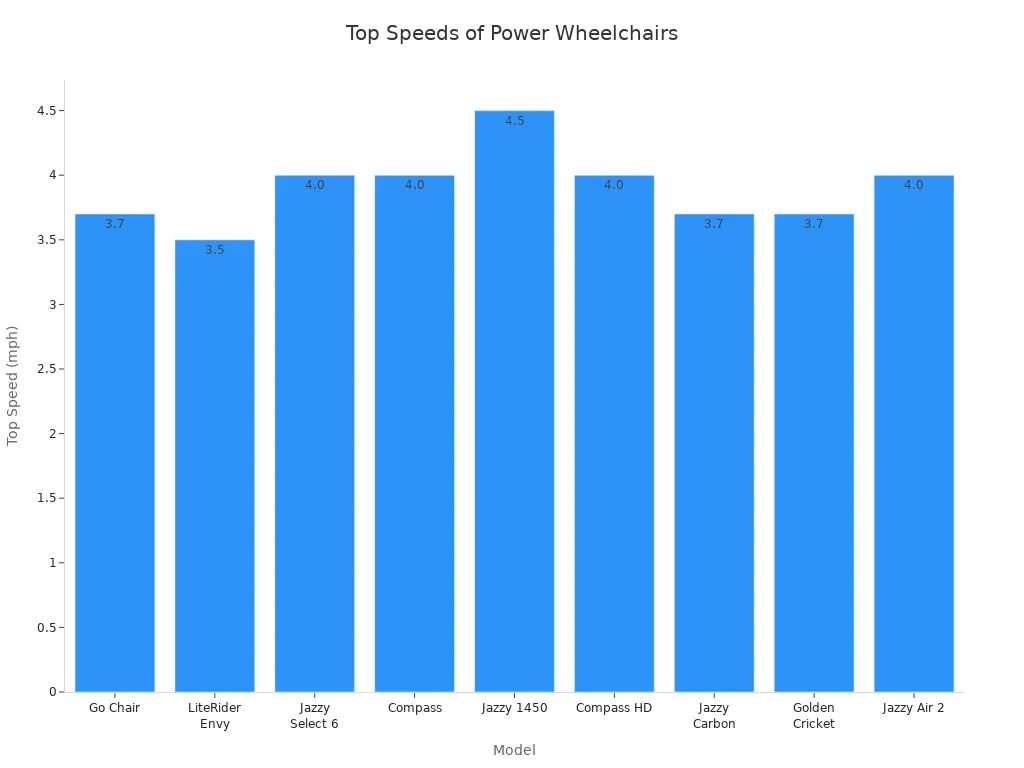
If you want to compare different brands and models, you can see that travel and portable powerchairs usually have top speeds around 3.5 to 4 mph. Full-size and bariatric models often reach 4 to 4.5 mph. Some folding and elevating chairs also stay in this range. Here is a table that shows the :
| Category | Brand | Model | Top Speed (mph) | Weight Capacity (lbs) |
|---|---|---|---|---|
| Travel/Portable Powerchair | Pride Mobility | Go Chair | 3.7 | 300 |
| Travel/Portable Powerchair | Golden Technologies | LiteRider Envy | 3.5 | 300 |
| Full-Size Powerchair | Pride Mobility | Jazzy Select 6 | 4.0 | 300 |
| Full-Size Powerchair | Golden Technologies | Compass | 4.0 | 300 |
| Bariatric Powerchair | Pride Mobility | Jazzy 1450 | 4.5 | 600 |
| Bariatric Powerchair | Golden Technologies | Compass HD | 4.0 | 450 |
| Folding Powerchair | Pride Mobility | Jazzy Carbon | 3.7 | 300 |
| Folding Powerchair | Golden Technologies | Golden Cricket | 3.7 | 300 |
| Elevating Powerchair | Pride Mobility | Jazzy Air 2 | 4.0 | 300 |
You can also see these differences in the chart below:
The SanLi Care Model S300 stands out as a modern, feature-rich power wheelchair. It offers a balance of speed, safety, and smart features. This model fits well within the typical speed range, making it a strong choice for both indoor and outdoor use.
Maximum Speeds
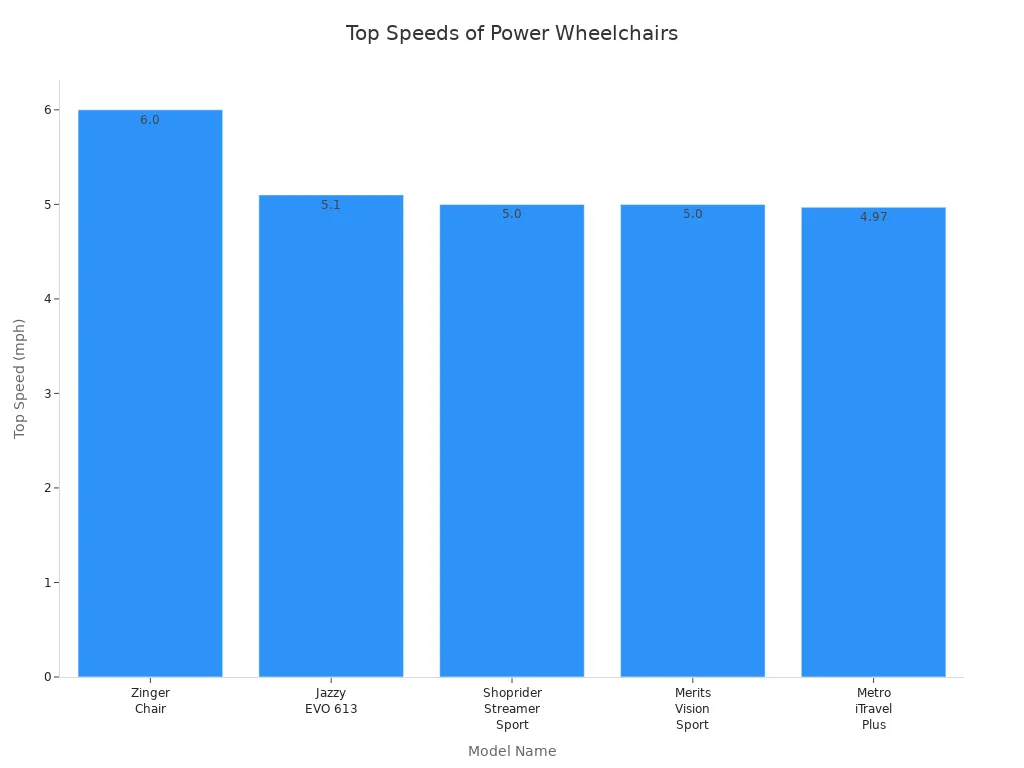
Some power wheelchairs can go faster than the average. The highest speeds for commercial models usually reach up to 6 mph, but a few can go even higher. The ISO standard sets a limit at about 9.3 mph for safety reasons. Most users do not need the fastest chair, but knowing the top speeds helps you choose the right model for your lifestyle.
Here is a table showing some of the :
| Model Name | Top Speed (mph) | Weight (lbs) | Weight Capacity (lbs) | Key Features |
|---|---|---|---|---|
| Zinger Chair (Journey Health) | 6.0 | 47 | 275 | Fastest speed, lightweight, foldable, highly maneuverable |
| Jazzy EVO 613 | 5.1 | 189 | 300 | Agile, lighter than heavy-duty, high-performance motor |
| Shoprider Streamer Sport | 5.0 | 203 | 300 | Stable, durable, comfortable seating |
| Merits Vision Sport | 5.0 | 214 | 300 | Robust, balanced weight and capacity |
| Metro iTravel Plus | 4.97 | 64.8 | 300 | Compact, transportable, intuitive controls |
You can also view these speeds in the chart below:
When you choose a power wheelchair, you should think about how much speed you need for your daily activities. The SanLi Care Model S300 gives you a safe and reliable speed, along with advanced features like incline detection and electromagnetic braking. These features help you stay safe, even at higher speeds.
Comparison to Manual Wheelchairs
Power Wheelchair Speed gives you a big advantage over manual wheelchairs, especially when you travel in your community. Studies show that power wheelchairs move faster than manual ones in outdoor settings. In the community, users in power wheelchairs reach average speeds of about 150 feet per minute, while manual wheelchair users average around 120 feet per minute. This difference means you can keep up with walking friends or cross streets more easily.
| Environment | Device Type | Average Speed (ft/min) | Statistical Significance vs MW | Effect Size (MW vs PW) |
|---|---|---|---|---|
| Community | Power Wheelchair | ~150 | PW significantly faster (p<0.01) | 0.75 (large effect) |
| Community | Manual Wheelchair | ~120 | Reference | N/A |
| Community | Power-Assist (WW) | ~145 | Not significant vs MW or PW | 0.39 (vs MW), -0.36 (vs PW) |
| Home | Power Wheelchair | ~45 | Slower than MW and WW | N/A |
| Home | Manual Wheelchair | ~55 | Faster than PW | N/A |
| Home | Power-Assist (WW) | ~75 | Fastest in home task | N/A |
You can see these differences in the chart below:
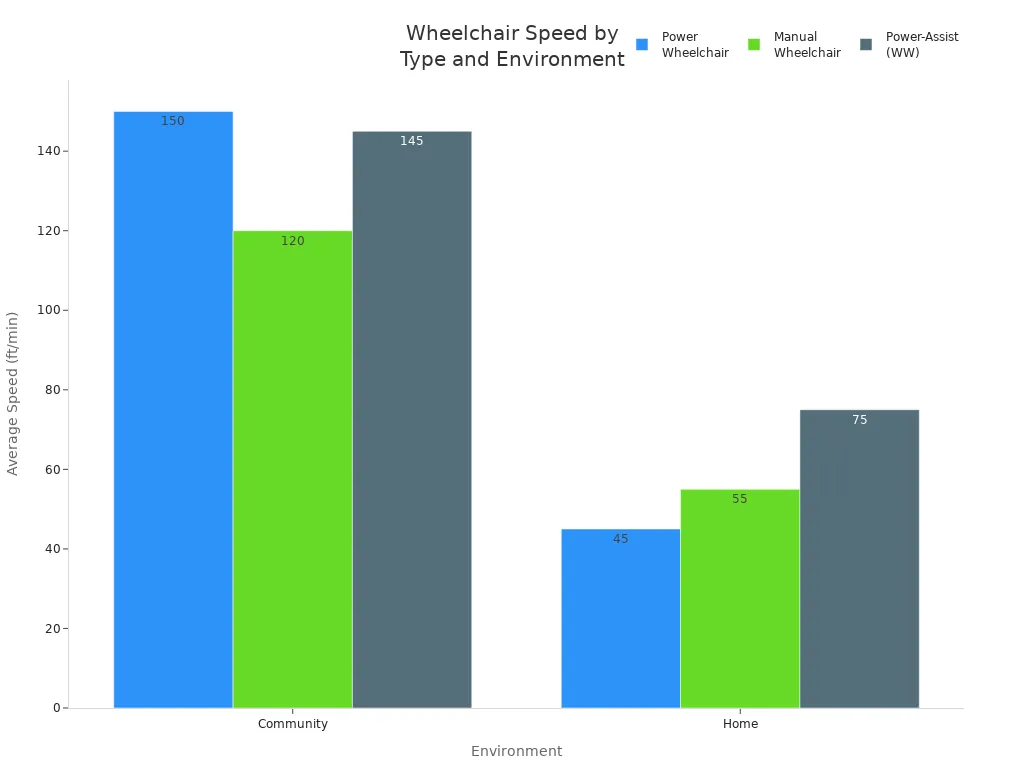
Power-assist devices can help manual wheelchair users go faster, especially indoors. Still, power wheelchairs offer the best speed for outdoor travel. If you want to move quickly and easily in your neighborhood, a power wheelchair like the SanLi Care Model S300 can help you reach your goals.
Tip: Power Wheelchair Speed not only helps you get places faster but also gives you more freedom and confidence in your daily life.
Speed by Wheelchair Type
Power Wheelchair Speed changes based on the type of wheelchair and where you plan to use it. Each type has unique features that help you move safely and comfortably in different environments. You should choose a model that matches your daily needs.
Indoor Models
Indoor power wheelchairs focus on maneuverability and comfort. You often need to turn in tight spaces, like hallways or between furniture. Many indoor models have a . This helps you move easily in apartments, offices, or elevators. The table below shows :
| Wheelchair Type | Average Speed (mph) | Key Indoor Maneuverability Features |
|---|---|---|
| Motorized Wheelchairs | 5 to 8 | Steady speed, designed for comfort and ease of handling |
| Electric Wheelchairs | 4 to 8 | Compact, easy to maneuver, suitable for indoor use |
| Small Electric Wheelchairs | 4 to 6 | Lightweight, portable, but lower speed and battery life |
| Mid-Wheel Drive Models | N/A | Tight turning radius, good stability indoors |
| WHILL Model C2 | N/A | 20-inch turning radius, excellent for tight indoor spaces |
You will find that shorter wheelchairs and mid-wheel drive models improve your turning ability. Brands like Pride Mobility and ComfyGo design chairs for indoor comfort and control. The SanLi Care Model S300 stands out with its 79cm turning radius, making it easy to navigate even the smallest rooms.
Outdoor and All-Terrain
Outdoor and all-terrain power wheelchairs give you more speed and power. These models handle rough surfaces, steep inclines, and uneven paths. You get advanced suspension, larger tires, and higher ground clearance. Outdoor models often reach speeds of 6 mph or more. The table below :
| Feature | Standard Indoor Power Wheelchairs | Outdoor/All-Terrain Power Wheelchairs |
|---|---|---|
| Maximum Speed | Up to 4 mph | 6 mph or more |
| Terrain Capability | Smooth, flat indoor surfaces; tight spaces | Rough, uneven terrains; better stability |
| Battery Life | Smaller batteries; short indoor use | Larger batteries; longer range for outdoor use |
| Suspension & Tires | Standard suspension; smaller wheels | Advanced suspension; larger, durable tires |
| Maneuverability | Tight turning radius | Stable on rough terrain; less tight turning radius |
You can use the SanLi Care Model S300 both indoors and outdoors. Its omni-directional wheels and incline detection system help you stay safe on slopes and over obstacles.
Travel and Portable
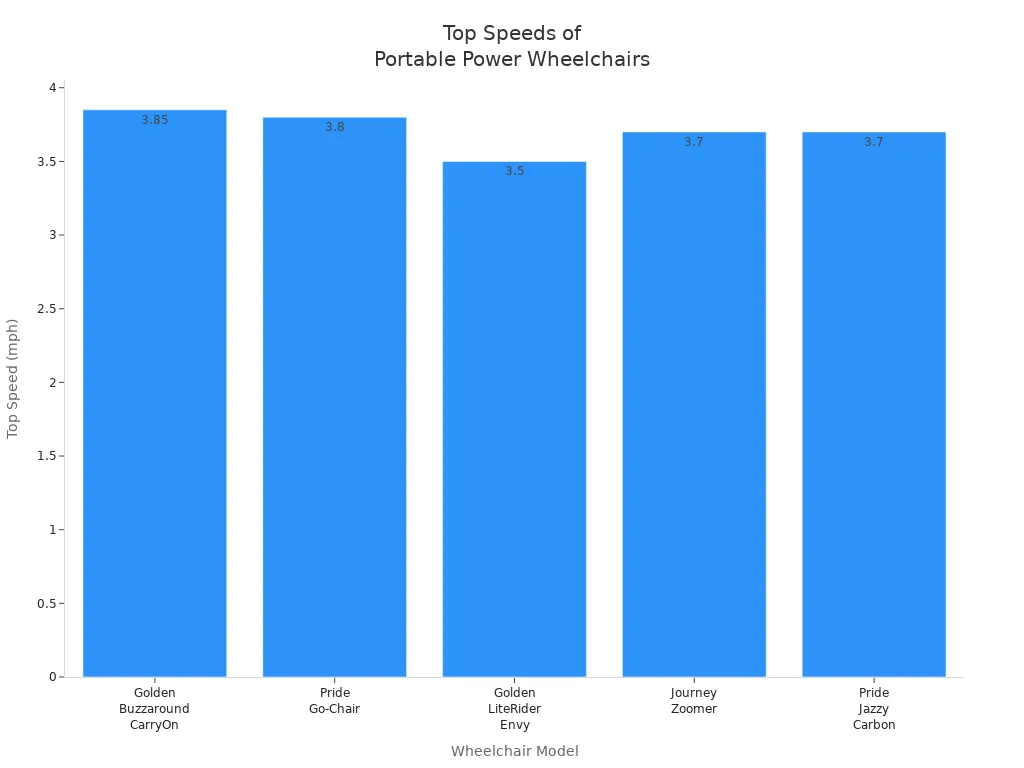
Travel and portable power wheelchairs focus on easy transport and storage. These models fold or disassemble quickly. Most weigh less than 50 pounds for the heaviest part. . This speed keeps you safe in airports, hotels, or busy public places. The chart below compares top speeds for popular portable models:
You will find features like FAA-approved batteries and lightweight frames. The SanLi Care Model S300 offers a foldable frame and easy disassembly, making it a smart choice for travel and daily use.
Tip: When you select a power wheelchair, think about where you will use it most. The right type helps you balance speed, safety, and convenience.
Power Wheelchair Speed Factors
Battery and Motor
The battery and motor are the heart of your power wheelchair. They play a big role in how fast you can go and how far you can travel.
.
Lithium-ion batteries give you more energy and charge quickly.
, help you keep a steady speed, even on hills or rough ground.
Brushless motors last longer and work more efficiently.
helps you get the best speed.
Keeping your wheelchair light by removing extra items also helps you move faster.
Tip: Regular maintenance of your battery and motor keeps your Power Wheelchair Speed at its best.
User Weight
Your weight affects how fast your wheelchair can go. Heavier loads make the motor work harder, which can lower the top speed. You can see this in the table below:
| Power Wheelchair Model | Max User Weight (lbs) | Max Speed (mph) |
|---|---|---|
| Quickie Q700 M | 300 (250 with seat elevator) | 6 (standard), 8 (optional) |
| Hoveround Teknique XHD Heavy Duty | 450 | 4 |
| Aotedor 203 Folding Power Wheelchair | 330 | 3.7 |
. Always check the weight limit for your chair to keep it running safely and smoothly.
Terrain and Surface
The type of ground you travel on changes your Power Wheelchair Speed. Smooth pavement lets you go faster and keeps your ride comfortable. Grass, gravel, or dirt can slow you down and make the ride bumpier.
and can make it harder to control your chair.
, which lowers your speed.
, but you may still notice a drop in speed.
Note: For the best speed, stick to hard, flat surfaces when possible.
Wheel and Frame Design
The design of your wheelchair’s wheels and frame also affects speed and stability.
help you move faster.
A wide wheelbase and low center of gravity keep you stable at higher speeds.
.
Advanced braking systems and anti-tip casters keep you safe when moving quickly.
Aerodynamic frames and smart controls make it easier to manage your speed and direction.
Choosing a wheelchair with these features helps you balance speed, safety, and comfort every day.
Safety and Legal Considerations
Speed Regulations
You need to know the speed rules for power wheelchairs in your area. Many places set limits between to match walking speeds on sidewalks. The Americans with Disabilities Act (ADA) treats electric wheelchairs as pedestrian devices, so you must follow safe speed limits, especially in public spaces. Most modern wheelchairs, like the SanLi Care Model S300, come with . These controls let you slow down indoors or in crowded areas and go a bit faster outdoors. Adjustable speed settings help you stay safe and follow local laws. They also let you match your speed to your environment, which lowers the risk of accidents.
Tip: Always check your local rules before using your wheelchair in new places.
Braking and Stability
Braking systems play a big role in your safety, especially at higher speeds. give you reliable stopping power, even if the power fails. These brakes work well on different surfaces and in all kinds of weather. The SanLi Care Model S300 uses electromagnetic braking and an AI-driven incline detection system. This system can sense when you are on a slope and adjust the brakes or give you a warning. When you go uphill, the brakes keep you from sliding backward. When you go downhill, the brakes slow you down gently to keep you stable. Features like these make sure you stay safe, even when Power Wheelchair Speed increases.
Safe Operation Tips
You can stay safe by following some simple tips:
Use to stop and lock your wheelchair.
Always steer straight up or down slopes, not across, to avoid tipping.
Watch out for obstacles like stones, cracks, and curbs.
Charge your battery fully before each trip.
Carry a cell phone in case you need help.
Get training from a professional to learn safe driving and transfers.
Check your wheelchair often for loose bolts, tire wear, and battery health.
Use seatbelts or harnesses to stay secure.
Follow traffic rules and use lights or reflectors to be seen.
Avoid wet or slippery surfaces and ask for help on steep slopes.
Note: Personalized training and regular maintenance help you use your wheelchair safely every day.
Measuring and Optimizing Speed
How to Measure Speed
You can measure your wheelchair’s speed in several ways. For the most accurate results in a lab, track your movement and show how fast you go. These systems help researchers study joint movement and how you push your chair. In real life, you can use small devices called attached to your wheelchair wheels. IMUs measure how fast your wheels turn and give you reliable speed data. They are lightweight and easy to use every day. Some advanced wheelchairs also use , which measure both speed and the force you use to move. These tools work well both in the lab and outside, giving you a clear picture of your Power Wheelchair Speed.
Tip: Many modern power wheelchairs, like the SanLi Care Model S300, display your speed on a digital screen, making it easy to check as you ride.
Maintenance Tips
Regular care keeps your wheelchair running at its best speed. You should . The table below shows how each task helps you maintain top performance:
| Maintenance Task | What to Do | Why It Matters for Speed |
|---|---|---|
| Tire Pressure Check | Press tire weekly; inflate if it compresses over 5mm | Prevents slippage and keeps speed steady |
| Tire Wear Inspection | Look for worn tread monthly; replace if needed | Improves grip and safe maneuvering |
| Battery Care | Charge fully, avoid draining completely, use right charger | Keeps speed reliable and battery healthy |
| Professional Maintenance | Have experts check and install batteries | Prevents speed drops and sudden breakdowns |
Note: Neglecting these tasks can lead to slower speeds, less control, and more wear on your wheelchair.
Upgrades and Modifications
You can boost your wheelchair’s speed and performance with smart upgrades. Swapping to high-capacity batteries or more efficient motors can help you travel faster and farther. Upgrading to lightweight wheels or frames reduces the effort needed to move. Some users add IMUs or digital speedometers for better speed tracking. Always talk to a professional before making changes to make sure your upgrades are safe and fit your wheelchair model.
Upgrade to lithium-ion batteries for longer rides.
Choose lightweight, durable wheels for smoother movement.
Add a digital display or speed sensor for real-time feedback.
Remember: Always follow manufacturer guidelines and local laws when upgrading your wheelchair.
You can expect most power wheelchairs to travel around , but speed depends on many factors. The table below shows what affects your speed and range:
| Factor | Impact on Speed and Range |
|---|---|
| User Weight | Heavier users may go slower |
| Terrain | Rough ground lowers speed |
| Battery Health | Good batteries keep speed steady |
| Maintenance | Regular checks help you move faster |
Always follow safety rules and local laws. Talk with a professional before choosing or changing your wheelchair. Models like the SanLi Care S300 offer advanced features for many needs. Power Wheelchair Speed helps you stay active and independent.
FAQ
How fast can a power wheelchair go?
Most power wheelchairs travel between 3 and 8 mph. Some advanced models reach up to 10 mph. You should always check your chair’s manual for the exact speed.
Can you adjust the speed on a power wheelchair?
Yes, you can adjust the speed using the control panel or joystick. Many chairs, like the SanLi Care Model S300, let you choose different speed settings for indoor or outdoor use.
Is it safe to use a power wheelchair at top speed?
You should use top speed only in safe, open areas. Lower your speed indoors or in crowded places. Always follow safety tips and local rules to protect yourself and others.
What affects how fast my wheelchair goes?
| Factor | Impact on Speed |
|---|---|
| Battery Level | Low battery slows you down |
| User Weight | Heavier weight reduces speed |
| Terrain | Rough ground makes you slower |
Do power wheelchairs need special maintenance for speed?