
for easy travel. Many people have special problems when flying. They must handle battery rules, get through airport security, and keep their device safe. Getting ready ahead of time helps a lot.
Here is a short checklist to help you begin:
about your mobility device.
Collect important papers and battery details.
Charge your device and pack extra keys.
Get to the airport early for check-in and security.
Key Takeaways
Tell your airline about your power wheelchair scooter and battery at least 48 hours before your flight.
Pick a like the SanLi Care Model S300. This helps you follow airline size and weight rules.
Collect all important papers, like manuals, battery info, and doctor notes. Keep these with you while you travel.
Get your battery ready by knowing its type. Take out lithium-ion batteries if needed and put them in your cabin bag.
Get to the airport early. This gives you more time for check-in, security, and help with your mobility device.
Use priority boarding. Talk clearly with airline staff about your scooter and battery to make things go smoothly.
Check your scooter right after you land. If it is damaged, tell airline staff and show them photos and papers.
Learn your rights under the Air Carrier Access Act. Ask for help if you have any problems during your trip.
Quick Checklist
Before You Book
Check Airline Policies Airlines have different rules for taking a mobility scooter. Look at the airline’s website or call them. Ask about battery types, size rules, and how to tell them about your device.
Notify the Airline Early . Tell them about your mobility scooter. Give them the . The is a foldable device that most airlines allow.
Gather Documentation . Take photos of your mobility scooter before you leave. If your doctor gave you the device, bring a medical letter.
Confirm Cargo Hold Size Ask if your mobility scooter can stand up in the cargo hold. If it cannot, think about using a smaller model like the .
Plan for Assistance Ask for help at the airport if you need it. You can get help with check-in, security, or getting to your gate.
Purchase Travel Insurance Pick a plan that covers damage to your mobility equipment and trip problems.
Tip: Always carry a printed sheet with your scooter’s details and battery info. This helps airline workers take care of your device.
At the Airport
Arrive Early . This gives you time for check-in and paperwork for your mobility scooter.
Check In Your Device Go to the special help counter. Show your papers and explain how to use your mobility scooter. If you have the SanLi Care Model S300, say it folds and is airline approved.
Prepare the Battery Take out or secure the battery if needed. Put it in your carry-on if the airline says so. Make sure the battery follows FAA rules.
Request Gate Check Ask if you can use your mobility scooter to the gate. If not, ask for an aisle chair or someone to help you.
Communicate Clearly Use words like “lithium-ion battery” and “FAA approved” when talking to staff. Give them your printed info sheet.
Note: If you have trouble, ask for the airline’s Complaint Resolution Official (CRO) to help you.
After Landing
Retrieve and Inspect Your Device Get your mobility scooter at the gate or baggage claim. Check it for damage right away. Take photos if you see any problems.
Report Problems Immediately Tell airline staff if there is damage. Ask for a written damage claim and talk to the accessibility team.
Know Your Rights You have rights under the Air Carrier Access Act and the Americans with Disabilities Act. If you need help, .
Stay Organized Keep all your papers, photos, and receipts. These will help if you need to make a claim or ask for help.
Tip: Having a backup plan and knowing your rights makes travel with a mobility scooter much easier.
Airline Policies
Power Wheelchairs & Scooters
You have to follow airline rules when you fly with a power wheelchair or a mobility scooter. Every airline has its own rules, but most are almost the same. You need to . Give them facts about your power wheelchair or mobility scooter, like its size, weight, and battery type. This helps the airline get ready for your device and keeps it safe during the flight.
Here is an :
Call your airline at least 48 hours before your trip.
Tell them your scooter’s size, weight, and battery type.
Ask if you can use your mobility scooter at the gate and if you can get help getting on the plane.
Go to the airline counter when you get to the airport and tell the staff about your device.
Bring papers like your user manual, battery certificates, and battery labels.
Put your name, contact info, and where you are going on your scooter.
Most airlines let you use your mobility scooter up to the plane door. Staff will check it at the gate and give it back to you when you land.
Tip: Always keep your papers close. This makes check-in and security faster.
:
| Airline | Notification Requirement | Battery and Scooter Details Required | Additional Notes |
|---|---|---|---|
| American Airlines | Tell them at least 48 hours before you fly | Type of battery, removable battery, secure connection or cabin carry | You must give detailed battery info |
| British Airways | Tell them 48 hours before your flight | Scooter size/weight limits, non-spillable or approved lithium batteries | Give scooter details |
| Qantas | Register your mobility aid before you travel | Size, weight, battery type, packaging by safety rules | Bring instructions for taking apart at check-in |
| Lufthansa | Get approval from Medical Services before you fly | Detailed info about scooter and battery, packaging by world rules | Tell them early to set up transport |
The matches these rules. It folds, is light, and has clear battery papers. You can give all the needed info to the airline easily.
Battery Rules
Airlines have strict rules for batteries. The FAA and TSA have rules to keep everyone safe on the plane. You must know your battery type and how many watt-hours it has. Most airlines let you bring lithium-ion batteries up to 300 watt-hours each. You can bring up to two extra batteries if each one is under this limit.
If your power wheelchair or mobility scooter uses a sealed lead acid (SLA) battery, you do not have to take it out. The airline will put it in the plane as it is.
If your device uses a lithium-ion battery, you usually have to take it out and bring it in the cabin. The battery must be 300 watt-hours or less.
Always bring battery info sheets and FAA approval letters. Show these to TSA or airline workers if they ask.
Put a label on your battery and keep it in a safe case so it does not short out.
Note: The SanLi Care Model S300 has a battery that meets FAA and TSA rules for flying.
Here are some important battery rules:
SLA batteries: can stay in the device
Always tell the airline what kind of battery you have
Size & Weight Limits
Airlines have rules for the size and weight of power wheelchairs and mobility scooters. Most airlines take devices that weigh less than 120 lbs. Foldable and light models, like the SanLi Care Model S300, make flying easier. You should measure your device’s wheelbase and check the plane’s weight rules.
Here are some :
Carbon Fiber Cricket: 58 lbs
Reyhee Roamer: 65 lbs
Whill Fi: 58 lbs
Whill Ci2 Smart Chair: 112 lbs
Pathway GEO Cruiser DX: 50 lbs
Journey Zoomer: 51 lbs
Transformer Ultra-Portable Scooter: 53 lbs
Golden Tech Stride Foldable Power Wheelchair: 52.6 lbs
Most devices are under airline weight limits. The SanLi Care Model S300 is made to fold up and fits these rules.
Some planes have different weight limits for the wheelbase. :
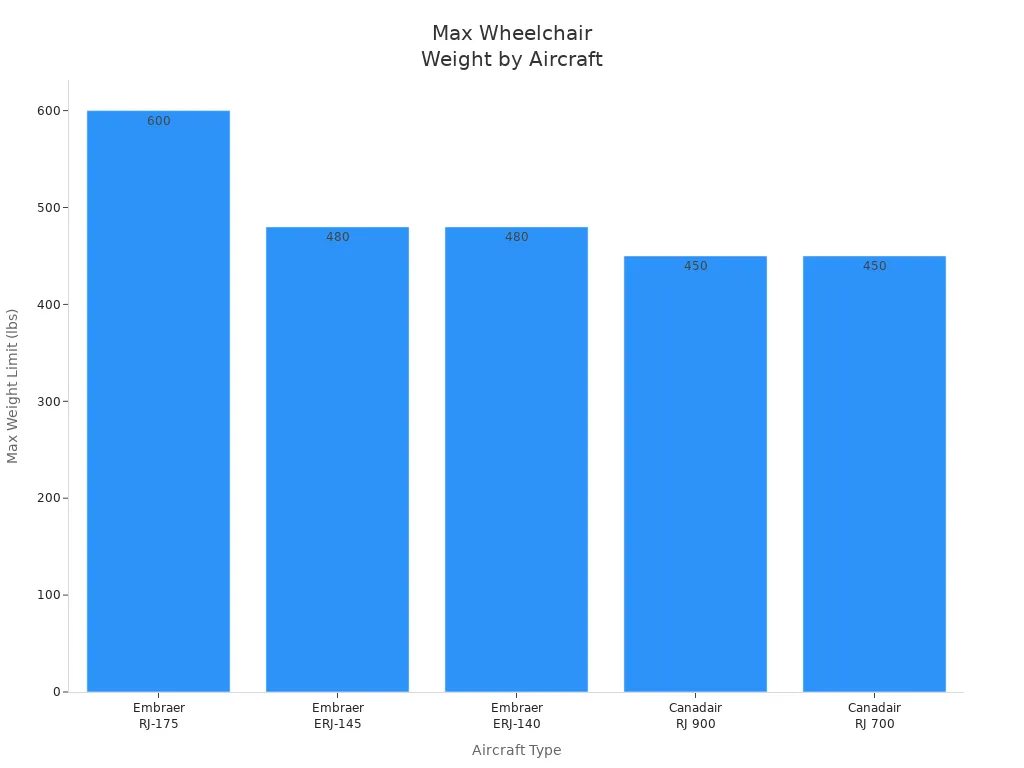
You should always check your airline’s rules before you fly. Some airlines let you store your device in the cabin if there is space. If not, workers will put your device in the cargo hold. You can ask for a gate check tag so you can use your power wheelchair or mobility scooter up to the plane.
Tip: Pick a foldable, light device for the best trip. The is a good example of a travel-friendly power wheelchair scooter.
Pre-Travel Planning
Research Airlines
Begin by checking different airlines before you travel. Every airline has its own rules for power wheelchairs and mobility scooters. You need to know the size, weight, and battery rules for your device. Some airlines have very strict limits. Others are more flexible. Try to find airlines that make it easier to travel with power wheelchairs.
When you look up airlines, remember these steps:
that fits airline rules.
Visit the airline’s website to read about size, weight, and battery rules.
Make sure your , especially if it is lithium-ion.
Bring the FAA battery paper to show airline workers.
. Look at the battery, tires, and brakes.
Tip: A like the SanLi Care Model S300 usually fits airline rules and makes travel easier.
Notify in Advance
Always tell your airline about your power wheelchair or scooter before you fly. Telling them early helps them get ready for you and stops delays. Most airlines want at least 48 hours’ notice. Some want you to contact them even sooner.
Here is a table to show what :
| Airline | Advance Notice Recommendation |
|---|---|
| American Airlines | Contact Special Assistance well in advance |
| Delta Air | Minimum 48 hours advance notice; earlier is better |
| United Airlines | 48 hours advance notice required |
| Southwest Airlines | Not required, but recommended; for groups, notify 24 hours ahead |
| Alaska Airlines | Requests advance notice, no specific timeframe |
Call the airline’s special help team. Tell them your device’s make, model, and battery type. Ask how they will handle, store, and return your device during your trip. Talking to them early helps you avoid problems at the last minute.
Gather Documents
Before you go, collect all the papers you might need. These papers help you get through check-in and security faster. They also help if something happens to your power wheelchair.
Be sure you have:
The for your scooter.
The battery sheet and FAA approval letters, if you have them.
A saying you need the device.
Written proof from the airline about your device and battery.
Clear photos of your scooter in case it gets lost or damaged.
Contact info for service or support.
Note: Keep all your papers in a folder or on your phone. Show them to airline workers if they ask. This makes your trip much easier.
Planning ahead helps you feel ready and safe when you travel with power wheelchairs. You can enjoy your trip because you are prepared for every step.
Battery Prep
Battery Types
You should know your battery type before you fly. Airlines let you bring different batteries, but each has special rules. Here is a :
| Battery Type | Characteristics & Safety | Air Travel Approval & Notes |
|---|---|---|
| Sealed Lead Acid (SLA) | Non-spillable, sealed, maintenance-free | Usually allowed on planes; may need terminals taped or disconnected |
| AGM | Sealed, non-spillable, vibration resistant | Treated like SLA; easy to transport |
| Gel Cell | Sealed, vibration resistant | Similar to SLA and AGM; check airline rules |
| Dry Cell | Non-spillable, sealed | Allowed without removal; safer than wet cell |
| Spillable Wet Cell | Liquid electrolyte, traditional | Must be removed and packed separately; less common |
| Lithium-ion (Li-ion) | Lightweight, high energy, rechargeable | Airline-approved with watt-hour limits; must be carried in cabin and protected |
Most new scooters, like the SanLi Care Model S300, use . These batteries are light and last longer than others. Airlines let you bring them if they meet the watt-hour limit. Always look at your battery label for the type and watt-hour number.
Packing Batteries
. Each battery type needs special steps:
Sealed lead acid, AGM, gel cell, and dry cell batteries can stay in your scooter. You might need to tape or cover the terminals to stop short circuits.
Lithium-ion batteries often need to be taken out for flights. Carry them in your cabin bag. Cover the terminals with tape or use a battery case. Some airlines want you to use a fireproof or special battery bag.
Spillable wet cell batteries must be removed and packed in a leak-proof case. Cover the terminals and put a label on the battery.
Always label your battery with its type, voltage, and watt-hour number.
Use a battery isolation switch or quick-release box if your scooter has one. This makes it easier to disconnect.
Tip: Tell the airline about your battery type before you fly. Being honest and clear helps staff follow the right rules.
Safety Tips
You can keep your battery safe by doing these things:
. Do not bring damaged batteries on the plane.
Carry spare batteries only in your carry-on bag. Never put them in checked luggage.
Stop short circuits by using the original box, taping the terminals, or putting batteries in a safe case.
Keep spare batteries close to you during the flight. This lets you watch for any problems.
Turn off your scooter and battery during the flight.
Follow airline watt-hour limits. Most airlines let you bring lithium-ion batteries up to 300 Wh for wheelchairs.
Label your battery clearly. Write the type, voltage, and watt-hour number.
If you have questions, ask airline staff for help. They know the newest safety rules.
Note: Airlines and companies change safety rules often. Always check for new rules before you travel.
Accessibility at Airports
Traveling with a power wheelchair scooter is easier if you know what will happen. Airports must follow accessibility laws to help you move from arrival to boarding. You can ask for special assistance to make your trip less stressful.
Check-In
for check-in. Most airports have special help from the curb or entrance. , or you can ask for help at the information desk. Tell staff you need help with your power wheelchair scooter. They will put a tag on your device and ask about its weight, size, and battery type. You may need to show your battery papers and owner’s manual.
Here is a table of :
| Service Type | Description | Traveler Instructions |
|---|---|---|
| Airport Wheelchair | Staff help you from the curb, through check-in, security, and to the gate. | Ask for special help 48 hours before your flight. |
| Personal Device Travel | Staff help with manual and battery-powered scooters. | Give details about your device and bring your papers. |
| Boarding Options | You can board early or in a special group if you need help. | Tell staff how you want to board the plane. |
You can ask for help with your bags, papers, or moving around the airport. Keep your documents ready at check-in. If you did not ask for help before, you can still ask at the counter.
Security
When you get to security, you might wonder what will happen at tsa. You can ride your scooter to the checkpoint. TSA officers will check your scooter and battery. Tell them your and follows airline rules. Sometimes, you may need to take out the battery, but often you can leave it in. If you can walk, you may go through the metal detector while staff check your scooter. If you cannot walk, TSA will give you a wheelchair and help you.
Here is what to expect at tsa:
Staff may wipe your scooter to check for safety.
You may need to take off covers or extra parts.
Keep your battery papers close by.
After the check, put your battery back and go to your gate.
Tip: Get to security early. This gives you more time for checks and help.
Gate Check
At the gate, you can ask for special help again. Airline staff will check what you need and help you get your scooter ready. Most airlines let you ride your scooter to the gate. Fold and secure your scooter, like the , so staff can load it easily. Take out the battery and carry it with you if it is lithium-ion.
Special help at the gate includes:
You can board first if you need help moving.
Staff can help you move to an aisle chair if needed.
Staff will tag your scooter to keep it safe.
If you have a problem, ask for a .
After you land, staff will bring your scooter to the gate or baggage claim. Check your device for damage before you leave the airport.
Note: Many airports have barrier-free paths, accessible bathrooms, and trained staff. Always ask for help if you need it.
Onboard & Arrival
Boarding
When you get ready to board, you will notice that airlines have special steps for travelers with power wheelchair scooters. You should . . You must tell the airline in advance, especially if your device uses a lithium-ion battery.
At the gate, you usually transfer to an aisle chair. This chair helps you get to your seat on the plane.
Staff will tag your scooter and take it to the cargo hold. Make sure they keep your device upright and do not lay it on its side.
If you cannot walk, TSA will not make you leave your scooter. They may inspect or swab your device while you stay seated.
If your scooter uses a lithium-ion battery, you often need to remove it and carry it with you in the cabin. Sealed lead-acid batteries can usually stay in the device.
Always check that your scooter fits upright in the cargo hold. Ask staff if you are not sure.
Tip: Speak clearly with airline and airport staff. Give them your scooter’s details and battery information. This helps them handle your device safely.
In-Flight
During the flight, you will not have your power wheelchair scooter with you. The airline stores it in the cargo hold. You should keep your battery (if required), keys, and any important parts in your carry-on bag. If you use a removable battery, place it under your seat or in the overhead bin as directed by the crew.
Keep your device’s manual and battery documents with you.
If you need help moving around the cabin, ask a flight attendant for an aisle chair.
Stay calm and comfortable. Let the crew know if you need anything during the flight.
Note: You can use your phone or tablet to check on your device if it has smart features, like the SanLi Care Model S300.
Device Retrieval
After landing, you want to get your back quickly and safely. Follow these steps to make the process smooth:
.
Wait at the aircraft door or go to the baggage claim area, depending on the airport’s rules.
When you get your scooter, .
If you see damage, report it to the airline’s customer service desk immediately.
If your scooter was disassembled, use your toolkit to put it back together.
You may need to wait a few minutes for your device, as times can vary by airport and airline. Stay patient and keep your documents ready.
Tip: Always inspect your scooter before leaving the airport. Quick action helps you solve problems faster and keeps your travel stress-free.
Handling Issues
Damage
You may worry about your getting damaged during air travel. Airlines sometimes mishandle these devices. In 2023, the U.S. Department of Transportation reported a mishandling rate of for power wheelchairs and scooters. This means that out of every 100 devices, about one or two were delayed, damaged, or destroyed.
Here is a table showing how often airlines mishandled power wheelchair scooters in 2023:
| Airline | Mishandling Rate (2023) | Number Mishandled | Number Carried |
|---|---|---|---|
| Allegiant Airlines | 0.06% | 9 | 14,314 |
| Delta Air Lines | 0.68% | 890 | 130,887 |
| United Airlines | 1.20% | 1,176 | 98,287 |
| Hawaiian Airlines | 1.51% | 108 | 7,160 |
| Southwest Airlines | 1.65% | 2,206 | 133,679 |
| JetBlue Airways | 1.67% | 334 | 20,004 |
| American Airlines | 1.83% | 1,730 | 94,436 |
| Frontier Airlines | 1.88% | 350 | 18,629 |
| Alaska Airlines | 1.92% | 388 | 20,170 |
| Spirit Airlines | 5.88% | 411 | 6,995 |

You can see that some airlines handle devices better than others. Always check your scooter for damage as soon as you get it back. Take photos or videos if you notice any problems. This helps you prove what happened.
Tip: Act quickly if you find damage. Report it before you leave the airport.
Lost Devices
Sometimes, airlines lose power wheelchair scooters. If this happens, you need to stay calm and take action right away. Here are steps you should follow:
Go to the airline’s baggage service office as soon as you notice your device is missing.
Give staff your claim tag and describe your scooter, including the make and model.
Ask for a loaner wheelchair or scooter while the airline looks for your device.
Write down the names of airline staff who help you and keep all paperwork.
Check with the airline often until they return your scooter.
Note: Airlines must help you if they lose your mobility device. The protects your rights.
Filing Claims
If your power wheelchair scooter gets damaged or lost, you have the right to . Follow these steps to make sure the airline handles your case:
Report the problem at the airport baggage office or online as soon as possible.
Take clear photos or videos of the damage, showing the date and time.
Ask to speak with the airline’s for extra help.
Request a loaner device if you need one while yours is being repaired or replaced.
Choose your own repair shop or vendor if you prefer. The airline must work with your choice or provide one.
Keep all receipts, paperwork, and communication with the airline.
If the airline does not fix the problem, file a complaint with the U.S. Department of Transportation.
Remember, airlines must pay for repairs or replacement up to the original price of your scooter.
Tip: Filing your claim quickly helps you get results faster. Always know your rights and ask for help if you need it.
Traveling with Mobility Scooters
Choosing the Right Scooter
When you plan to fly, picking the right mobility scooter makes your journey much easier. You want a scooter that fits airline rules and keeps you comfortable during your trip. Here are some important things to look for:
Check Airline Rules Early . Ask about their rules for mobility scooters and batteries. Each airline has its own policies, so you need to know what they allow.
Measure Your Scooter Use a tape measure to check the length, width, and height of your scooter. Make sure it fits within the airline’s size limits for cargo or cabin storage.
Look at your scooter’s battery. Most airlines accept lithium-ion batteries if they are under 300 watt-hours. Always check the label and bring battery documents.
Folding and Portability Choose a scooter that folds or disassembles easily. This helps you get through airport security and makes storage on the plane simple.
Weight Capacity and Comfort Pick a scooter that supports your weight and feels comfortable for long periods. Lightweight models are easier to handle at airports.
Prepare for Disassembly If your scooter comes apart, pack the pieces safely. Use bubble wrap or soft bags to protect each part.
Tip: Always charge your mobility scooter before you leave for the airport. Bring extra keys and a charger in your carry-on bag.
Many travelers choose models like the . These scooters fold quickly, use , and have strong weight limits. You can find models that weigh as little as 51 pounds, making them easy to lift and store.
SanLi Care S300 Features
The SanLi Care Model S300 stands out as a top choice for air travel. You get a 3-in-1 device that works as an electric wheelchair, a smart scooter, and an e-push assist chair. This scooter gives you freedom and flexibility on your journey.
Foldable and Lightweight The S300 folds in just four steps. You can lift it into a car trunk or store it in small spaces. Its lightweight frame makes airport navigation easy.
Airline-Approved Battery The S300 uses a lithium-ion battery that meets FAA and TSA rules. You can remove the battery and carry it in your cabin bag if needed.
Smart Technology Use Bluetooth and a mobile app to control your scooter, check battery health, and lock or unlock the device. This feature helps you stay in control during your trip.
All-Terrain Capability The S300 handles slopes, gravel, and small obstacles. Its omni-wheels give you a tight turning radius, perfect for crowded airports or narrow aisles.
Comfort and Safety Adjustable seat height and back support keep you comfortable. The scooter has incline detection, overspeed braking, and electromagnetic brakes for safety.
Easy Disassembly You can take the S300 apart quickly. This makes it simple to pack and protects the scooter during air travel.
Extra Features The S300 includes a 4″ display, USB charging ports, tail lamps, and optional GPS. You get everything you need for a smooth travel experience.
Note: The SanLi Care S300 comes with a one-year warranty and 24/7 support. You can travel with confidence, knowing help is always available.
Travel Tips
You can make your trip with a mobility scooter smooth by following these travel tips:
Contact Your Airline Early . Give them your scooter’s make, model, and battery type.
Gather Documents Bring your owner’s manual, battery papers, and a medical letter if needed. Keep these in a folder or on your phone.
Take Photos Photograph your scooter before you leave. This helps if you need to report damage later.
Label Your Scooter Attach a luggage tag with your name and contact info. This makes it easier to find your scooter if it gets misplaced.
Prepare for Security Know your battery type and be ready to remove it if asked. Keep spare batteries in your carry-on bag.
Arrive Early Get to the airport with plenty of time for check-in and security. Allow extra time for parking and shuttle services.
Most airlines let you board early. This gives you more time to get settled and explain your needs to the crew.
Inform Staff About Layovers Tell airline staff if you have connecting flights. This helps them transfer your scooter smoothly.
Pack Essentials Carry a basic tool kit, charger, and spare parts. Bring a durable cover to protect your scooter during loading.
Get Travel Insurance Choose a plan that covers your mobility scooter. Insurance protects you from loss or damage during your trip.
🧳 Tip: Always clarify where you will pick up your scooter after landing. Ask if it will be at the gate or baggage claim.
Traveling with mobility scooters becomes much easier when you plan ahead. Pick a scooter that fits airline rules, prepare your documents, and communicate with airline staff. You can enjoy your trip and stay independent wherever you go.
Airline Resources
Major Airlines
Many big airlines help people who travel with a . They give clear steps, special help, and friendly workers. Here are some good airlines for air travel:
American Airlines lets you board early and gives you tags for gate delivery. They help you get battery approval. You can call them before your trip to ask for help.
Delta Air Lines tells you how to handle batteries and store your device. You can ask for help at every part of your trip.
JetBlue Airways helps you from the ticket counter to the plane. You can ask for wheelchair help when you book and get help with connecting flights.
Alaska Airlines has a self-service wheelchair program at some airports. Your friend or family member can help you, which makes things easier.
Spirit Airlines and Frontier Airlines have special rules for storing mobility devices and batteries. You must get to the airport early and give them your device details.
Tip: Always tell your airline before you fly. This helps the staff get ready for you and makes your trip smoother.
International Flights
If you fly to another country with a power wheelchair scooter, you must follow different rules. Airlines may have their own rules for batteries, device size, and papers. The table below shows some important differences:
| Policy Aspect | Key Differences and Details |
|---|---|
| Battery Types | Sealed Lead-Acid (SLA) batteries are heavier and often go in cargo. Lithium-Ion batteries are lighter and usually must be taken out and carried in the cabin. |
| Battery Limits | FAA lets you bring lithium batteries up to 300 Wh each. Spare batteries in carry-ons can be up to 160 Wh. You can bring two spares at most. |
| Notification | You must tell airlines early, especially if you have lithium-ion batteries. |
| Documentation | Bring papers from the maker, FAA approval letters, and battery info sheets for checks. |
| Airline Variations | Big airlines have their own rules. Budget airlines may have stricter size and weight limits. |
| General Policy | Most airlines let you check your power wheelchair or scooter for free at the gate or ticket counter. |
Always look at your airline’s website before you buy tickets. Some airlines want more papers or have different rules for international flights.
Helpful Links
You can make your trip easier by using online tools and following expert advice. Here are some ways to get ready:
Look up each airline’s wheelchair rules before you buy tickets.
Call airlines to ask about battery and paperwork needs.
Join online groups like on Facebook to learn from other travelers.
Use forums to get tips and help from people who have traveled before.
Here are some easy steps to follow:
Talk clearly with airline staff about your device.
Use a cover to keep your device safe.
.
Check your scooter after you land and tell staff if it is damaged.
Put your scooter back together carefully, using tools if you need them.
Pick a foldable or small scooter for easier trips.
Pack extra parts, manuals, and money for repairs.
Note: and bring a card with translations if you travel to another country. This helps you explain your device and battery in another language.
You can trust advice from mobility experts and online groups. These places give support, tips, and real stories to help you travel with confidence.
Final Tips
Stay Organized
You can make flying easier by staying organized. Make a checklist before your trip. . Make sure it . Charge your batteries all the way. Put important papers like your owner’s manual, battery sheets, and doctor’s letters in a folder you can grab fast.
Get to the airport early. Give yourself at least one more hour than normal. This gives you time to check in and ask for help. Talk to staff about your device. Pick gate-checking so you can use your scooter until you board. Keep your things ready for security. You might get extra checks, like a pat-down or a wipe test on your scooter. Ask for help if you need it.
After you land, check your scooter right away. Take pictures if you see damage. Put back any parts you took off for the flight. Learn how to use your wheelchair by hand in case of trouble. Use online groups to get more travel tips. Make sure your destination has ramps and bathrooms you can use.
Tip: Planning well helps you feel less stressed and makes your trip better.
Advocate for Yourself
You have rights when you fly with a . Speak up for what you need at every step. . Learn the airline’s rules, especially about batteries and how they handle your scooter. Explain to staff how to use and care for your scooter.
Put your name and instructions on your wheelchair. Ask for early boarding and help with unloading. Get your scooter ready for travel and bring tools for small fixes. Take photos of your scooter before and after the flight. If you see damage, tell staff right away.
Keep all your papers and know your rights as a traveler. Ask for help with unloading and putting your scooter back together. If you have problems, use airline forms or talk to disability groups. Speaking up helps make travel better for everyone.
Remember: You deserve safe, fair, and easy travel.
Support Networks
You do not have to travel alone. Many support groups can help you with special needs. Join online groups to learn from others who use power wheelchair scooters. These groups share tips about airports, hotels, and travel.
Contact the airline’s help team before your trip. They can answer questions and set up help for you. Ask friends or family to help you at the airport if you need it. Make sure your hotel or cruise room fits your needs. Ask about ramps, wide doors, and bathrooms you can use.
A good support network gives you confidence. You can fix problems faster and enjoy your trip more when you know where to get help.
Note: Meeting others makes your trip safer and more fun.
You can fly with your power wheelchair scooter when you prepare well. Check airline rules, gather your documents, and talk to staff early. Stay organized and know your rights. You will travel with less stress and more freedom.
Need more help? Visit or .
Share your own travel tips or stories in the comments below! Your advice helps others travel with confidence. ✈️🦽
FAQ
Can you take a power wheelchair scooter on any airline?
Yes, you can. Most airlines allow power wheelchair scooters. You must follow their rules for size, weight, and batteries. Always check with your airline before you book your ticket.
What documents should you bring for your scooter?
Bring your owner’s manual, battery information, and a doctor’s letter if you have one. Keep photos of your scooter and battery labels. These help airline staff handle your device safely.
How do you prepare your battery for a flight?
Check your battery type and watt-hour rating. Remove lithium-ion batteries if required. Place them in your carry-on bag. Cover the terminals with tape or use a battery case. Show battery documents at check-in.
Can you use your scooter inside the airport?
Yes, you can use your scooter to move around the airport. Most airlines let you ride it to the gate. Staff will tag your scooter and help you board the plane.
What should you do if your scooter gets damaged during travel?
Report damage to airline staff right away. Take photos of the damage. Ask for a written claim form. Keep all paperwork. Airlines must repair or replace your scooter if they damage it.
Is the SanLi Care Model S300 approved for air travel?
Yes, the meets airline rules for size, weight, and battery type. Its foldable design and removable battery make it easy to travel with on most airlines.
How early should you arrive at the airport?
Arrive at least two to three hours before your flight. This gives you enough time for check-in, security, and any extra help you may need with your scooter.
Can you bring spare batteries for your scooter?