
, as shown in the chart below.
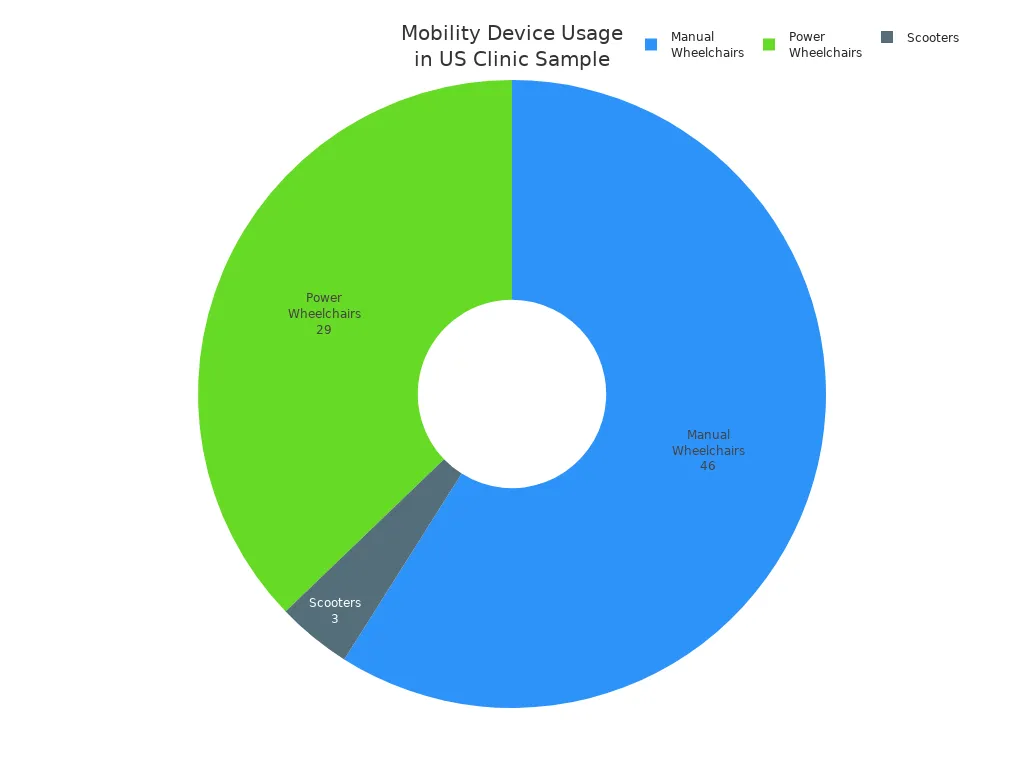
You should think about how easy it is to move, use, pay for, carry, and fix each device. You also need to think about how each device matches your physical ability. Your comfort, freedom, and happiness with a mobility aid depend on these important things.
Key Takeaways
are easy to move with joystick controls. They have smart features. They help people with low strength stay independent.
Manual wheelchairs are light and simple to use. They cost less money. They are good for people with strong arms. They fit active lifestyles.
Power wheelchairs work best inside and in small spaces. Scooters are better for outside travel and rough ground.
Manual wheelchairs need you to push them yourself. This can make you stronger. But it can also make you tired or sore after a while.
Power wheelchair scooters cost more at first. They need regular care. You must charge and sometimes replace the battery.
Manual wheelchairs fold up easily. They are easier to carry. They are great for travel and small places.
Picking the right device depends on your body, what you do each day, your budget, and where you will use it most.
Always ask a professional for advice. They can help you get the best fit and training for your mobility device.
Power Wheelchair Scooter Overview
What Is a Power Wheelchair Scooter
A power wheelchair scooter helps people who have trouble moving. It is made for those with . If you cannot walk or use a manual wheelchair, you might need this device. Doctors often suggest power wheelchairs for adults and seniors with serious disabilities. These devices help you get around your house, visit your doctor, shop, or join events. Power wheelchairs have special seats, ways to sit, and control choices. You can use them all day, both inside and outside.
Power wheelchair scooters help you stay independent and make life better. They let you do daily tasks and join in social events more easily.
Key Features
Controls
You use a to control a power wheelchair scooter. This lets you move forward, backward, and turn easily. Some models have Bluetooth, so you can use a phone app to control it. You can check the battery, lock or unlock it, and change settings for comfort and safety. The controls are simple, even if your hands are weak.
Maneuverability
Power wheelchairs are great at moving in small spaces, especially indoors. They are small and can turn in tight spots. You can go through narrow halls, elevators, and busy places. The table below shows how power wheelchairs and mobility scooters are different:
| Characteristic | Power Wheelchair | Mobility Scooter |
|---|---|---|
| Maneuverability | Zero turning radius, excellent for tight indoor spaces | Larger turning radius, less maneuverable indoors |
| Intended Use | For severe mobility limitations, daily long-term use, mostly indoors | Primarily for outdoor use, recreational or as-needed use |
| Comfort & Customization | Extensive customization, ergonomic design | Limited customization, simpler seating |
| Battery Life & Charging | Longer battery life, faster charging | Shorter battery life, more frequent charging |
| Cost | More expensive | Generally less expensive |
You get padded seats, footrests you can move, and tires that absorb bumps. These things make your ride smooth and comfy, even on rough ground.
SanLi Care Model S300 Example
The is a new kind of power wheelchair scooter. It works as an electric wheelchair, a smart walker, and an e-push assist chair. You get many choices for how you move. The S300 uses new technology like Bluetooth and a special phone app. You can control it from far away, check the battery, and use safety locks.
The S300 has special omni-wheels and can turn in a small space, only 79cm wide. You can move easily in small homes, offices, or elevators. It is light, folds up, and is easy to carry or store. You can and bring it on a plane. The S300 holds up to 115kg and lets you change the seat height and back support. It has safety features like slope detection, brakes for going too fast, electromagnetic brakes, and wheels that do not explode. The smart rollator matches your walking speed, and it can go over slopes, gravel, and bumps up to 6cm high.
With the SanLi Care Model S300, you get freedom, comfort, and safety every day, when you travel, and outside. This power wheelchair scooter helps you live the way you want.
Manual Wheelchair Overview
What Is a Manual Wheelchair
A manual wheelchair is a common way to help people move. It helps when walking is hard or not possible. You use your arms to push the big wheels. A caregiver can also push you with the handles. Many people pick this device because it is simple and works well. You see manual wheelchairs in hospitals, homes, and public places. They help you stay independent and do daily tasks.
Manual wheelchairs work for many types of users. . Some women in nursing homes use heavy chairs for a short time. If you have a spinal cord injury, you might need a special wheelchair. People with other nerve problems use standard models too. . About 70% of long-time users are men. People use wheelchairs for spinal cord injuries, amputations, and multiple sclerosis.
You can pick a manual wheelchair that fits your health, age, and how you live. Where you live and what experts say also matter when you choose.
Key Features
Propulsion
You move a manual wheelchair with your upper body strength. You grab the push rims on the big wheels to move or turn. This gives you full control over where you go. If your arms are strong, you can be more independent. Some wheelchairs let a caregiver push you, which helps if you get tired or need to go a short distance.
Manual wheelchairs need you to use your arms and shoulders. They are best if you have strong upper body muscles. You can move easily in small rooms or crowded halls. This makes manual wheelchairs great for moving indoors and for people who travel a lot.
Portability
are easy to carry and store. Most can fold up and fit in a car trunk or closet. Lightweight and ultra-lightweight chairs make travel and storage even easier. If you move your wheelchair often, you will like this feature.
and what they are for:
| Type of Wheelchair | Intended Use / Features |
|---|---|
| Standard Manual Wheelchair | Cheap, strong, good for short use, can be pushed by user or helper |
| Lightweight Manual Wheelchair | Weighs 28-34 lbs, easy to push and carry, adjustable, good for daily use and active people |
| Ultralightweight Wheelchair | Under 28 lbs, custom fit, made for full-time users who are very active, high performance |
| Transport Wheelchair | Small back wheels, pushed by a helper, best for short trips and doctor visits |
| Reclining Wheelchair | Backrest leans back for comfort, good for people who need to change position often, not as easy to carry |
| Tilt-in-Space Wheelchair | Seat and back tilt for comfort and support, used in rehab or long-term care |
You can choose a wheelchair that matches how you move and if you need help. Manual wheelchairs give you choices, are easy to move, and help you every day.
Power Wheelchair vs Scooter: Key Differences
Difference in Mobility
When you look at power wheelchairs and scooters, you see big differences in how they move. Power wheelchairs are . They can and fit in tight halls. You can use them in crowded rooms. The joystick is easy to use, even if your arms are weak. Many people like power wheelchairs for homes, offices, and elevators.
Mobility scooters work best outside. They go farther and can . You can ride a scooter to the park or a store. Scooters have big wheels and strong motors. This helps you cross grass, gravel, or bumpy sidewalks. But scooters need more space to turn, so they are not good for small rooms.
:
| Feature | Power Wheelchair | Mobility Scooter |
|---|---|---|
| Typical Range | 10-15 miles | Up to 35-40 miles |
| Top Speed | Around 6 mph | Up to 15 mph |
| Terrain Suitability | Best on flat, smooth surfaces and gentle slopes | Designed for outdoor use, can handle rougher terrain |
| Maneuverability | Smaller turning radius, easier to maneuver indoors | Larger turning radius, better for outdoor travel |
| Battery Life Factors | Depends on terrain and user weight | Depends on terrain and user weight |
Pick the device that fits where you will use it most. If you need to move around inside, a power wheelchair is easier. If you want to go far outside, a scooter gives you more speed and range.
Tip: The has smart wheels and controls. It works well inside and outside, so it is a good choice for many people.
Difference in Physical Effort
How much work you do is another big difference. With a manual wheelchair, you use your arms to push. You must move the wheels to go, turn, or stop. This can make your muscles strong, but it can also make you tired. Long trips or rough ground can hurt your shoulders. Some people get sore or hurt after using a manual wheelchair for years.
A power wheelchair or scooter does not need much effort. You use a joystick or handlebar to move. You do not have to push or pull. This makes power wheelchairs and scooters good for people with weak muscles or big movement problems. You can go farther without getting tired. You also do not hurt your arms from too much use.
Manual wheelchairs and lots of energy.
Power wheelchairs and scooters need very little effort.
Power devices help you move easily, even if you are weak.
Choose the right device for your health and strength. If you want to keep your arms strong and can handle the work, a manual wheelchair is good. If you need to save energy or are not strong, a power wheelchair or scooter is better.
Difference in Cost
Price is a big thing to think about when picking a device. Manual wheelchairs cost the least. You can get a simple one for $500 or less. They have fewer parts and do not break often. You do not pay much after you buy one.
Power wheelchairs and scooters cost more money. They and can go up to $5,000 or more. Portable power wheelchairs, like the SanLi Care Model S300, cost $688 to $2,999. You also need to buy new batteries every 1-2 years, which cost $100-$200. Fixing and keeping them working adds to the total price.
:
| Cost Aspect | Manual Wheelchairs | Power Wheelchairs / Mobility Scooters |
|---|---|---|
| Average Purchase Cost | $500 or less | $1,400-$5,000+ |
| Portable/Travel Models | N/A | $688 to $2,999 |
| Battery Replacement Cost | N/A | $100-$200 every 1-2 years |
| Maintenance Frequency | Lower | Higher, more regular upkeep required |
| Additional Costs | Minimal | Repairs, warranty, battery replacements |
| Insurance Coverage | Limited | Often covers up to 80% if medically necessary |
Insurance can help you pay less. if you need the device for your health. Medicaid and VA programs might help too, depending on your case. Always check your insurance and get approval before you buy.
Note: Some models, like the SanLi Care Model S300, have smart features and can go on many types of ground. This can make the higher price worth it for some people.
Difference in Portability
When you think about how easy it is to move your wheelchair, there are big differences. Power wheelchair scooters and manual wheelchairs are not the same. You want a chair that fits your life. This is very important if you travel a lot or have little space.
Some power wheelchairs are very light. Ultralight models can weigh only . You can pick them up without much trouble. These are great for trips.
Many folding power wheelchairs have easy locks. You can fold them up fast. When you need them, just open them again. This makes them simple to use.
Folding electric wheelchairs fit in small places. You can put them in car trunks or airplane luggage spots. This makes them good for travel.
Regular manual wheelchairs are often heavier and bigger. Lightweight folding power wheelchairs are easier to take with you.
Because they are light and fold up, you can move them easily. This helps when you fly, drive, or go through tight spots.
But there are some problems too. Power wheelchairs and scooters can be heavy and big. You might need a . Most power wheelchairs do not fold up easily. This is because of their motors, batteries, and strong frames. It can be hard to move them if you want to travel or ride with family.
:
| Aspect | Manual Wheelchair | Power Wheelchair / Scooter |
|---|---|---|
| Weight | Lighter, easy to lift | Heavier, some lightweight models |
| Folding | Folds easily, compact | Some fold, others do not |
| Disassembly | Not needed, already compact | Some can be taken apart, most cannot |
| Transport Equipment | Fits in most cars | May need special lift or large trunk |
| Travel Friendly | Yes | Yes, if lightweight and foldable |
If you want a chair that is easy to move, look for a light, folding power wheelchair like the . It folds up and comes apart easily. This makes it a smart pick for trips and daily use.
Difference in Maintenance
Taking care of your wheelchair is important. Power wheelchair scooters and manual wheelchairs are different here too. You want a chair that is easy to care for and does not cause problems.
Manual wheelchairs are simple. They do not have many parts that move. You do not need to charge batteries. Just check the tires, clean the frame, and make sure the wheels turn well. This means they break less and cost less to fix.
Power wheelchairs need more work. You must charge the battery often. The motors and controls need to be checked. You might have to get a . How much you use the chair and the battery type matter. You also need to check the tires, clean, and oil the parts. If something breaks, you may need a pro to fix it.
Here is a quick list to help you see the differences:
Manual wheelchairs:
Easy to care for
No batteries to worry about
Cheaper to fix
Break down less
Power wheelchairs:
More parts to look after
Cost more to fix
May need a pro for repairs
If you want a chair that is easy to care for, pick a manual wheelchair. If you get a power wheelchair, remember to keep up with regular care so it works well.
Difference in Customization
Making your wheelchair fit you is important. Both power wheelchair scooters and manual wheelchairs can be changed in many ways. Power wheelchairs usually have more cool features.
:
Armrests: Pick soft, shaped, or fold-up styles in many sizes.
Controls: Choose joystick settings, speed, or special controls like head arrays or sip-and-puff.
Seating: Pick from shaped backs, foam, gel, or air cushions. Add supports for your legs, knees, arms, or chest.
Leg rests and footplates: Change the angle, add heel hoops, or swing them away for comfort.
Power seating: Some power wheelchairs let you lean back, tilt, lift the seat, or even stand up.
Lighting: Add lights in front, back, or under the seat for safety.
Storage: Add cupholders, phone holders, baskets, or spots for canes and oxygen.
Wheels: Change the small wheels or rims for better balance.
Style: Pick colors and looks you like.
The SanLi Care Model S300 is special. It has smart app controls, a seat you can move up or down, omni-wheels, and a frame that folds. These things help you make the chair fit your needs and life.
Tip: Try different choices and talk to an expert before you pick your wheelchair. Changing your chair can help you feel better and do more on your own.
Pros and Cons: Power Wheelchair Scooter
Pros
Independence
Using a power wheelchair gives you more freedom. You can move around your house, work, or town with less work. People who use power wheelchair scooters say they feel more independent every day. They also feel happier with their lives. You can go to parties, shop, and travel more easily. Many people find they do more activities and join in more community events. Power wheelchair scooters help you get past things that might stop you from living how you want.
Comfort
Power wheelchairs have special comfort features. You can change the seat height and back support to fit you. Some seats have air cushions that help stop pain from sitting too long. Many chairs have soft seats, armrests you can move, and smooth rides. These things make using your wheelchair nicer, inside or outside. You stay comfy even on bumpy ground or long trips.
Advanced Features
New power wheelchair scooters have smart technology. You can use an app to control your chair and check the battery. in small spaces. The app lets you lock or unlock your chair from your phone. These features help you do daily tasks and move in different places. But some people think the controls are hard to learn. You might need time and practice to use all the features well.
Note: Smart features in power wheelchair scooters help you be more independent. They make it easier to go up slopes, over curbs, and across rough ground. They also help keep you safe and comfortable.
Cons
Cost
Power wheelchairs cost a lot more than manual wheelchairs. You pay a big price at first, usually between . You also have to pay for repairs, new batteries, and regular care. Insurance might not pay for everything you need. These costs can be hard for many people.
Maintenance
You need to take care of your power wheelchair often. You must charge it, check the battery, and get it serviced by a pro. If something breaks, you may need expert help to fix it. Batteries need to be replaced every few years. These jobs add to your work and cost. Some people find that fixing their chair often stops them from doing what they want.
Weight
Power wheelchair scooters are big and heavy. Their can make it hard to use them in small spaces. You might have trouble getting through narrow doors or storing your chair. Buses and trains must be able to hold you and your chair, which can . Sometimes, you need special lifts or help to get on public transit. The weight of your chair can limit where you go and how easy it is to travel.
A big, heavy power wheelchair can block aisles or exits in public places.
Some buses or trains may ask you to board without your chair if it is too heavy.
You may need to plan ahead to make sure your scooter fits where you want to go.
Pros and Cons: Manual Wheelchair
Pros
Affordability
A manual wheelchair does not cost much money. You pay less than for most power models. You do not need to buy batteries or fix electronics. It is easy and cheap to take care of because it has fewer parts. Many doctors say manual wheelchairs are a good deal and last a long time. You can find one that fits your budget and what you need.
Manual wheelchairs .
You can buy standard models in many stores.
You do not spend much on repairs or upkeep.
Portability
If you or have little space, portability matters. Manual wheelchairs are light and . You can . Chairs made from aluminum or titanium are strong but not heavy. Some models , so you can move them easily.
Tip: Folding chairs and carrying bags help you travel. You can almost anywhere without problems.
Light chairs are .
.
Portable chairs help people who travel or live in small homes.
Simplicity
Manual wheelchairs are simple to use. You do not need to charge batteries or fix electronics. You can use your chair any time you want. The design is easy to clean and keep working well. You can change the seat, footrests, or armrests to be more comfortable. Simple chairs break less and need fewer repairs.
Fewer parts mean less can break.
Both users and helpers can use them easily.
You can adjust features for comfort and freedom.
Cons
Physical Demand
You need strong arms to use a manual wheelchair. You must push the wheels to move, which can tire your arms and shoulders. Going up ramps or over rough ground is hard work. Getting in and out of cars also takes effort. Doing the same moves every day can hurt or cause pain.
.
Getting into cars and going up hills is hard.
If the chair does not fit well, you may feel pain or sit wrong.
Limited Range
You cannot go as far in a manual wheelchair. Long trips or going outside can be tough. Things like steep ramps or small doors can stop you. Sometimes you need help from someone else for long trips or hard places.
| Challenge | Impact on User |
|---|---|
| Steep ramps | More work for your arms |
| Narrow doorways | Hard to get through |
| Outdoor terrain | Harder to push the chair |
Fatigue
Manual wheelchair users often get tired. Pushing all day makes your muscles sore, especially on long days or rough ground. You might get , or feel very tired after using your chair a lot. Training and good chair setup can help, but many people still feel tired.
Note: like sliding boards can help you feel less tired and make daily life easier.
Choosing the Right Option
Assessing Needs
First, think about what you can do and what you need help with. Occupational therapists . They use checklists and talk to you and your family. They see how you dress, bathe, and make food. They also look at your house. They to see if your device will fit.
Therapists might give you special tests to check if you can use a powered device safely. They use things like the . They also use tape measures to make sure your chair fits your body. These steps help you find a device that keeps you safe and lets you do more on your own.
Tip: Make a list of what you do each day and where you have trouble moving. This will help you and your doctor pick the best device for you.
Lifestyle Fit
. Decide where you will use it most, like at home, work, or outside. If you travel a lot or go through small spaces, a light, folding device may be best. If you are outside a lot or go far, a with more features might be better.
Think about how much help you need. Some people want a device they can use alone. Others need help from someone else. Comfort, balance, and being able to change things matter too. Look for things you like, such as seats you can move or easy controls.
Ask yourself:
Do you need to lift your device into a car?
Will you use it on bumpy ground or smooth floors?
Do you want smart features like app controls?
Note: Devices like the work well inside and outside. They are a good choice for many people.
Budget
Money is important when you choose a device. First, at the start. Manual wheelchairs usually cost less. Power wheelchair scooters cost more because they have extra features. Remember to think about other costs, like new batteries and repairs.
Check if your insurance will help pay. Many plans, like Medicare, may pay part of the cost if your doctor says you need it. You can also look for grants or help from your community to pay for your device.
| Cost Factor | Manual Wheelchair | Power Wheelchair Scooter |
|---|---|---|
| Initial Price | Lower | Higher |
| Maintenance | Minimal | More frequent |
| Battery Replacement | Not needed | Every 1-2 years |
| Insurance | Sometimes covers | Often covers |
Tip: Talk to your doctor about your budget and ask about all ways to get help paying. This will help you get a device that works for you and fits your money plan.
Professional Advice
When you choose a mobility device, you should always seek professional advice. Healthcare professionals have the training and experience to help you make the best decision for your needs. They can look at your health, your daily routine, and your living space. You get a plan that fits your life, not just a product.
Why should you talk to a professional?
Personalized Assessment: A physical therapist or occupational therapist can test your strength, balance, and coordination. They watch how you move and see what challenges you face each day.
Safety First: Professionals check if you can use a manual wheelchair or if you need a power wheelchair scooter. They make sure you stay safe at home, at work, and outside.
Device Fitting: Experts measure your body and adjust the device. You get the right seat height, back support, and controls. A good fit prevents pain and injuries.
Training and Support: Therapists teach you how to use your new device. You learn how to move, turn, and stop safely. They show you how to care for your wheelchair or scooter.
Tip: Always ask your doctor or therapist to help you try different models. You can test devices in a clinic or showroom. This helps you feel confident before you buy.
Steps to follow when seeking professional advice:
Schedule an Evaluation: Book an appointment with a rehabilitation specialist. Bring a list of your daily activities and any problems you have with movement.
Discuss Your Goals: Tell the professional what you want to do. Do you want to travel, work, or play sports? Your goals help guide the choice.
Test Different Devices: Try both manual wheelchairs and power wheelchair scooters. Notice how each one feels. Check if you can use the controls and if the device fits your space.
Review Insurance and Funding: Ask about insurance coverage. Professionals can help you fill out forms and get approval for the device you need.
Plan for Training: Set up training sessions. Learn how to use and maintain your device. Practice in real-life settings.
Note: You should never rush your decision. Take time to ask questions and try different options. The right advice helps you stay independent and safe.
Professional advice gives you confidence. You get a device that matches your needs and supports your lifestyle. Always trust experts to guide you through this important choice.
Picking a power wheelchair scooter or a manual wheelchair depends on what you need and how you live.
Power wheelchair scooters give you more freedom, comfort, and cool features.
Manual wheelchairs are cheaper, easy to carry, and simple to use.
Think about your daily habits, what your body can do, and how much money you have. Try out different kinds and ask doctors or therapists for help. You can find a mobility device that matches your life and helps you stay busy and sure of yourself.
FAQ
What is the main difference between a power wheelchair scooter and a manual wheelchair?
A power wheelchair scooter moves with a joystick or app. It has a motor that helps you go. A manual wheelchair moves when you push the wheels with your arms. Power models help people who do not have strong arms. They give more freedom if you cannot push yourself.
Can you travel with a power wheelchair scooter on an airplane?
Yes, you can bring many light, folding power wheelchair scooters on planes. Always look at airline rules before you fly. Some scooters, like the , are safe for planes. They have batteries and parts that meet airline rules.
How often do you need to charge a power wheelchair scooter?
You should plug in your power wheelchair scooter every day if you use it a lot. Charging it at night keeps it ready for the next day. Always read the instructions from the maker for the best battery care.
Are power wheelchair scooters covered by insurance?
Many insurance plans, like Medicare, pay for power wheelchair scooters if you need one for health reasons. You must get a doctor’s note and show why you need it. Always ask your insurance company for the rules.
How do you maintain a manual wheelchair?
Check the tires, clean the frame, and make sure the wheels spin well. Tighten any loose bolts and check the brakes often. Simple care keeps your manual wheelchair safe and working right.
Who should choose a manual wheelchair?
Pick a manual wheelchair if your arms are strong and you want something light and easy to carry. Manual wheelchairs are good for short trips and inside use. They are simple and easy for many people.
What features make the SanLi Care Model S300 unique?
The has three ways to use it, smart app controls, omni-wheels for sharp turns, and a frame that folds. It has safety features, seats you can adjust, and is safe for planes. These things help you stay free and comfortable.
Can you use a power wheelchair scooter outdoors?