
worldwide, with hospitals purchasing more than half of these annually. Below are key factors to consider when you :
| Factor | Electric Wheelchairs | Manual Wheelchairs |
|---|---|---|
| Cost vs Profit Margin | Higher margins, premium positioning | Lower unit cost, ideal for bulk purchase |
| Target Market Demand | High demand in aging societies and homecare | Strong demand in hospitals, NGOs, emerging markets |
| Logistics and Distribution | Complex logistics due to weight and batteries | Lightweight, foldable, easier to ship |
It’s important to choose wheelchairs that match your users and facility goals. Partnering with a reliable supplier like ensures high-quality products and comprehensive after-sales support, helping you select the right DME products for your business. If you want to or about Electric Wheelchair Procurement, this is designed to guide you in making informed decisions in the mobility equipment market.
Key Takeaways
Manual wheelchairs cost less and are simple to fix. This makes them good for buying many at once for hospitals and care centers.
Electric wheelchairs help users feel more free and comfortable. But they cost more and need more care.
Think about how strong the user is and what they do each day. This helps you pick the best wheelchair for them.
Manual wheelchairs are light and can fold up. They are easier to move and store than electric wheelchairs, which are heavier.
Buying in bulk can save a lot of money. Ask suppliers if they give discounts for big orders.
It is important to keep wheelchairs in good shape. Manual wheelchairs need less care than electric ones. Electric wheelchairs need battery checks and repairs.
Both types of wheelchairs can be changed to fit what users want. This helps meet special needs and likes.
Picking the right wheelchair makes users happier and stay longer. This leads to better results in care centers.
Electric Wheelchair Procurement vs Manual Wheelchair Procurement
Which Is Better for Bulk Orders
When you compare electric wheelchair procurement and manual wheelchair procurement, you should look at what makes them different. Manual wheelchairs are often picked for big orders. They to buy, are easy to fix, and simple to move. These things make them a good choice for hospitals, care centers, and NGOs that help many people.
Electric wheelchair procurement gives users more freedom and uses new technology. These wheelchairs make it easier for people to move and are more comfortable. But they cost more, are harder to ship, and need more care. If your users have weak upper bodies or need help moving for a long time, electric wheelchair procurement might be better.
Here is a table that shows the good and bad points of each type:
| Feature | Manual Wheelchair | Electric Wheelchair |
|---|---|---|
| Portability | Lightweight and foldable for easy transport | Heavier and bulkier, less convenient for travel |
| Cost | Generally more affordable with lower maintenance costs | Higher initial and ongoing maintenance costs |
| Physical Strain | Requires upper body strength, can lead to fatigue | Reduces physical exertion, enhancing comfort |
| Adaptability | Easier and more affordable to customize | Highly adaptable but can be expensive to modify |
| Travel Range | Limited by user’s physical ability | Greater range due to motorized assistance |
When picking wheelchairs for big orders, , their daily life, where they live, and your budget.
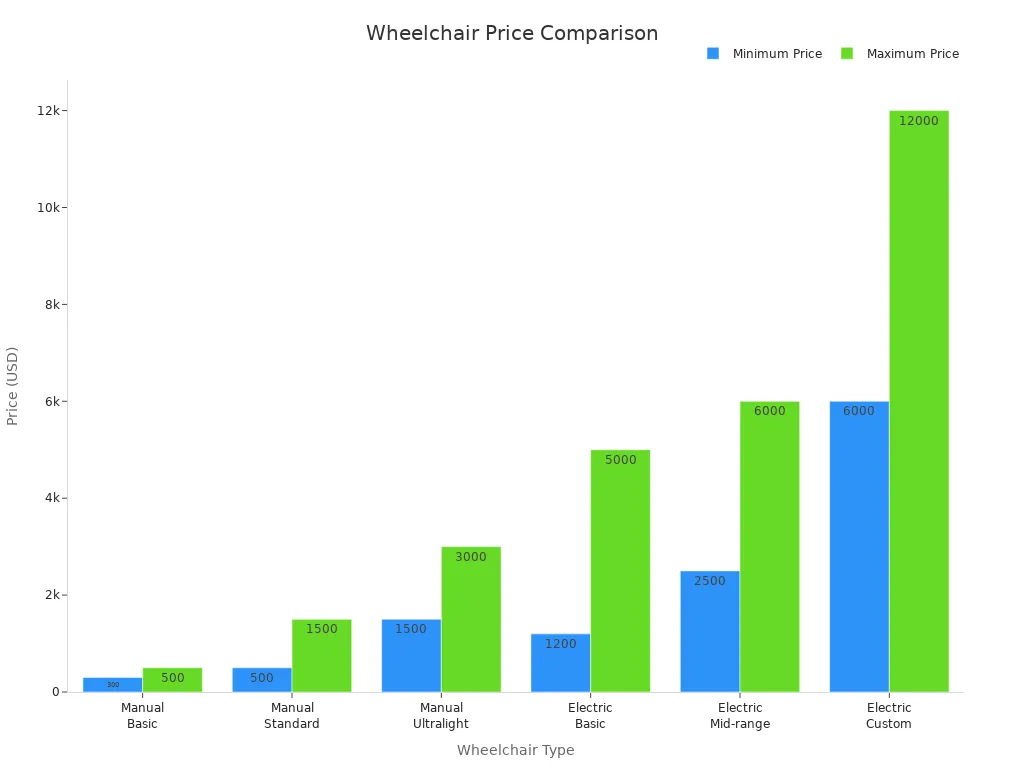
You can also check the :
| Type of Wheelchair | Price Range (USD) |
|---|---|
| Manual (Basic) | $300 – $500 |
| Manual (Standard) | $500 – $1,500 |
| Manual (Ultralight) | $1,500 – $3,000 |
| Electric (Basic) | $1,200 – $5,000 |
| Electric (Mid-range) | $2,500 – $6,000 |
| Electric (Custom) | $6,000 – $12,000+ |
Manual wheelchairs do not need much care and are easy to fix. Electric wheelchairs need new batteries and regular check-ups. Think about how you will move them. Manual wheelchairs are light and fit in most cars. Electric wheelchairs are heavy and may need special vans.
Key Factors for Buyers
When you start electric wheelchair procurement or manual wheelchair procurement, focus on what matters most. This will help you pick the best one for your users and your money.
Portability: Manual wheelchairs are light and fold up. You can store and move them without trouble. Electric wheelchairs are heavy and need more room.
Cost-effectiveness: Manual wheelchairs cost less and are cheap to keep working. Electric wheelchairs cost more and need pricey batteries.
Maintenance requirements: Manual wheelchairs are easy to take care of. Electric wheelchairs need special repairs and regular service.
User independence: Electric wheelchairs help users do more on their own and make things easier for helpers. Manual wheelchairs need users to be strong or have someone help push.
Specific user needs and preferences: Pick a wheelchair that fits the user’s body, daily life, and where they live.
Here is a quick list of the good and bad points for each:
Manual wheelchairs: Cost less, easy to fix, and do not break often.
Electric wheelchairs: Cost more, need new batteries, and are harder to repair.
Think about how much you will spend over time. Manual wheelchairs are cheaper to buy and keep working, so they save money in the long run. Electric wheelchairs cost more for batteries and repairs, and these costs add up.
People feel different about each type. Electric wheelchairs help users do more by themselves and make work easier for helpers, so users who need a lot of help like them more. Manual wheelchairs are trusted and save money, so they are used a lot in hospitals and care centers.
To get the most for your money, pick the right wheelchair for your group. Look at the good and bad points, the main differences, and what your facility needs. This will help you make the best choice when buying many wheelchairs.
Overview of Wheelchair Types
Electric Wheelchair and Power Wheelchair Basics
Main Features
Electric wheelchair and power wheelchair models use new technology. These wheelchairs help people who need more help to move. They run on batteries you can charge again. Most have joystick controls, seats you can adjust, and strong frames. Some power wheelchair models let you lean back or lift your legs. You can also change how they drive. Folding electric wheelchair models are small when folded. This makes them easy to carry and store. Some power wheelchair types, like beach or off-road models, work well outside and on rough ground.
| Type | Description |
|---|---|
| Electric wheelchair | Powered by batteries, ideal for seniors or long-distance mobility. |
| Folding electric wheelchair | Travel-friendly, compact, and easy to transport. |
| All-terrain power wheelchair | Designed for outdoor and active use. |
Electric wheelchair and power wheelchair models make moving easier for users.
These wheelchairs help people do more things by themselves.
They work well on hills, thick carpet, and bumpy ground.
Power wheelchair models can go farther and handle tough places better than manual wheelchair models.
Tip: If someone has weak muscles or gets tired fast, a power wheelchair can help them and feel more comfortable every day.
Typical User Profiles
Many people use power wheelchair technology. People with often need special power wheelchair models to get around. Older adults who find manual wheelchair use hard may like electric wheelchair designs. People with neurological disorders, like multiple sclerosis or ALS, often need special power wheelchair features. In places like nursing homes, some people do not get custom wheelchairs, even if they need them, because of how wheelchairs are bought.
Power wheelchair users often include:
People with spinal cord conditions
Seniors with limited upper-body strength
Individuals with neurological disorders
Residents in nursing homes or long-term care facilities
Manual Wheelchair Basics
Main Features
A manual wheelchair is light, easy to move, and does not cost much. Most manual wheelchair models fold up, so you can store or carry them easily. You can pick basic, standard, or ultra-light designs for your needs. Manual wheelchair frames are made from strong materials like aluminum or steel. This makes them last a long time. To use a manual wheelchair, you need strong arms or someone to push you.
Manual wheelchair models are best for or buildings.
You can change things like seat width, armrests, and footrests to fit the user.
If users are not strong enough, using a manual wheelchair can make them tired or cause injuries.
Note: Manual wheelchair options are the top choice for hospitals, NGOs, and care centers because they are cheap and easy to fix.
Typical User Profiles
Manual wheelchair users usually have some arm strength and need help moving every day. These users can be people getting better after surgery, people with short-term injuries, or people in rehab centers. Manual wheelchair models are also good for people who need a simple, easy-to-care-for wheelchair for a short time or just inside.
Manual wheelchair users typically include:
Patients in hospitals or clinics
Individuals with temporary mobility limitations
Residents in rehabilitation or elder care facilities
People who can self-propel or have caregiver assistance
Picking a power wheelchair or a manual wheelchair depends on how strong users are, what they do each day, and where they go.
Cost Comparison for Bulk Procurement
If you want to buy many wheelchairs, you should compare costs. You need to look at the price to buy, how much it costs to fix, and if you can get discounts for buying a lot. You also need to think about how easy they are to move and store.
Initial Purchase Cost
Electric Wheelchair Pricing
Electric wheelchair models cost more at first. You pay extra for special features, batteries, and technology that help users move by themselves. If you buy many at once, each electric wheelchair can cost from $500 to over $5,000. The price changes because of design, how much weight it holds, and extra things it can do.
Manual Wheelchair Pricing
Manual wheelchair models are cheaper to buy. If you buy a lot, you will pay between $100 and $300 for each one. This low price is good for hospitals, NGOs, and care centers that want to save money.
| Wheelchair Type | Average Cost Range |
|---|---|
| Manual Wheelchairs | $100 – $300 |
| Electric Wheelchairs | $500 – $5,000+ |
Tip: If you need many wheelchairs for a big place, manual wheelchair models help you use your money wisely.
Ongoing and Maintenance Costs
Maintenance for Electric Wheelchairs
Electric wheelchair maintenance needs more work and money. In five years, you might spend for each one. This includes buying new batteries, fixing electronics, and getting special repairs. You should remember these costs when you plan for the future.
Maintenance for Manual Wheelchairs
Manual wheelchair maintenance is easy and cheap. In five years, you will spend less than $1,000 for each one. Most repairs are for tires, brakes, or the seat. You can often fix these yourself, which saves money and time.
| Type of Wheelchair | Five-Year Maintenance Costs |
|---|---|
| Manual | Under $1,000 |
| Electric | $3,000 – $5,000 |
Note: Manual wheelchair models are a smart pick for busy places because they are easy to fix and do not cost much to keep working.
Bulk Discount Opportunities
If you buy a lot of wheelchairs, you can save money. Most big suppliers give better prices if you order more. Good companies also keep their wheelchairs high quality while giving you a deal.
Most top wheelchair makers give better prices if you buy more.
Good suppliers keep prices low and quality high.
If you want to save the most money, ask your supplier about discounts and special deals for big orders.
How easy a wheelchair is to move also changes the total cost. Manual wheelchair models are light and fold up, so shipping and storing them costs less. Electric wheelchair models are heavier but have more features, which can be worth the higher price for some users.
Comparing costs helps you pick the best wheelchair for your budget, your building, and what your users need.
Maintenance and Support
Electric Wheelchair Maintenance Needs
You must take care of electric wheelchairs often. These wheelchairs have motors, batteries, and controllers. They need regular checks to work well. Here are some common things you should do:
Clean the air vents every six months so they do not get too hot.
Test the brakes every month, especially on hills, to keep users safe.
Change how you care for the wheelchair if it is humid or cold.
Charge the batteries halfway and unplug them if you will not use the wheelchair for a long time.
Check the batteries often and get new ones when needed.
Lift the wheelchair off the ground during storage to stop the tires from getting flat spots.
Keep the wheelchair clean so dirt and water do not build up.
Look at the controllers and wires to see if they are worn out or broken.
Use expert advice to help the wheelchair last longer.
Taking care of the wheelchair before problems happen helps stop sudden breakdowns and keeps users safe.
Manual Wheelchair Maintenance Needs
Manual wheelchairs are easier to take care of than electric ones. You can keep them working with simple checks and cleaning. Here are the main things to remember:
They have , so they cost less to fix.
You should check the tires, brakes, and seat cushions.
Clean the frame and wheels to stop rust and dirt.
Most repairs are quick and do not need special tools.
You can do most manual wheelchair care at your own facility. This saves time and money. That is why manual wheelchairs are good for places with many users or not many workers.
After-Sales Support and Warranty
Picking a good supplier like SanLi Care helps you worry less. You get a clear warranty, fast repairs, and easy-to-find spare parts. Here is what top suppliers give you:
Warranties last from 1 to 3 years for frames, motors, and batteries.
You can get help with repairs and questions.
Spare parts are easy to get, especially for electric wheelchairs.
The warranty covers parts and labor.
If a wheelchair cannot be fixed, you get a new one or your money back.
The warranty covers normal use, accidents, and fixing settings.
Good suppliers make sure you get quality products and fast service. Strong support after you buy helps your facility work well.
SanLi Care gives you full service after you buy, teaches your staff, and helps with marketing. You get quick help and easy spare parts. This keeps your wheelchairs working and helps your users move every day.
User Suitability and Needs
Matching Wheelchair Type to User
Mobility and Independence
You need to pick the right wheelchair for each person. This helps users move around and do things on their own. When buying many wheelchairs, start by learning about each user. Check how much help they need and what they do every day. Some people need a wheelchair that moves with power. Others like manual models so they can use their own strength.
People who want to be independent may like electric wheelchairs. These wheelchairs let users move without help from others. They have things like joystick controls, seats you can change, and soft cushions. These features make the wheelchair more comfortable and easier to use. Manual wheelchairs are good for people with strong arms who want to push themselves. Think about where the wheelchair will be used. People staying in hospitals may need extra support. People who go out a lot may want light wheelchairs that are easy to carry.
Tip: . Seats you can change and armrests you can take off help users stay safe and active.
Facility and Demographic Considerations
You should think about what your building and users need. Hospitals and care centers help many different people. You can sort wheelchairs by what each user needs. This helps you have the right wheelchairs for everyone.
Here are some things to think about when picking wheelchairs:
Learn about each user’s needs and how much help they need.
Decide if the wheelchair will be used inside, outside, or in the community.
Check if the wheelchair is easy to move and store.
Make a plan for cleaning and fixing the wheelchairs.
Guess how long each wheelchair will last before you need a new one.
Make sure the wheelchairs are safe for everyone.
Match the wheelchair to the money and rules you have.
Pick suppliers who can change wheelchairs to fit users and give good help.
Think about all the costs, not just the price to buy.
Teach users and helpers how to use the wheelchair.
Keep records of how the wheelchairs are used and fixed.
You should also make sure everyone can use the wheelchairs. Custom wheelchairs can stop injuries and help people do more. Good features are seats you can change, armrests you can take off, and soft cushions. When you pick wheelchairs that fit users and your building, everyone moves better and feels safer.
Note: Picking the right wheelchair saves money and helps your building run better. Users can do more by themselves and move around more easily.
Logistics in Bulk Procurement
When you buy many mobility aids at once, logistics are very important. You need to think about how you will store, move, and deliver each wheelchair safely. If you know these steps, you can stop delays and save money.
Storage and Transport
Space and Handling for Electric Wheelchairs
Electric wheelchairs are bigger and heavier than manual ones. Most electric wheelchairs weigh from . You need strong boxes to keep batteries and controls safe. Batteries need special care because they can be dangerous. You also need to fill out papers for these parts. Electric wheelchairs use more space in storage and shipping. You might need machines like forklifts to move them.
Space and Handling for Manual Wheelchairs
Manual wheelchairs are much lighter, about 30 to 50 pounds. You can stack or fit them inside each other to save space. Use strong boxes, edge guards, and lock the brakes for safe travel. Manual wheelchairs are easy to load and unload. You can fit more of them in each shipping container, so shipping costs less.
| Wheelchair Type | Average Weight (lbs) | Special Handling Needs |
|---|---|---|
| Manual Wheelchair | 30-50 | Standard packaging, secure brakes, easy stacking |
| Electric Wheelchair | 100-250 | Battery protection, hazardous materials documentation |
Tip: Always check the rules for shipping medical devices in your area. If you do not follow the rules, your shipment can be delayed or sent back.
Delivery and Customs
You must follow strict rules when you bring in wheelchairs from other countries. You can ship by boat or by plane. Electric wheelchairs need special boxes and more papers because of their batteries and electronics. This makes shipping cost more and needs extra planning. Manual wheelchairs are easier to ship and cost less.
Taxes and fees depend on what you ship and where it goes. Electric wheelchairs may get because they are medical devices. Manual wheelchairs usually have normal taxes for goods. You should get all your papers ready before you ship to stop customs delays.
SanLi Care helps you with every step. They help you follow the rules, like and technical files. SanLi Care gives you different ways to ship and works with big shipping companies. You get one account manager and quick help if you have problems. This makes sure your big wheelchair order gets to you safely and on time.
Note: Having the right papers and good shipping partners makes your order easy and fast.
Customization and Compliance
Custom Options for Electric Wheelchairs
You can change electric wheelchairs to fit each user’s needs. Customization makes wheelchairs more comfortable and safe. It also helps users do more on their own. When you buy many wheelchairs, you can pick lots of features:
Armrests that move or fold for easy getting in and out
Joystick settings that can be changed for shaky hands
Special joysticks for people who cannot move their hands much
Head arrays so users can drive with their heads
Sip and puff controls for people who cannot use their hands
Controls for helpers to drive the wheelchair
Special switches, like ones for the chin or shaped like an egg
Different headrests for more support
Leg rests and footplates you can change
Lights for using the wheelchair when it is dark
Supports to help users sit safely and not fall
Seatbelts and harnesses for safety
Many seat and cushion choices for comfort
Custom colors and covers to match your group’s look
Storage like cupholders and bags
Different wheels and rims for rough or smooth ground
These choices help you pick the right wheelchair for each user’s body and daily life. You can also make your wheelchairs look and work better for your group.
Custom Options for Manual Wheelchairs
Manual wheelchairs can also be changed to help users and fit your group’s needs. You can choose:
Seat width and depth that fits each person
, like rubber or air-filled
Armrests in many styles for different things people do
Frame colors to match your group’s colors
Special wheels for inside or outside use
Extras like straps, IV holders, or places for oxygen tanks
These options let you make a wheelchair that helps each user move and stay safe. You can help many kinds of people in different places.
Regulatory and Certification Requirements
You must follow rules when you bring in or sell wheelchairs in big markets. In the United States, electric wheelchairs are called Class II medical devices. You need to follow FDA rules, like sending a 510(k) notice and using a quality system. Manual wheelchairs are usually Class I, so there are fewer rules. In Europe, both types need CE marking and must follow the EU Medical Device Regulation. You also have to meet ISO safety and performance standards.
| Market | Wheelchair Type | Regulatory Body | Key Requirements |
|---|---|---|---|
| United States | Electric Wheelchair | FDA | Class II, 510(k) premarket notification, Quality System Regulations |
| Manual Wheelchair | FDA | Class I, less stringent requirements | |
| Europe | Electric Wheelchair | EU | CE marking, Medical Device Regulation, EN 12184, ISO standards |
| Manual Wheelchair | EU | CE marking, Medical Device Regulation, EN 12184, ISO standards |
Always check the newest rules for your market. Following these rules keeps users safe and helps your business bring in wheelchairs without problems.
Long-Term Value and ROI
Durability and Lifespan
You want your wheelchairs to last a long time. It is important to pick strong models for your facility. Electric models use tough frames and special materials. These parts help them handle daily use and heavy people. Manual models are also built to be strong. Their aluminum and steel frames do not break easily. If you take care of a manual model, it can last five to ten years. Electric models can last even longer if you look after the batteries and electronics. You should check both types often and fix problems right away. Look for damage and change broken parts quickly. This keeps your wheelchairs safe and working well.
Tip: Plan regular check-ups to stop sudden problems and help your wheelchairs last longer.
User Satisfaction and Retention
Happy users are important for your care center. People want wheelchairs that are . You should pick models with seats and armrests you can adjust. These features make users feel better every day and help them keep using the wheelchair. Some people say manual models are not always comfy or easy to move. Both comfort and easy movement are very important. Seats, armrests, and cushions you can change help users feel safe. Listen to what users say and make changes if needed. When users are happy, they stay longer and tell others about your center.
People want soft seats and easy-to-move wheelchairs.
Adjustable parts make users happier.
Good fit and easy use help people stay longer.
Note: Comfort means good seats, parts you can change, and easy use. These things help users stay happy for a long time.
Resale and Replacement Value
Think about how much your wheelchairs are worth when you sell or replace them. Manual models keep their value because you can fix and upgrade them easily. You can sell used ones to other centers or give them to groups that need them. Electric models can be worth more if you keep them in good shape. If you get new batteries or electronics, they are easier to sell. When you buy new wheelchairs, you can get some money back by selling old ones. Pick models with easy-to-find parts and clear warranty rules. This helps you save money and keep your equipment in good shape.
| Model Type | Resale Value | Replacement Ease | Spare Parts Availability |
|---|---|---|---|
| Manual | Moderate | High | Widely available |
| Electric | High | Moderate | Available with supplier |
Tip: Write down all repairs and checks. This helps you sell wheelchairs for more money and makes it easier to decide when to get new ones.
You can get good value by picking strong wheelchairs, making users happy, and planning for upgrades. Your center will have good equipment and happy people.
You need to pick wheelchairs that fit your facility and users. Manual models are good for big orders in hospitals or care centers. Electric models are better for people who want to move on their own. Here is a checklist:
Look at how users move and what they do each day.
Think about your budget and how much you will spend over time.
Make sure the supplier gives good help and a strong warranty.
Pick a wheelchair that matches your goals and keeps every user comfortable.
FAQ
What is the minimum order quantity for bulk wheelchair purchases?
You need to order at least 100 of each item. You can pick up to four models for one 40-foot container. This lets you help different users with one shipment.
How long does delivery take for bulk orders?
It takes about 35 to 60 workdays after you pay the deposit. If you need them sooner, ask if there are any in stock or if you can get faster shipping.
Can you customize wheelchairs for my facility?
Yes, you can choose special colors, logos, or features. Just tell SanLi Care what you want and give the needed papers. They will make wheelchairs that fit your needs.
What certifications do SanLi Care wheelchairs have?
SanLi Care wheelchairs meet ISO 13485, ISO 9001, CE MDR, SFDA, and FDA rules. These products follow strict safety and quality standards from around the world.
What after-sales support do you receive?
You get a 12-month warranty for parts and 6 months for batteries. SanLi Care gives you spare parts, technical help, and quick answers if you have problems.
How do you maintain electric wheelchairs?
Check the batteries, clean the frame, and test the brakes often. Use the user manual for step-by-step help. SanLi Care can train your staff and give support.
Are bulk discounts available?
Yes, you can get discounts if you order a lot. Contact SanLi Care for a quote and ask about special deals for big orders.
What payment methods can you use?
You can pay by bank transfer (T/T) for big orders. For small or sample orders, you can use PayPal. Alibaba Trade Assurance is also an option for extra safety.
Conclusion
Selecting the right standard wheelchair weight and portability features is a strategic decision that influences every aspect of your B2B operation. By applying the decision framework outlined here and partnering with an experienced manufacturer, you can reduce costs, satisfy customers, and build a resilient product portfolio.
SanLi Care remains committed to supporting distributors with high-quality, compliant mobility solutions that promote independence and dignity. Our team is ready to assist with product selection, custom quotes, and ongoing partnership support.
For any questions or to request a quick quote, please send an email to inquiry@sanlicare.com.
To expand your knowledge, visit the to find more helpful information for them.
To expand your knowledge, check these related resources as below: