
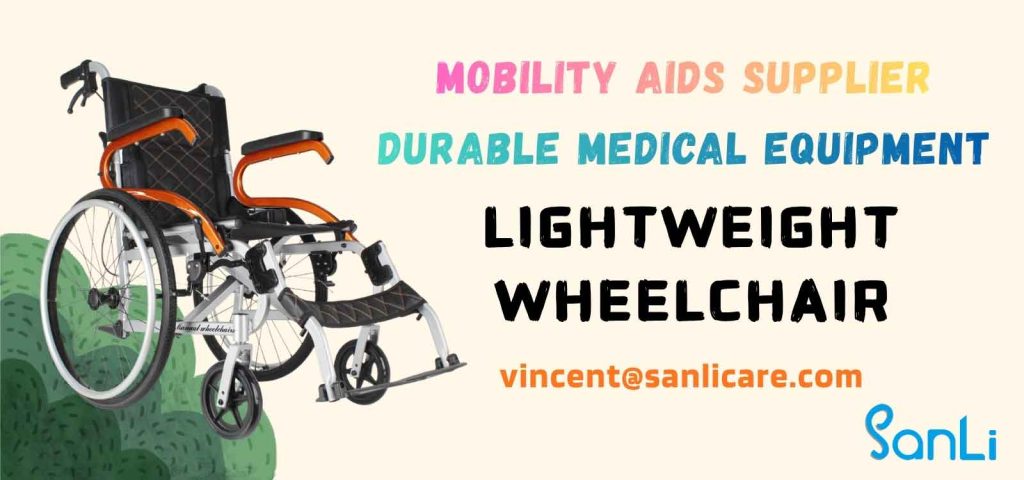
As a professional in the rehabilitation medical equipment industry, one understands how critical proper certification is for success in international wholesale trading. For traders, distributors, and wholesalers sourcing mobility aids such as wheelchairs, rollators, walking frames, commodes, and crutches, meeting FDA and CE standards is not merely a regulatory step. It represents a foundation for market access, customer safety, and long-term business growth. This detailed guide addresses the key concerns that potential customers frequently search for on platforms like Google, Bing, and Yahoo. It covers common pain points, including import delays due to missing documentation, customs rejections, liability risks, and the challenge of identifying reliable suppliers who deliver compliant products on time.
SanLi Care, as an experienced durable medical equipment manufacturer and mobility aids supplier, has supported hundreds of B2B partners worldwide by providing fully compliant products backed by over 20 years of manufacturing expertise. This article provides a clear, actionable B2B checklist, explains the real requirements behind FDA and CE compliance, and offers practical solutions to the problems you may encounter. Readers will gain valuable knowledge that strengthens their sourcing decisions and highlights why partnering with a vertically integrated factory like SanLi Care delivers peace of mind and competitive advantage.
Why Certification Matters for Mobility Aids in B2B Wholesale Trading
Business customers searching for “mobility aids supplier” or “durable medical equipment manufacturer” often focus on one core issue: how to import and sell products without facing regulatory hurdles. Non-compliance can result in shipments being held at customs, expensive recalls, or even legal action. In contrast, certified products open doors to major markets in Europe, North America, the Middle East, and beyond.
Key pain points include:
Uncertainty about which certifications are truly required for specific mobility aids.
Difficulty verifying supplier claims without access to technical files or test reports.
High costs and time associated with obtaining individual certifications for each product variant.
Concerns over product safety and quality that could damage distributor reputation.
The solution lies in working with a manufacturer that already holds the necessary approvals and offers full documentation support. SanLi Care maintains ISO 13485, ISO 9001, CE MDR, and FDA registration, along with TUV and SGS audits. This built-in compliance reduces your workload and accelerates time to market.
Understanding Device Classification for Mobility Aids
Mobility aids fall under different regulatory classes depending on their design and intended use. Correct classification forms the starting point for compliance.
FDA Classification Overview
Under FDA regulations, most manual wheelchairs and basic walking aids are Class I devices, which are subject to general controls and often exempt from premarket notification. Powered mobility aids, such as electric wheelchairs and certain scooters, typically fall into Class II and require 510(k) clearance to demonstrate substantial equivalence to a predicate device. As a responsible mobility aids supplier, SanLi Care ensures all relevant products carry proper FDA listing and, where necessary, 510(k) clearance.
CE Marking Under the Medical Device Regulation (MDR)
In the European Union, mobility aids are governed by the MDR 2017/745. Products are classified as Class I (non-measuring, non-sterile) or higher based on risk. Most wheelchairs and mobility aids require a technical file, risk management according to ISO 14971, clinical evaluation, and post-market surveillance. CE marking confirms conformity after assessment by a Notified Body where applicable.
Distributors often search for clarity on these classifications because misclassification can lead to market withdrawal. The checklist below addresses this concern directly.
Your Complete B2B Compliance Checklist for Mobility Aids
Use this step-by-step checklist to evaluate any potential supplier. Each item includes what to request and why it matters.
Verify Manufacturer Registrations and Quality Management Systems Request copies of ISO 13485 certification (quality management for medical devices) and ISO 9001. These demonstrate consistent manufacturing processes and traceability.
Confirm CE MDR Compliance Ask for the Declaration of Conformity, technical file summary, and Notified Body certificate if applicable. Ensure the product bears the CE mark with the correct identification number.
Check FDA Status Confirm FDA establishment registration, device listing, and 510(k) clearance number for Class II devices. Request UDI labeling details for traceability.
Review Product-Specific Test Reports Demand reports for stability (ISO 7176 series), biocompatibility, electrical safety (IEC 60601 for powered devices), and durability testing. SanLi Care performs 100% functional checks plus destructive testing on samples.
Examine Risk Management and Clinical Evaluation Under both FDA and CE rules, suppliers must maintain risk management files. Ask to see summaries showing hazard identification and mitigation.
Confirm Labeling and Instructions for Use Labels must include required symbols, warnings, and contact information in the target market language. User manuals should be clear and comprehensive.
Request Post-Market Surveillance Plan A compliant supplier maintains systems for monitoring product performance after sale and reporting adverse events.
Validate Supply Chain Traceability Ensure raw materials and components are traceable from medical-grade sources.
SanLi Care provides all of these documents proactively to B2B partners, eliminating the common pain point of repeated back-and-forth requests.
| Checklist Item | Document to Request | Why It Matters for B2B Buyers | SanLi Care Status |
|---|---|---|---|
| Quality Management | ISO 13485 certificate | Ensures consistent product safety | Certified |
| CE Marking | Declaration of Conformity | Required for EU market entry | CE MDR certified |
| FDA Registration | Establishment registration & listing | Required for U.S. import | FDA registered with 510(k) where needed |
| Test Reports | ISO 7176 stability reports | Proves durability and user safety | Full suite available |
| Risk Management | ISO 14971 summary | Reduces liability risk | Maintained internally |
This table serves as a quick reference tool you can save and share with your procurement team.
Common Challenges and Practical Solutions
Many wholesalers report frustration when suppliers promise compliance but fail to deliver documentation at customs. Another frequent issue is limited customization that still meets regulatory standards. SanLi Care solves these problems through vertical integration and dedicated regulatory support. Our factory team assists with dossier preparation for additional markets such as Health Canada or Australia TGA when needed.
By choosing a manufacturer that already exports successfully to multiple continents, you avoid the costly trial-and-error process. Our experience shows that compliant products command higher margins and foster repeat orders.
Partnering with a Trusted Durable Medical Equipment Manufacturer
When searching for a reliable mobility aids supplier, focus on those who combine certification with real manufacturing strength. SanLi Care operates a modern, vertically integrated facility equipped with CNC machining, robotic welding, and rigorous quality control checkpoints managed by 28 dedicated technicians.
To deepen your understanding of sourcing best practices, explore our guide to sourcing durable medical equipments for wholesale. This resource outlines proven strategies that many of our distributor partners have used to scale their businesses efficiently.
Selecting the right partner also involves evaluating product range and support services. For detailed advice on supplier evaluation, refer to our article on how to select right wheelchairs supplier for your business. It covers criteria beyond certification, including production capacity and after-sales support.
Growth-oriented distributors often seek lightweight options for air travel and urban use. Our lightweight wheelchairs wholesale strategies for B2B growth provides actionable insights into market demand and procurement tactics.
Safety and suitability remain top priorities. Review our guide what to look for when selecting mobility aids for B2B needs to ensure every product meets end-user expectations.
Finally, many customers ask whether their current inventory meets standards. Our dedicated post are your durable medical equipments meet compliance standard offers a self-assessment framework.
New Product Launches and Fast-Track Wholesale Opportunities
For those ready to expand their catalog, SanLi Care has introduced several updated mobility aids designed with the latest user feedback in mind. To learn how to integrate these into your wholesale business quickly, visit how to start durable medical equipment wholesale business. The guide includes practical steps tailored for new and established distributors.
If you prefer to begin with proven hot-selling items, browse our full range on the durable medical equipments manufacturer page. You will find lightweight aluminum wheelchairs, robust steel models, foldable commode chairs, rollators with brakes, and more— all available with competitive MOQ and customization options.
Frequently Asked Questions
What is the difference between FDA registration and 510(k) clearance for mobility aids? FDA registration confirms the manufacturer and device are listed, while 510(k) clearance is required for most Class II devices to prove safety and effectiveness. SanLi Care holds both where applicable.
Do all walking aids require CE marking for sale in Europe? Yes, under MDR. Even Class I devices need technical documentation and a Declaration of Conformity.
How long does it take to obtain compliance documents from a supplier? A well-prepared manufacturer like SanLi Care can provide complete files within days, whereas others may take weeks or refuse altogether.
Can I customize products while maintaining FDA/CE compliance? Yes. Minor modifications such as color or branding can be handled under existing certificates if they do not alter the intended use or risk profile. Our team reviews each request carefully.
What should I do if a shipment is held at customs? Contact your supplier immediately for missing certificates or test reports. Choosing a compliant durable medical equipment manufacturer from the start prevents this situation.
Are ISO certifications sufficient on their own? No. ISO 13485 supports quality systems, but FDA and CE require additional device-specific documentation.
How does compliance affect product pricing for wholesalers? While certified products may carry a slightly higher unit cost, they reduce overall risk and enable faster market entry, often resulting in better margins.
Where can I find more helpful resources on durable medical equipment sourcing? Visit our blog to explore additional guides on wholesale strategies and product selection.
Key Takeaways
Certification is essential for legal market access and risk reduction.
Use the provided checklist to evaluate every supplier systematically.
Partnering with an established manufacturer who already holds ISO, CE MDR, and FDA approvals streamlines operations.
SanLi Care combines regulatory excellence with manufacturing flexibility to support your B2B success.
In conclusion, navigating mobility aids certification requirements does not need to be overwhelming. By applying the knowledge and checklist shared here, distributors and wholesalers can make informed decisions that protect their business and serve end users with confidence. SanLi Care stands ready as your trusted partner in this journey.
To expand your knowledge, check these related resources as below:
For a quick quote on our compliant mobility aids and wheelchairs or to discuss your specific requirements, please send an email to inquiry@sanlicare.com. We look forward to supporting your wholesale business with SanLi Care quality and reliability.