
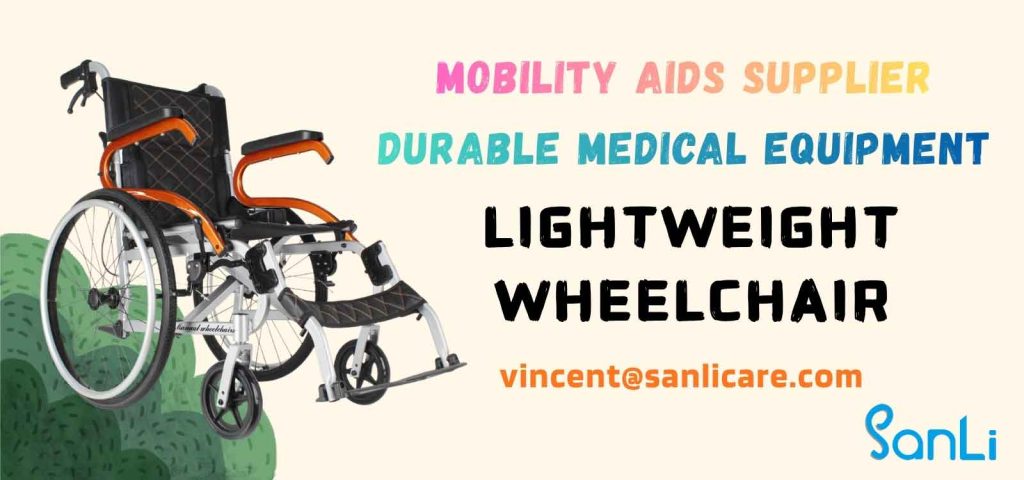
You want to unlock B2B growth in lightweight wheelchairs wholesale. The market now demands wheelchairs with true portability and innovative travel-friendly features. Buyers seek foldable electric wheelchairs that deliver both comfort and independence. Consider these current drivers in the wheelchair market:
The aging population drives lightweight wheelchairs wholesale to new heights.
Foldable electric wheelchairs see the fastest growth, showing a shift in purchase habits.
Baby Boomers, focused on active lifestyles, fuel ongoing wheelchair purchase trends.
You must select the right supplier, evaluate OEM and private label options, and use a clear guide for each purchase. This Blog serves as your electric wheelchair purchase guide, connecting you with SanLi Care and the Select Right DME Products For You resource. You May Know More, or Get Quick Quote, by following the guide for every wheelchair purchase.
Key Takeaways
Focus on the growing demand for lightweight and foldable electric wheelchairs to meet market needs.
Select suppliers with strong compliance certifications like ISO, CE, and FDA to ensure product quality and safety.
Leverage OEM and ODM models to create unique branding and enter the market quickly.
Build long-term partnerships with suppliers to enhance supply chain stability and reduce costs.
Utilize data-driven inventory planning to improve forecasting accuracy and reduce stockouts.
Prioritize product features like battery life, portability, and comfort to enhance user satisfaction.
Stay informed about regulatory changes to maintain compliance and avoid costly penalties.
Implement effective after-sales support to build trust and encourage repeat business from B2B clients.
Lightweight Wheelchairs Wholesale Market Trends
Demand for Portability and Foldable Designs
You see a clear shift in the mobility aids market. Portability and foldable electric wheelchair options now drive purchasing decisions. Over the past five years, the B2B market has moved toward portable and foldable wheelchair designs. Manufacturers focus on user-centric features, lightweight materials, and customization. These changes address the needs of pediatric and bariatric patients, as well as adults seeking independence. You notice that sustainable materials and processes also play a role, aligning with global trends.
The demand for lightweight foldable wheelchairs and ergonomically designed mobility aids is increasing, particularly among consumers living independently or in supported-living settings.
You must prioritize weight and portability when selecting products. Lightweight folding power wheelchair models offer easy transport and storage. This focus on portability helps you meet the needs of customers who travel or require frequent movement. The mobility aids market rewards suppliers who deliver on these expectations.
Growth of Foldable Electric Wheelchair Segment
Foldable electric wheelchair sales continue to surge. The wheelchair segment is expected to drive growth in the mobility aids market. You see projections that the market will reach over USD 9.2 billion by 2034, with a CAGR of 7.3% from 2025 to 2034. This growth comes from the rising global aging population and the increasing prevalence of physical disabilities.
Rising global aging population
Increasing prevalence of physical disabilities
Growing awareness of mobility assistance solutions
The foldable electric wheelchair segment stands out for its innovation. You find that lightweight folding power wheelchair models combine advanced battery technology, ergonomic seating, and easy folding mechanisms. These features make them attractive to both end-users and B2B buyers. The demand for foldable electric wheelchair products will only increase as more people seek independence and mobility.
B2B Opportunities in Mobility Market
You have many b2b opportunities in the mobility aids market. The shift toward foldable electric wheelchair solutions opens new channels for wholesalers and distributors. You can expand your product line to include a range of wheelchair models, from manual to electric, with a focus on weight and portability.
| Trend Description | Market Value (2025) | Projected Growth (2026-2034) | CAGR (%) |
|---|---|---|---|
| Standard Wheelchairs Market | USD 1,970 million | USD 2,486 million | 3.5% |
You should leverage these trends to build strong supplier relationships and secure exclusive distribution rights. The mobility aids market rewards those who adapt quickly to changing consumer preferences. By focusing on foldable electric wheelchair products, you position your business for long-term growth and success.
Sourcing Advantages from Leading Hubs
Cost and Supply Chain Benefits
You gain a competitive edge when you source lightweight wheelchair products from leading manufacturing hubs. These regions, especially in Asia, offer you significant cost advantages. You can access lower labor costs, streamlined logistics, and bulk purchasing options. This helps you keep your overall cost structure lean and your pricing attractive for B2B buyers.
Tip: By consolidating shipments and working with established suppliers, you can reduce shipping costs and minimize delays.
A reliable supply chain ensures you always have the right wheelchair models in stock. You avoid costly stockouts and can respond quickly to market changes. When you work with major hubs, you also benefit from scalable production. This means you can increase your order volume without facing sudden spikes in cost or quality issues.
| Sourcing Benefit | Impact on Your Business |
|---|---|
| Lower production cost | Higher profit margins |
| Efficient logistics | Faster delivery times |
| Scalable supply chain | Easier to meet demand spikes |
Access to Advanced Manufacturing
You see real value in sourcing from regions with advanced manufacturing capabilities. These hubs invest in modern factory infrastructure and vertical integration. This leads to better product quality and more consistent wheelchair performance.
You benefit from robust quality control systems that catch defects before products ship.
Research and development teams in these hubs focus on innovation, using advanced materials like carbon fiber.
You can offer your customers wheelchairs that are lighter, stronger, and more comfortable.
When you choose suppliers with advanced manufacturing, you position your business as a leader in quality. You also gain access to the latest features and designs, which helps you stand out in a crowded market.
OEM and Private Label B2B Opportunities
You can unlock new growth by leveraging OEM and private label services. The lightweight wheelchair market gives you two main options. You can create your own branded wheelchair line through OEM partnerships. This lets you design unique features and build a strong brand identity.
You can also use the ODM model to select from a range of pre-designed foldable electric wheelchair products. You add your own branding and enter the market quickly. Many Chinese manufacturers offer customization, so you can choose battery capacities, materials, and colors. This flexibility helps you target different price segments and customer needs.
You lower your development cost and reduce time to market with these models. You also gain the ability to test new wheelchair designs without heavy investment. By working with experienced suppliers, you ensure your products meet high standards and appeal to a wide range of buyers.
Electric Wheelchair Supplier Selection Criteria
Certifications and Compliance
When you evaluate an electric wheelchair supplier, you must check their certifications and compliance documentation. International trade requires strict adherence to safety and quality standards. You protect your business and your customers when you choose suppliers who meet these requirements.
ISO, FDA, CE Standards
You should confirm that your supplier holds all necessary certifications. These standards prove that the wheelchair meets global safety and quality benchmarks. The most important documents include:
| Document | Purpose |
|---|---|
| Declaration of Conformity | Legal proof of CE compliance |
| EN12184 Test Report | Safety and performance verification |
| Technical File | Engineering and compliance documentation |
| UDI & EUDAMED | Regulatory traceability requirement |
| ISO 13485 Certificate | Quality system validation |
A supplier with these certifications demonstrates commitment to performance, reliability, and durability. You reduce risk and ensure smooth customs clearance when you work with compliant partners.
Audit and Documentation
You must request recent audit reports and technical files from your electric wheelchair supplier. These documents show that the supplier follows strict quality management systems. You should also check for up-to-date FDA and CE registrations. Reliable suppliers provide clear documentation and respond quickly to your requests. This transparency builds trust and supports your b2b sourcing decision.
Quality Control and Testing
You need to verify that your supplier uses robust quality control processes. Consistent performance and reliability depend on strict testing at every stage of production.
In-Factory and Third-Party Checks
You should ask about both in-factory and third-party inspections. In-factory checks catch defects early and ensure each wheelchair meets your specifications. Third-party testing adds an extra layer of assurance. You can request independent lab reports for battery performance, electric wheelchair motor supplier reliability, and overall durability. This approach helps you avoid costly returns and protects your reputation in the market.
Tip: Choose suppliers who welcome third-party audits and share test results without delay.
Key Product Features: Battery, Terrain, Comfort, Safety
You must evaluate the core features that impact wheelchair performance and user satisfaction. The right combination of battery, terrain capability, comfort, and safety sets your product line apart.
| Feature | Advantages | Limitations |
|---|---|---|
| Portability and Travel | Ideal for car transport, public transit, and air travel. | Lower weight capacity compared to heavy-duty chairs. |
| Daily Handling | Easier maneuvering in tight spaces like apartments and offices. | Reduced terrain capability on uneven surfaces. |
| Energy Efficiency | Consumes less power, extending battery range. | Limited customization options compared to heavy-duty models. |
You should focus on battery performance for longer trips and reliable operation. Terrain capability matters if your customers need to navigate uneven surfaces. User comfort depends on ergonomic seating and adjustable features. Safety features, such as anti-tip wheels and secure brakes, protect users and reduce liability.
You gain a competitive edge when you source from a trusted electric wheelchair motor supplier. High-quality components improve reliability and reduce the cost of ownership over time. You should always compare models for durability and performance before making a final decision.
Supplier Reputation and Support
You must evaluate supplier reputation before you commit to any partnership. A strong reputation signals reliability, consistent quality, and ethical business practices. You can check supplier reputation through several methods:
Review customer testimonials and case studies.
Request references from other B2B buyers.
Search for industry awards or recognitions.
A reputable supplier responds quickly to your inquiries and provides clear answers. You should look for suppliers who offer transparent communication and proactive updates about your orders. Reliable support helps you resolve issues before they affect your business.
Tip: Choose suppliers who maintain a dedicated after-sales support team. This team should handle warranty claims, technical questions, and spare parts requests.
You need to assess the supplier’s experience in the wheelchair industry. Suppliers with a long track record often understand market changes and compliance requirements. They can guide you through product selection and help you avoid common pitfalls.
| Evaluation Factor | What to Look For | Why It Matters |
|---|---|---|
| Years in Business | 5+ years in wheelchair manufacturing | Shows stability and expertise |
| Customer Service | Fast, knowledgeable, multi-channel | Ensures smooth communication |
| After-Sales Support | Warranty, repairs, spare parts | Reduces downtime and complaints |
You should also check for online reviews and ratings on trusted platforms. Consistent positive feedback from other wheelchair buyers gives you confidence in your choice. If you see repeated complaints about delays or poor service, consider other options.
A supplier with a strong reputation and reliable support becomes a valuable partner. You gain peace of mind knowing your wheelchair orders will arrive on time and meet your quality standards.
Cooperation Models: OEM & ODM
OEM for Custom Branding
You can use the OEM (Original Equipment Manufacturer) model to build your own brand in the lightweight wheelchair market. This approach gives you control over the final product’s appearance and features. You do not need to invest in your own factory. Instead, you work with a manufacturer who produces wheelchairs to your specifications and branding. This model lets you focus on marketing and sales while the supplier handles production.
Here is how OEM for custom branding benefits you as a B2B buyer:
| Benefit | Description |
|---|---|
| Brand Identity | You can create your own brand identity without significant factory investment. |
| Control Over Market Strategy | You have better control over branding, packaging design, and market positioning. |
| Increased Profit Margins | Custom branding can lead to profit margins increasing by 15-30% compared to reselling known names. |
You gain the freedom to design packaging, select color schemes, and add unique features. You can also respond quickly to market trends and customer feedback. This flexibility helps you stand out in a competitive market.
Tip: Use OEM if you want to build a strong brand and maximize your profit margins.
ODM for Fast Market Entry
You can choose the ODM (Original Design Manufacturer) model if you want to enter the market quickly. ODM suppliers offer ready-made wheelchair designs that you can customize with your own branding. This model reduces your development risk and speeds up your launch timeline.
ODM services support you at every stage, from concept to mass production. You get help with design, engineering, and prototype testing. The supplier handles most of the technical work. You can focus on marketing and distribution. This approach lets you launch a new lightweight wheelchair line without waiting for long development cycles.
You benefit from a faster time to market and lower upfront costs. You can test new product ideas and adjust your strategy based on real customer feedback.
Note: ODM works best if you want to expand your product range quickly or test new markets with minimal investment.
Choosing the Right Model
You need to choose the cooperation model that fits your business goals. OEM and ODM each offer unique advantages. Consider your resources, timeline, and branding strategy before you decide.
Key differences between OEM and ODM cooperation models include:
Collaboration Model: OEM gives you more control over design and branding. ODM focuses on reducing development risk and accelerating time to market.
Concept & Requirement Definition: Both models require you to define your goals, but ODM aligns closely on application scenarios and performance targets.
Engineering & Feasibility Validation: You evaluate structural design and manufacturing feasibility with both models.
Prototype Development & Testing: Both involve building and validating prototypes, but ODM suppliers often provide more support.
Production & Ongoing Support: You transition to controlled mass production with quality control in both models.
You should select OEM if you want to build a unique brand and control every detail. Choose ODM if you need speed and want to minimize risk. Both models can help you grow your lightweight wheelchair business and meet changing market demands.
Inventory and Product Selection Strategies
Data-Driven Inventory Planning
You can boost your profitability by adopting data-driven inventory planning. Artificial intelligence and advanced analytics now play a key role in forecasting demand and managing stock levels. When you use AI tools, you improve forecasting accuracy by 30%. This improvement helps you avoid overstocking and reduces excess inventory costs by 15%. You also see a 20% reduction in stockouts, which means you always have the right products available for your customers.
| Inventory Benefit | Description | Impact on Profitability |
|---|---|---|
| Forecasting Accuracy Improvement | AI increases demand forecasting accuracy by 30%. | Reduces overstock costs by 15%. |
| Reduction in Stockouts | AI lowers stockouts by 20%. | Maintains optimal inventory levels. |
| Inventory Holding Cost Reduction | AI cuts holding costs by 25%. | Lowers operational expenses. |
| Response Time Improvement | 40% faster response to supply chain issues. | Enhances customer satisfaction and sales. |
You gain the ability to respond 40% faster to supply chain disruptions. This agility helps you maintain high customer satisfaction and secure repeat business. You should review your inventory data regularly and adjust your purchasing strategy based on real-time trends.
Product Mix: Lightweight, Foldable, Electric
You need to offer a balanced product mix to meet diverse market needs. The most successful B2B distributors focus on three main categories:
Compact lightweight electric wheelchairs for daily mobility
Specialized tilt-in-space wheelchairs for pressure relief
You should prioritize models with lightweight and foldable designs. These features make transport and storage easier for end-users. Enhanced portability supports various mobility scenarios, from home use to travel. Customization options allow you to address specific requirements for different B2B clients.
The JBH DC10L stands out as an ultra-lightweight carbon fiber electric wheelchair. It weighs only 15.5kg, which is much lighter than traditional models. This lower weight reduces shipping costs and improves maneuverability for users. Its intelligent folding mechanism enables compact storage, making it ideal for active lifestyles.
| Feature | Electric Wheelchair Models |
|---|---|
| Supply Type | Factory-direct wholesale supply |
| Customization | OEM & ODM based on market needs |
| Pricing | Competitive pricing for distributors and importers |
| Production Capacity | Stable production and quality control |
| Logistics | Professional export experience and global support |
You benefit from a wide range of electric wheelchair models. Focus on travel-friendly options and emphasize quality and customization to serve different market segments.
Dropshipping and Logistics Efficiency
You can streamline your operations by leveraging dropshipping and efficient logistics. Dropshipping allows you to reduce inventory risk and lower upfront investment. You only purchase wheelchairs when you receive orders, which minimizes storage costs and eliminates the need for large warehouses.
Efficient logistics ensures timely delivery and enhances your reputation with B2B clients. You should partner with suppliers who have professional export experience and global logistics support. This partnership helps you manage customs, track shipments, and resolve issues quickly.
Tip: Choose suppliers with stable production capacity and proven logistics networks. This approach guarantees consistent supply and reliable order fulfillment.
You can scale your business faster when you combine dropshipping with data-driven inventory planning and a well-chosen product mix. This strategy positions you as a responsive and reliable distributor in the competitive lightweight wheelchair market.
Building Supply Chain Partnerships
Negotiation and Long-Term Cooperation
You build strong supply chain partnerships by using effective negotiation strategies. Start by requesting competitive quotations from at least three qualified suppliers. This approach helps you compare not only price but also service, quality, and reliability. You should always pilot test a small batch of wheelchairs in real-world conditions. This step allows you to check if the supplier’s products fit your infrastructure and meet user comfort standards.
Clear contracts protect your business. Negotiate terms that cover lead times, defect resolution, and training. A well-written contract reduces misunderstandings and sets clear expectations for both parties. You also need to plan for long-term maintenance. A strong maintenance plan extends the life of your wheelchairs and lowers operational costs.
| Strategy | Details |
|---|---|
| Request Competitive Quotations | Obtain bids from at least three qualified suppliers and evaluate on more than price alone. |
| Pilot Testing | Test a small batch in real-world conditions to assess infrastructure fit and user comfort. |
| Ensure Contract Clarity | Negotiate terms that protect your organization, including lead times, defect resolution, and training. |
| Plan for Long-Term Maintenance | Develop a strong maintenance plan to extend equipment life and reduce operational costs. |
Tip: Long-term cooperation with reliable suppliers leads to better pricing, priority production, and faster problem resolution.
Communication and Joint Initiatives
You need open and regular communication with your suppliers. Schedule routine check-ins to discuss order status, quality feedback, and upcoming needs. Use clear language and document all agreements. This practice prevents confusion and builds trust.
Joint initiatives can help both you and your suppliers grow. You might collaborate on product development, marketing campaigns, or training programs. These projects create shared value and strengthen your partnership. When you work together, you solve problems faster and adapt to market changes more easily.
Set up regular video calls or meetings.
Share sales forecasts and inventory data.
Invite suppliers to participate in product launches or trade shows.
Note: Strong communication reduces errors and helps you respond quickly to supply chain disruptions.
Risk Management
You face several risks in the lightweight wheelchair supply chain. Supply disruptions, budgeting uncertainty, and contract exposure can all impact your business. You must identify these risks early and use smart strategies to manage them.
| Risk Type | Description | Mitigation Strategy |
|---|---|---|
| Supply Disruption Risk | Unstable shipping schedules can lead to delays and stock shortages. | Focus on total landed cost and build long-term supplier partnerships. |
| Budgeting Uncertainty | Freight volatility makes cost forecasting difficult. | Negotiate flexible pricing models and adopt a hybrid inventory strategy. |
| Contract Exposure | Fixed-price agreements limit the ability to adjust pricing. | Consolidate shipments to manage costs effectively. |
You can reduce supply disruption risk by building long-term relationships with your suppliers. Flexible pricing models help you manage budgeting uncertainty. A hybrid inventory strategy, which combines just-in-time and safety stock, gives you more control over costs and availability. Consolidating shipments also helps you manage contract exposure and keep expenses predictable.
Callout: Proactive risk management keeps your supply chain stable and your business competitive.
Compliance and After-Sales Considerations
International Shipping and Customs
You must understand the compliance requirements for international shipping and customs clearance when importing lightweight wheelchairs. Each country enforces strict rules to protect consumers and ensure product safety. You need to prepare the right documents before shipping. Missing paperwork can lead to costly delays, extra storage fees, or even damage to your brand’s reputation.
Here is a summary of the main compliance requirements you should address:
| Compliance Requirement | Description |
|---|---|
| CE Certificate or FDA Clearance | Essential for smooth customs processes in Brazil and other Latin American countries. |
| Declaration of Conformity | Required documentation to prove compliance with standards. |
| Portuguese-language user manual | Necessary for local understanding and compliance. |
| HS code on invoice | Must be clearly declared (e.g., 8713.90.00) for customs classification. |
| Translation of product labels | Required for compliance with local regulations. |
| ANVISA registration support (Optional Class II+) | Helps in the registration process for medical devices in Brazil. |
| Spare parts service/instruction | Needed if the wheelchair has a modular design. |
| Consequences of non-compliance | Includes mandatory lab testing, storage fees, and damage to brand trust. |
| Local documentation agents | Required if registering as Class II+ for medical devices in Brazil. |
| CE/FDA labeling on packaging | Often required by public organizations and resale partners for compliance verification. |
You should always check the latest import rules for your target market. Prepare user manuals in the local language and ensure all product labels meet local standards. Clear communication with your supplier helps you avoid surprises at customs.
Tip: Work with experienced logistics partners who understand medical device regulations in your destination country.
Warranty and Customer Support
You need to offer strong warranty and customer support to build trust with your B2B clients. A clear warranty policy shows your commitment to quality and reliability. Most buyers expect at least a one-year warranty on electric wheelchairs. You should provide easy access to spare parts and technical support. Fast response times reduce downtime and keep your clients satisfied.
Set up a dedicated support team to handle warranty claims, repairs, and spare parts requests. Train your staff to answer technical questions and resolve issues quickly. You can also provide online resources, such as troubleshooting guides and video tutorials, to help clients solve common problems.
Callout: Reliable after-sales support increases repeat business and strengthens your reputation in the mobility aids market.
Regulatory Updates
You must stay informed about regulatory changes in the mobility aids industry. New rules can affect product design, labeling, and import procedures. Subscribe to industry newsletters and join trade associations to receive timely updates. Regularly review your compliance documents and update them as needed.
You should also communicate regulatory changes to your suppliers and clients. This practice ensures everyone follows the latest standards and avoids costly mistakes. Proactive compliance management protects your business and keeps you ahead of the competition.
Note: Staying current with regulations helps you avoid penalties and maintain smooth operations across international markets.
You now have a roadmap for B2B growth in lightweight wheelchairs wholesale. Focus on these strategies:
Track market trends like foldable electric wheelchairs.
Select suppliers with strong compliance and support.
Use OEM and private label models for brand expansion.
Build long-term partnerships for supply chain stability.
Take action: Review your current suppliers and explore new B2B opportunities to drive sustainable business growth.
FAQ
What certifications should you check when sourcing lightweight wheelchairs?
You should verify ISO 13485, CE, and FDA certifications. These documents confirm that the wheelchairs meet international safety and quality standards. Always request recent audit reports and technical files from your supplier.
How do you choose between OEM and ODM models?
You select OEM for custom branding and full control over design. You choose ODM for faster market entry and lower development costs. Assess your business goals before making a decision.
What are the main benefits of foldable electric wheelchairs?
Foldable electric wheelchairs offer easy transport, compact storage, and greater independence for users. You can meet the needs of active clients who travel or move frequently.
How can you reduce supply chain risks?
Build long-term relationships with reliable suppliers. Use flexible pricing models and hybrid inventory strategies. Consolidate shipments to manage costs and avoid disruptions.
What after-sales support should you expect from suppliers?
You should expect a dedicated support team, fast warranty service, and access to spare parts. Reliable suppliers help you resolve technical issues quickly and keep your clients satisfied.
Which features matter most in lightweight wheelchairs?
| Feature | Why It Matters |
|---|---|
| Battery Life | Supports longer travel range |
| Portability | Eases transport and storage |
| Comfort | Improves user satisfaction |
| Safety | Reduces accident risk |
Can you dropship lightweight wheelchairs for B2B clients?
Yes, you can. Dropshipping reduces inventory risk and upfront investment. You only purchase wheelchairs after receiving orders, which streamlines your operations and improves cash flow.