
To find out your scooter’s weight capacity, check the user manual. You can also look for a label on the frame. Another way is to visit the manufacturer’s website. Knowing the weight capacity keeps you safe. It also helps your power wheelchair scooter work well. This process is easy to do. If you have a model like the SanLi Care S300, you can find its weight capacity fast. Look at the product label or in the official guide.
Key Takeaways
Always check your ’s weight limit before you use it. This helps you stay safe and keeps your device working well.
Weight capacity means your body weight plus any bags, medical gear, or other things you carry.
If you go over the weight limit, your device can break. It can also make the battery not last as long. You might lose your warranty, too.
You can find the weight limit in the user manual. You can also look for labels on your device or check the manufacturer’s website.
Weigh yourself and your things often. Make sure your total weight is under your .
Check your wheelchair or scooter often. Get a professional to service it to keep it safe and working well.
If your weight or needs change, think about getting a heavy-duty or bariatric model. These give better support.
Talk to a doctor or mobility expert before you buy a new wheelchair or scooter. They can help you find the best one for you.
Weight Capacity Basics
What Is Weight Capacity
Weight capacity means the most weight your power wheelchair or mobility scooter can hold safely. This number counts your body weight and anything you carry, like bags or medical gear. Manufacturers set this limit to keep you safe and make sure your device works right.
Tip: Always look at the weight capacity before you use any power wheelchair or mobility scooter. This helps you avoid trouble and keeps your ride smooth.
Most mobility scooters and wheelchairs fit into groups by their weight capacity:
Lightweight and standard models can hold .
Heavy-duty mobility scooters and heavy-duty power wheelchairs are for people over 350 pounds.
The can hold 115 kg (about 254 lbs), so it works for many adults and seniors.
Many things decide the weight capacity of your device:
The . Stronger materials like aluminum or steel let the device hold more weight.
The motor and battery power. Bigger motors and batteries help carry heavier loads.
Suspension and tires. Larger, tougher tires and better suspension systems support more weight.
The size and type. Full-sized or heavy-duty models can hold more than lightweight ones.
Why It Matters
Knowing the weight capacity is important for your safety and how well your power wheelchair or mobility scooter works. If you go over the limit, you could or tip the device over. Too much weight can also and slow down your scooter or wheelchair. The motor may have a hard time, especially on hills or rough ground.
Note: Using your mobility scooter or wheelchair within its weight capacity gives you a comfy ride and helps your equipment last longer.
Here are some reasons to always follow the weight limit:
Going over the weight capacity can make the frame weak or break.
The motor and battery might wear out faster, which can cost a lot to fix.
You could if you overload your device.
Staying under the limit keeps you safe and helps your scooter or wheelchair last longer.
Manufacturers say you should pick a model with a weight capacity at least 25 pounds more than what you plan to carry. This extra space helps you feel safe and makes your device work better.
Wheelchair vs. Scooter Capacity
When you compare electric wheelchair weights and mobility scooter capacities, you will see some differences. Both types have models for different needs, but their weight limits are not always the same.
| Scooter Category | Typical Weight Capacity Range (lbs) |
|---|---|
| Lightweight Scooters | 250 to 350 |
| Standard-sized Scooters | 250 to 350 |
| Heavy-duty Bariatric Scooters | Above 350 |
| Standard Power Wheelchairs | 250 to 350 |
| Heavy-duty Power Wheelchairs | 350 to 600+ |
Lightweight mobility scooters and standard power wheelchairs usually have about the same weight capacity. Heavy-duty mobility scooters and heavy-duty power wheelchairs are made for higher limits. These models use stronger frames, bigger motors, and better suspension to hold more weight.
The is in the standard group with its 115 kg (254 lbs) weight capacity. This makes it a good pick for many people, but if you need more support, you should look at heavy-duty mobility scooter or wheelchair models.
It is very important to think about weight. Always choose the right device for your needs to stay safe and get the best results.
If you use motorized scooters or power wheelchairs, remember that weight for users means your body weight plus anything you bring with you. Picking the right model helps you avoid trouble and lets you be more independent.
Maximum Weight Capacity
How to Find It
You should know the maximum weight capacity before using your wheelchair or mobility scooter. This number shows the most weight your device can safely hold. There are a few simple ways to find this information.
First, check the user manual that comes with your power wheelchair or mobility scooter. Most manuals have the maximum weight capacity in the specifications section. If you do not have the manual, look for a label on the frame. Manufacturers often put a sticker or plate under the seat or on the base. This label tells you the maximum weight capacity and other important facts.
You can also go to the official website for your wheelchair or mobility scooter brand. Many companies share product details online. For example, if you have the SanLi Care Model S300, you can see its maximum weight capacity is 115 kg (about 254 lbs) on the . This makes it easy to check if your device is right for you.
Tip: Always check the maximum weight capacity before adding accessories or extra items. This keeps you safe and helps your power wheelchair or mobility scooter work well.
Where to Look
You can find the maximum weight capacity in a few places. Here are the most common spots:
User Manual: The manual gives you the official numbers for your wheelchair or mobility scooter.
Frame Labels: Look under the seat, on the backrest, or near the battery. Manufacturers put labels here for quick reference.
Manufacturer Website: Search for your model online. Most brands, like SanLi Care, Pride Mobility, and Drive Medical, show the maximum weight capacity on their product pages.
Retailer Listings: Online stores often list the maximum weight capacity in the product description.
Here is a table to help you compare the SanLi Care Model S300 with other popular models:
| Model Name | Type | Maximum Weight Capacity (lbs) |
|---|---|---|
| SanLi Care Model S300 | Power Wheelchair Scooter | 254 |
| Pride Go-Go Elite Traveller | Mobility Scooter | 300 |
| Drive Medical Scout | Mobility Scooter | 300 |
| Golden Technologies LiteRider | Power Wheelchair | 275 |
You can see the SanLi Care Model S300 fits in the standard range for power wheelchairs and mobility scooters. If you need a higher maximum weight capacity, look at heavy-duty models.
User Manual and Labels
The user manual is very helpful when you want to know the maximum weight capacity. Open the manual and look for the “Specifications” or “Technical Data” section. You will find the maximum weight capacity there, along with other details like battery life and motor power.
If you cannot find your manual, check the labels on your wheelchair or mobility scooter. Manufacturers put these labels in easy-to-see spots. The label will show the maximum weight capacity, the model number, and sometimes the serial number. This information helps when you need to order parts or get service.
Note: If you cannot find the maximum weight capacity in the manual or on the label, visit the manufacturer’s website or contact customer support. They can give you the exact number for your model.
You should always know the maximum weight capacity before using your power wheelchair or mobility scooter. This keeps you safe and helps your device last longer. The has a clear label and a detailed manual. You can find its maximum weight capacity quickly, just like with other top brands.
Electric Wheelchair Weight Info
Model Numbers
The model number helps you find details about your wheelchair. This number is special for each wheelchair. You can see it on a label under the seat, on the frame, or in the user manual. Write down your model number before you look for more information.
When you know your model number, you can check the and the maximum weight capacity. For example, if you have the SanLi Care Model S300, the model number helps you find the right facts on the manufacturer’s website or in the manual. This step lets you compare your wheelchair with other models. You can also use the model number when you talk to customer support or order parts.
Tip: Keep your wheelchair’s model number in a safe spot. You will need it for service, repairs, or when you want to check the .
Online Resources
There are many online resources to help you learn about your wheelchair. Start by going to the official website for your wheelchair’s brand. Most companies have a support or product page where you can search by model number. You will see the electric wheelchair weight, motorized wheelchair weight, and the maximum weight capacity in the specifications.
Online stores also share this information. Look for your wheelchair on trusted sites like Amazon, Walmart, or medical supply stores. These sites usually list the power and weight details in the product description. You can also read user reviews and questions that may answer your concerns.
If you want to compare different wheelchairs, use online comparison tools. These tools let you see the features, weight, and capacity of several models side by side. This helps you pick the best motorized wheelchair for your needs.
Note: Always make sure the information matches your exact model number. Small changes in model numbers can mean big changes in features or weight.
Contacting Support
If you cannot find the information you need, contact the manufacturer or your dealer. Most companies have a customer support phone number, email, or live chat on their website. Give them your model number and ask for the electric wheelchair weight or the motorized wheelchair weight. The support team can also help you with other questions about your wheelchair.
You can also visit your local dealer or mobility store. Bring your wheelchair or the model number with you. The staff can look up the details and show you similar models. This is helpful if you want to upgrade or need advice about your power wheelchair.
Callout: Do not guess the weight or capacity of your wheelchair. Always get the correct information from a trusted source. This keeps you safe and helps your wheelchair last longer.
Exceeding Weight Limits
Safety Risks
If you go over the weight limit, you could get hurt. The scooter might not stay steady. You could tip over on ramps or bumpy ground. The brakes may not stop you fast enough. It gets harder to stop quickly. The motor can get too hot or even stop working. If the scooter cannot handle the extra weight, you might lose control.
Alert: Always check your total weight before you ride. This includes bags and medical equipment. Staying in the safe range helps stop accidents.
Extra weight makes it tough to steer in busy places or on hills. Turning can feel shaky. These problems can cause falls or injuries. Your safety is the most important thing.
Equipment Damage
Too much weight can break your scooter. The frame might bend or crack. Wheels and axles can wear out faster. The motor and battery have to work harder. This makes them wear out sooner. You might hear weird sounds or notice slower speeds. Over time, your scooter will not last as long and may break more often.
Here are some problems from too much weight:
Bent or cracked frames
Tires and axles that wear out fast
Motors that get too hot
Batteries that do not last long
Seats that get loose or break
If you want your scooter to last, follow the weight rules. Check your scooter often for damage. Keeping it in good shape means you can use it every day.
Warranty Issues
Most companies give a warranty for their power wheelchair scooters. This warranty pays for repairs or new parts if something breaks during normal use. If you use your scooter the right way, you get help with problems. The warranty also covers normal wear and power surges.
But if you go over the weight limit, the . Companies put this rule in the user manual. Damage from using your scooter wrong or carrying too much weight is not covered. If you ask for repairs because of extra weight, the company will say no. You will have to pay for new parts and fixing it yourself.
Warranties do not pay for damage from too much weight.
You can still buy new parts if you need them.
.
Customer support can answer questions but cannot approve claims for misuse.
Tip: Always follow the rules in your user manual. This keeps your warranty good and protects your scooter.
Taking care of your scooter and following the rules helps you avoid big repair bills. You get the most safety and value when you use your scooter the right way.
Staying Within Safe Limits
Weighing Yourself
You need to know your total weight before using your . Step on a reliable bathroom scale to check your body weight. If you use the scooter with heavy clothing or shoes, include those in your measurement. Always add the weight of any medical devices you carry, such as oxygen tanks or backpacks. This total helps you stay within the safe range for your scooter’s weight capacity.
Tip: Weigh yourself at home before each trip, especially if your weight changes often. This habit keeps you aware and helps you avoid going over the limit.
Some scooters, like the SanLi Care Model S300, offer excellent with different users. You can adjust the seat and backrest for comfort, but you must always check that your total weight fits the scooter’s design. Good compatibility means the scooter works well for many people, but you still need to check your own numbers.
Accessories and Items
When you use your power wheelchair scooter, you often bring extra items. These can include shopping bags, groceries, or even a laptop. Each item adds to the total weight. Make a list of what you carry most days. Weigh these items together on a household scale. Add this number to your body weight.
Here is a simple table to help you track your total load:
| Item | Weight (lbs) |
|---|---|
| Body Weight | ? |
| Backpack | ? |
| Groceries | ? |
| Medical Equipment | ? |
| Other Accessories | ? |
| Total | ? |
Check the total before you leave home. If you plan to shop or pick up packages, estimate the extra weight you will add. This step helps you avoid going over the scooter’s weight capacity. Many scooters have strong compatibility with baskets and holders, but you must always count their contents in your total.
You should also think about home and vehicle compatibility. If you use ramps or lifts, make sure they can handle your total weight, including the scooter and all items. This check keeps you safe at home and when traveling.
Regular Checks
Manufacturers recommend that you . Use the checklist in your user manual to look for loose bolts, worn tires, or weak brakes. These checks help you spot problems before they become serious. You should also schedule a professional service at least once a year. A technician can test the scooter’s compatibility with your needs and make sure it stays within safe weight limits.
Note: Regular checks protect your safety and keep your scooter running smoothly. They also help you keep your warranty valid.
If you notice any changes in how your scooter moves or sounds, stop and check for problems. Good compatibility between your weight, your items, and your scooter’s design means fewer breakdowns and a longer life for your equipment.
Choosing the Right Wheelchair
When to Upgrade
You might need a new wheelchair or mobility scooter if your weight changes. If your power wheelchair feels shaky or has trouble on hills, it may not be strong enough. Adding more bags or new accessories can make your total weight too high. If you feel squished or not comfy, a bigger seat or stronger frame could help. Getting a new device keeps you safe and helps it work better.
The can hold up to 254 pounds. This model is good for many adults and seniors. If your weight or your items are close to this limit, you should look for a stronger model. Always check if your wheelchair fits your daily life. If you want to travel or go outside, you may need more power and a tougher frame.
Higher Capacity Options
Some power wheelchair and mobility scooter models can hold more weight. . Bariatric scooters can carry between 400 and 700 pounds. These models have stronger frames, bigger motors, and wider seats for more comfort.
Here is a :
| Model Name | Weight Capacity (lbs) | Scooter Weight (lbs) | Price (USD) | Special Features |
|---|---|---|---|---|
| Merits Pioneer 10 | 500 | N/A | 3,665 | Heavy-duty frame, 4-wheel, rear suspension |
| Pride Revo 2.0 3-Wheel | 400 | N/A | 1,909 | 5 mph top speed, 12-mile range, roomy seating |
| Pride Revo 2.0 4-Wheel | 400 | 99 | 1,949 | Feather-Touch disassembly, mid-size luxury |
| Pride Victory 10 4-Wheel | 400 | N/A | N/A | 22″ seat width, Feather-Touch disassembly |
| Pride Baja Wrangler 2 | 450 | N/A | N/A | Off-road, customizable seat and battery |
| Merits Silverado Extreme 4-Wheel | 450 | N/A | 5,338 | Long range (55 miles), full suspension |
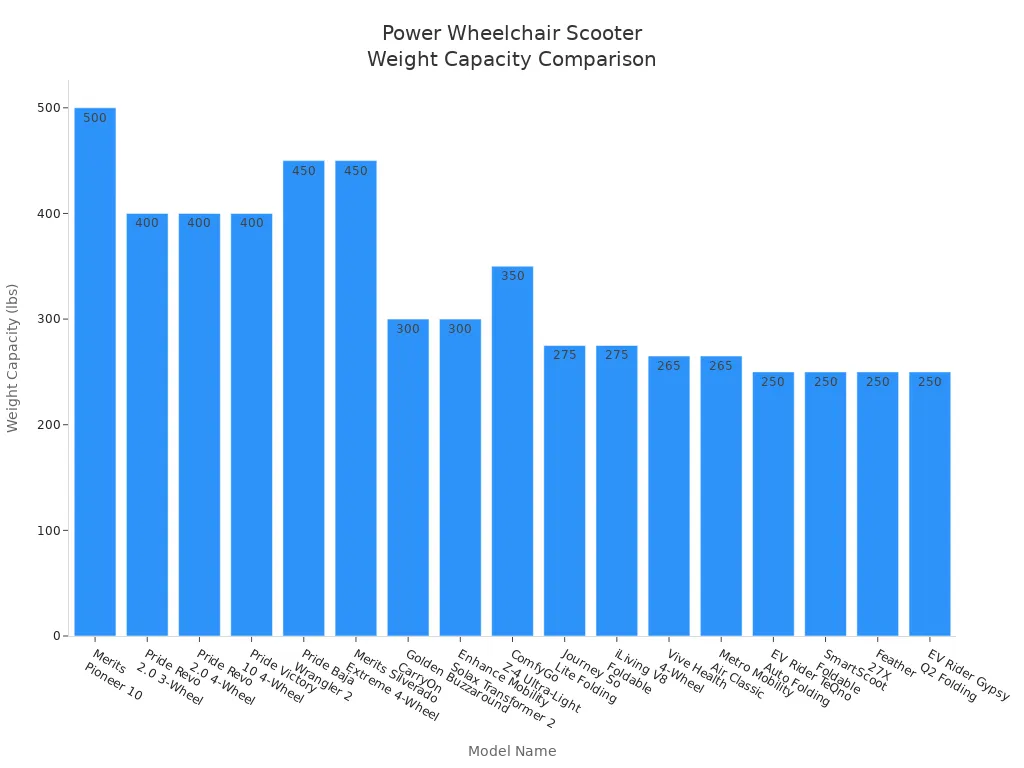
When picking a mobility scooter, compare the motorized wheelchair weight, power, and if it fits your needs. Bariatric mobility scooters and heavy-duty power wheelchairs give more support if you need a higher weight limit.
Professional Advice
Mobility experts say you should match your wheelchair or scooter to your weight and how you live. Here are some tips from the pros:
Power wheelchair weight limits are different for each model.
Foldable wheelchairs hold less weight.
Heavy-duty power wheelchairs and bariatric scooters can hold 400 to 700 pounds.
Some bariatric mobility scooters can hold over 600 pounds.
If you weigh more, pick a bariatric model for better safety.
Always .
. This can break your wheelchair or cause accidents. Experts look at your weight, what you need, and your plans to make sure your device is safe. They help you stay safe and keep your wheelchair working well.
Tip: Ask your doctor or a mobility expert before you buy a new power wheelchair or mobility scooter. Their advice helps you find the best one for you and makes sure it will work for a long time.
Knowing what your scooter can handle keeps you safe. It also helps your scooter last longer. Always look at your scooter’s details before you use it. If you are not sure, ask someone for help. Manufacturers and dealers give you manuals and training. They also check your scooter to make sure it works well. If you need more help, you can use these options:
Ask mobility experts for advice
Keep learning and ask for help when you pick or use your power wheelchair scooter.
FAQ
How do you find the weight capacity of your wheelchair?
You can look in the user manual. You can also check for a label on the frame. Another way is to visit the manufacturer’s website. These places tell you the real weight limit for .
What happens if you exceed your wheelchair’s weight limit?
If you go over the weight limit, your wheelchair might not be safe. The frame, wheels, or motor could break. You might also lose your warranty. Always stay under the weight limit.
Does the weight capacity include accessories and bags?
Yes, the weight capacity counts your body weight and what you carry. This means bags, medical gear, and other things on your wheelchair.
Can you upgrade your wheelchair for a higher weight capacity?
Most wheelchairs cannot be changed for a higher weight limit. If you need more support, pick a new wheelchair with a bigger weight capacity.
How often should you check your wheelchair’s weight capacity?
Check your wheelchair’s weight limit before you use it. Do this if your weight or what you carry changes. Checking often keeps you safe and your wheelchair in good shape.
Where can you get help if you have questions about your wheelchair?
You can ask the manufacturer, your dealer, or a mobility expert. They can help with questions about , its weight limit, and how to use it safely.