
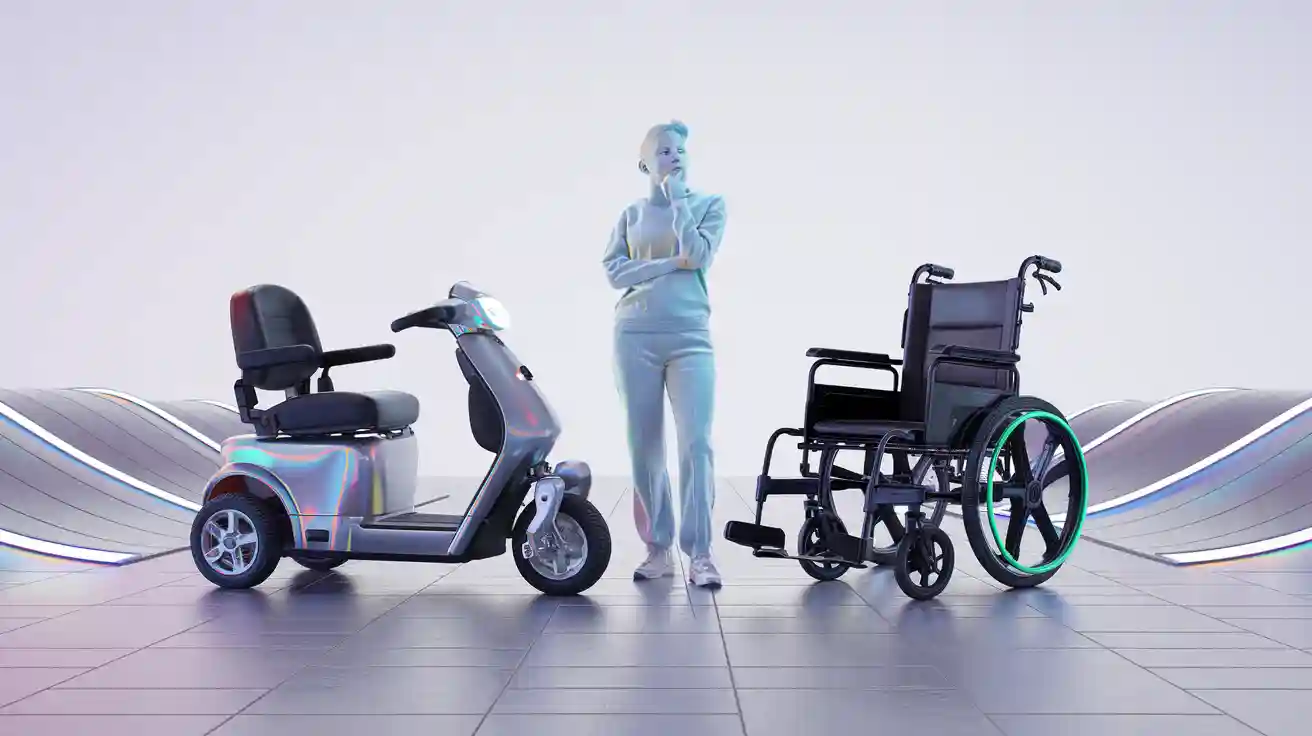
When deciding between handicap scooters and an electric wheelchair, it’s important to consider your personal needs and ask yourself, “” Think about your mobility, your daily routine, and the places you visit most often. Many people rely on handicap scooters, electric wheelchairs, and other mobility aids, and the demand for these products is expected to reach . If you have some mobility and want to enjoy outdoor activities, handicap scooters can help you stay independent. On the other hand, if you need more assistance or primarily move around indoors, an electric wheelchair might be a better fit. Understanding the differences between handicap scooters and electric wheelchairs will help you decide which mobility aids is good for you, supporting your independence and quality of life.
Key Takeaways
Handicap scooters work well for people with some arm strength and balance. They are good for people who want to be active outside.
Electric wheelchairs give strong support to people who cannot move much. They are better for use inside the house.
Pick a device by thinking about how often you will use it. Also, think about where you will use it. Scooters are best for short trips outside. Wheelchairs are better for daily or indoor use.
Comfort and special features, like seats you can adjust and easy controls, help you feel more free. These features can also help lower pain.
How easy it is to move the device is important. Folding scooters are easier to carry and store. Electric wheelchairs are heavier and harder to move.
Scooters usually cost less at first and do not need much fixing. Wheelchairs cost more but have more features and give more support.
Insurance can help pay for your device. Check your plan to know what you must pay yourself.
Talk to healthcare experts before you choose. Think about what you need now and in the future. This will help you pick the best device for your life and freedom.
Physical Abilities
Picking the right mobility aid depends on what your body can do. You should think about your strength, balance, and how well you move your arms and hands. Both handicap scooters and electric wheelchairs have special benefits, but they need different abilities.
Handicap Scooters: User Needs
Strength and Balance
Handicap scooters are best if you have some upper body strength and good balance. You need to sit up straight without much help and use your arms to steer. Studies show that older adults who exercise often get . These skills help when using mobility devices. If walking is hard but you can stand and move a little, a scooter might work for you. Most people who use scooters are or trouble moving.
Tip: If you have trouble with balance or weak arms, using a scooter can be hard and unsafe, especially on bumpy sidewalks or hills.
Steering Ability
You must control the handlebars and use the throttle and brakes with your hands. This takes good hand skills and coordination. , so more people can use scooters. But you still need enough arm strength and body control to steer and stay safe. If you have a lot of trouble walking or cannot use your arms well, a scooter may not be right for you.
Electric Wheelchair: User Needs
Limited Mobility
Electric wheelchairs help people who cannot move much. If you cannot walk or have trouble moving your arms, an electric wheelchair gives you the support you need. These devices can be changed to fit you, so you can adjust the seat, controls, and support parts. Power wheelchairs are good for people who cannot push a manual wheelchair or need a mobility aid all day.
| Aspect | Mobility Scooters | Electric Wheelchairs |
|---|---|---|
| User Physical Requirements | Needs upper body strength, hand use, and body control | Made for users with very little or no lower body movement; can work for people with weak arms |
| Walking Ability | Can walk short distances | Usually cannot walk or push themselves |
| Customization | Not many options | Many ways to change and adjust |
| Physical Effort to Propel | No effort; battery powered | No effort; electric powered |
| Usage Frequency and Duration | 3-5 times a week, short trips | Used about 10.6 hours each day |
Support and Stability
Electric wheelchairs give strong support and keep you steady. You can use a joystick or other controls, which need less strength and skill than scooter handlebars. Many people say electric wheelchairs . These devices also have features like seats you can adjust and extra support for your back and head. If you have big problems moving, a power wheelchair can help you move safely and feel comfortable all day.
Electric wheelchairs help you stay independent and see friends.
You might need some training to use all the features.
You can change the settings to fit your needs as they change.
Note: If walking is very hard or you need help moving all the time, an electric wheelchair or power wheelchair is usually the safest and most comfortable choice.
Which Device Fits Your Needs?
If you can move a little and walk short distances, a scooter might work for you. You need enough strength and balance to steer and sit up straight. If you have trouble moving or need more help, an electric wheelchair or power wheelchair gives better support and can be changed to fit you. Always think about your daily life, where you go, and your safety before picking a device.
Frequency and Type of Use
Picking between a mobility scooter and an electric wheelchair depends on how much you use it and where you go. Think about your daily habits, the places you visit, and how much help you need to get around.
Occasional vs. Daily Use
Some people only use a mobility device for short trips or special days. Others need their device every day, or just when they feel tired. Surveys show people use their devices “never,” “sometimes,” or “every day.” You can also count how many days each week and how many hours each day you use your device. This helps you pick what fits your life best.
If you use a device just a few times a week, a mobility scooter may be a good choice. Handicap scooters are easy to keep and simple to charge. You can use them when you need and put them away when you do not.
If you need help all day, every day, an electric wheelchair is often better. Electric wheelchairs are made for long hours. They give comfort and support for people who use them from morning to night.
Tip: Think about how often you leave your house and how long you stay out. If you spend many hours away or need to move around your home all day, pick a device that matches your needs.
Indoor vs. Outdoor
Where you use your device matters as much as how often you use it. The differences between mobility scooters and electric wheelchairs show up when you look at .
Tight Spaces
Electric wheelchairs are easier to use in small rooms, halls, and busy places. Their small size lets you turn corners and fit through narrow doors. Many electric wheelchairs use a joystick, so you can move with one hand. This makes them great for moving inside.
You can move around your kitchen, bathroom, or bedroom without hitting things.
Power wheelchairs can go over ramps and small bumps inside your house.
Mobility scooters are bigger and need more space to turn. You might have trouble getting through tight spots or sharp corners. If you live in a small apartment or go to places with narrow aisles, an electric wheelchair will help you move around better.
Rough Terrain
Mobility scooters work well outside. They have bigger wheels and strong frames for sidewalks, park paths, and even some gravel or grass. If you like going to parks, stores, or outdoor events, a mobility scooter can help you move around easily.
Mobility scooters do well on rough ground and bumpy places.
You can go farther outside without getting tired.
Electric wheelchairs are mostly made for inside use. Some new models, like , can go over curbs and slopes, but most regular electric wheelchairs have trouble on rough ground. You might find it hard to use them on bumpy sidewalks or steep hills.
Note: The choice between a mobility scooter and an electric wheelchair depends on where you spend most of your time. If you are indoors a lot, electric wheelchairs are easier to use. If you like being outside, a mobility scooter works better.
| Feature | Mobility Scooters | Electric Wheelchairs |
|---|---|---|
| Indoor Maneuverability | Hard in small spaces | Great in tight areas |
| Outdoor Performance | Good on rough ground | Best on smooth places |
| Turning Radius | Needs more space | Turns in small spots |
| Comfort for Long Use | Good for short trips | Best for all-day use |
You should always pick a device that fits your daily needs and the places you go most. Knowing these main differences will help you choose the best one for your movement and freedom.
Comfort and Customization
Picking the right mobility device means thinking about comfort and fit. Comfort and customization are very important every day. If your seat feels good and you can control your device, you feel more free and sure of yourself.
Seating Options
The seat matters a lot for how you feel when you use your device. You need a . It should also help you avoid pain. Many people say are the most important things. Studies show people feel happier and more independent with a seat that fits well and supports their back.
Research shows good seating does more than feel nice. It helps you sit up straight and makes it easier to keep good posture. It also lowers the chance of pain or pressure sores. Some seats have a special tilt, with the back lower than the front. This helps keep your pelvis steady. This design can help you move and push yourself. But if it is not set up right, it can shift your weight and cause problems.
help you sit up and use your arms better.
Adjustable parts let you change the seat to fit your body.
Pelvic belts and special cushions give extra support and stop sliding.
Tip: Always pick a seat that gives you support, comfort, and pressure relief. This helps you stay healthy and feel good.
Controls and Adjustments
Joystick vs. Handlebars
You steer a mobility scooter with handlebars. You use your hands to turn, speed up, and stop. This works best if your hands are strong and move well. Electric wheelchairs use a joystick. You can move it with one hand or even a finger. Some new wheelchairs use voice or gesture controls. These are good for people who cannot move much.
A new study found that help people with weak arms or spinal cord injuries. You can pick the speed and control type that works for you. This makes it easier to drive your device.
Custom Features
Today’s mobility devices let you change many things to fit you. You can pick different seat shapes, back supports, and control systems. Some devices use smart sensors to help you avoid bumping into things. Others let you change the speed or use your phone to control the device.
often have seats and controls you can adjust for comfort.
New tech, like gesture and voice controls, give you more ways to use your device.
Custom features help you feel more sure of yourself and independent.
When you choose a device with the right , your life gets better. Studies show people are happier and more satisfied when their device fits their needs and daily life.
Portability and Transport
When picking a mobility device, portability is very important. Many people want something easy to move and store. You might need to fold it, lift it into a car, or take it on a bus. A portable device can make your life easier and help you get around.
Mobility Scooters: Travel
Folding and Storage
Mobility scooters are now easier to carry and store. Many new scooters can fold up and are not heavy. Some fold in just a few seconds. This makes them simple to put in a closet or car trunk. This is great if you live in a small place or travel a lot.
| Model | Battery Range (miles) | Turning Radius (inches) | Folding Capability |
|---|---|---|---|
| Shoprider Sprinter XL4 | 12.8 | 47 | No |
| Vocic D91 Folding | N/A | 39 | Yes |
| Vocic D51 Explorer | 9.6 | 43 | No |
| Shoprider Enduro XL4 | 21.3 | N/A | No |
The is easy to turn and fold. This makes it simple to use and store. Foldable scooters are popular because they fit in small spaces. They are also easy to carry. Makers use .
Foldable scooters are selling more each year. Experts think the market will reach . This shows that people want scooters that are small and easy to store.
Car and Transit Use
If you travel by car or bus, a folding scooter helps a lot. You can lift a light scooter into your trunk or take it on a train. Many people buy ramps and rollators to help them move their scooters. This shows how much they care about portability. About . This proves that easy-to-move devices are important.
Electric Wheelchair: Transport
Bulk and Weight
Electric wheelchairs are often heavier and bigger than scooters. This makes them hard to lift or store, especially if you are alone. Some people have . Taxi drivers sometimes say no or charge more because wheelchairs take up space. You may also have safety problems if your wheelchair does not fit in a car or cannot be tied down.
Heavy wheelchairs are hard to lift.
Big size makes taxis and buses harder to use.
Some wheelchairs do not work well on rough ground.
Accessibility
Getting around can be tough for electric wheelchair users. You might find stairs, bumpy sidewalks, or buildings without ramps. These things can make you feel less free and stop you from joining in activities. Many people feel worried or need help when places are not easy to get into.
Portability is more than just being light or small. It means you can go where you want, when you want. A portable device helps you get past daily problems and live better.
| Mobility Device | Current Use (%) | Out-of-Pocket Payment (%) | Notes on Portability and Importance |
|---|---|---|---|
| Portable Ramps | 27 | 57 | Foldable and portable; key for mobility outside the home. |
| Rollators | 28 | 60 | High use and payment rates show user preference for portability. |
Think about how you travel, where you store things, and what you need to get around. A portable device can help you stay active and do things on your own.
Cost and Insurance
Upfront Costs
When you look at handicap scooters and electric wheelchairs, you will see they cost different amounts. than electric wheelchairs. . Bariatric power wheelchairs can cost from $2,000 to $5,500. , so they cost more. Mobility scooters are simpler and have fewer ways to change them, so you pay less at first.
You should also think about the . Here is a table that shows what you might pay:
| Device | Average Upfront Cost (USD) | Operational Electricity Cost (% of Upfront Cost, 12h use) | Operational Electricity Cost (% of Upfront Cost, 24h use) |
|---|---|---|---|
| Power scooter/wheelchair | $500 | 10% | 19% |
| Hospital bed | $1,850 | 3% | 5% |
| Oxygen concentrator | $1,049 | 20% | 40% |
Tip: Power wheelchairs cost more because they give more support and can be changed to fit your needs.
Maintenance
You need to think about maintenance costs when you pick a mobility device. Power wheelchairs have more parts and electronics, so they may need more repairs and check-ups. You might have to get new batteries, fix motors, or adjust controls. These repairs can add up over time.
Mobility scooters are easier. They have fewer features, so you may spend less on fixing them. You still need to check the tires, battery, and brakes. Taking care of your device helps it last longer and keeps you safe.
Power wheelchairs: Higher maintenance costs because of more features.
Mobility scooters: Lower maintenance costs, but still need regular checks.
Keeping your device in good shape helps you avoid bigger repair bills later.
Insurance Coverage
Insurance can help pay for your mobility device. Many people use Medicare or private insurance to cover some of the cost. . You pay the other 20%. For example, if your electric wheelchair costs $4,000, you might pay about $992 yourself.
| Insurance Scenario | Coverage Description | Typical Out-of-Pocket Cost Estimate |
|---|---|---|
| Original Medicare | Covers 80% after $240 deductible; you pay 20% coinsurance | ~$992 for a $4,000 wheelchair |
| Medicare Advantage | Coverage varies; may have copays, coinsurance, or deductibles | Varies by plan; sometimes less than $880 |
| Medigap Plan A | Covers deductible but not coinsurance | ~$640 coinsurance out-of-pocket |
| Medigap Plan G | Covers both deductible and coinsurance fully | $0 out-of-pocket |
Medicare Advantage plans work in different ways. They may have set copays or coinsurance, and you might need to use certain stores or get approval first. Some plans cover more, so you might pay less. Medigap plans can help pay for deductibles and coinsurance, which lowers your costs even more.
Always check your insurance plan before you buy. Rules and costs can change, so it is smart to ask questions and get clear answers.
Pros and Cons
Handicap Scooters: Pros & Cons
Handicap scooters have good points and some bad points. These devices help you do things on your own if you can move a bit. Many people say a mobility scooter lets them shop, see friends, or go outside. You can change the steering and seat to feel more comfortable. Some models have bigger seats for extra support.
Pros:
You can do more things by yourself each day.
Many scooters turn easily, especially three-wheel ones.
Adjustable steering and big seats make rides nicer.
Some scooters have safety features like reclining seats and simple controls.
Cons:
The per charge. You must plan your trips.
Moving a mobility scooter is hard because it is big and heavy.
Buying and fixing a scooter can cost a lot over time.
You may have trouble using public transport or getting into buildings.
showed most first-time users of powered mobility devices, like handicap scooters, did better at daily tasks and meeting friends. But the same study found accident rates from 1.54 to 15 accidents per person each year. Training can help, but not everyone gets better. Older adults, about 81 years old, often pick scooters. Younger people like other devices more. More research is needed to learn about safety, social life, and how these devices change lives.
| Aspect | Findings |
|---|---|
| User Demographics | Most scooter users are older, around 81 years old. |
| Accident Rates | People have 1.54 to 15 accidents each year. |
| Training Effectiveness | Some people get better with practice, but not all do. |
| Research Gaps | We need more studies on safety, movement, and life quality. |
Tip: Always check your scooter’s battery before leaving home. This keeps you safe and stops you from getting stuck.
Electric Wheelchair: Pros & Cons
An electric wheelchair has different good and bad points. This device is better if you cannot move much or need more help. You do not need strong arms to use an electric wheelchair. You can also go farther without getting tired.
Pros:
You do not need strong arms, so it works for people with big movement problems.
You can do more things alone and travel longer distances.
Seats, armrests, and footrests can be changed for comfort.
Good support helps stop pain and pressure sores.
Some models fold up, so they are easier to move and store.
Cons:
You or you cannot use it.
Electric wheelchairs are big and heavy, so moving and storing them is hard.
You might have problems in small spaces, on rough ground, or on steep hills.
They cost a lot at first and can be hard to fix.
Some people feel alone or worry about needing the device too much.
Using it a lot can make your muscles weaker.
Studies show electric wheelchairs . Manual wheelchairs are lighter and fit in small spaces, but you need to be strong. Electric wheelchairs give you more freedom, but you should think about the cost and if it fits your needs.
Note: If you want to move around easily and feel comfortable, but need more help, an electric wheelchair could be best. Always think about your daily life and where you go when you look at the pros and cons.
Independent Living and Choosing
Lifestyle Fit
You need a mobility device that works for your daily life. The right device helps you do things on your own. It lets you move around your home and community. Think about how the device will help you be more independent. You want to need less help from others.
A device that makes moving easier and keeps you comfy.
Custom features, like seats you can adjust, help you sit up straight and reach things.
Easy-to-use devices help you feel sure of yourself and less tired.
A good fit can help you join friends and family at events. Many people say a well-chosen wheelchair or scooter helps them do more alone. It also means . Some people worry about using a device because of what others think. Others find it hard to learn new controls. Training and support can help you get used to your device and feel better about it.
Tip: Think about what you want to do most. Do you want to shop, see friends, or move around your house? Pick a device that helps you do these things every day.
Future Needs
Your needs might change as time goes on. Maybe you can walk a little now, but later you may need more help. Most people can guess what they need soon, but things can change in a few months or years. You should think about how your health and life might change.
| Predictor Factor | Influence on Mobility Device Selection |
|---|---|
| Primary medical condition | Helps decide if you need a scooter or power wheelchair |
| 2-minute walk test (2-MWT) | If you walk more, a scooter may work; if not, a wheelchair may be better |
| Demographic factors | Age, gender, and other details do not affect device choice |
You should talk to a doctor or mobility expert before you choose. They can help you look at your needs and suggest the best device. They might tell you to get a device you can change or upgrade later. This helps you stay independent as your needs change.
Devices you can adjust or change help you stay independent longer.
Learning how to use your device makes things easier and less scary.
Picking the right device now can help you avoid problems and stay active later.
Note: The device you pick today can help you stay independent tomorrow. Always plan for changes and ask experts for help to make the best choice.
Picking a handicap scooter or an electric wheelchair depends on what you need. If you like to stay active and can move a bit, a scooter might work for you. If you need more help, an electric wheelchair gives more comfort and keeps you steady. Some studies say , but there is not much research on all devices. Always think about comfort, how easy it is to carry, the price, and if insurance helps pay. Talk to a healthcare expert to find the best way to be more independent and live better.
FAQ
What is the main difference between a handicap scooter and an electric wheelchair?
A handicap scooter uses handlebars for steering. You need some arm strength to use it. An electric wheelchair uses a joystick or other controls. It gives you more support than a scooter. Scooters are best for outdoor use. Electric wheelchairs work better inside.
Can you use a mobility scooter indoors?
You can use a mobility scooter inside, but it might not fit in small rooms. Scooters are harder to turn in tight spaces. Electric wheelchairs turn easily in homes, stores, or offices.
How far can you travel on a single charge?
Most mobility scooters go 15 to 20 miles on one charge. Electric wheelchairs usually go 10 to 15 miles. Always check your battery before you leave home.
Will insurance cover my mobility device?
Many insurance plans, like Medicare, pay for part of the cost if your doctor says you need it. You may still have to pay some money yourself. Always look at your plan’s rules first.
Which device is easier to transport in a car?
Folding mobility scooters are lighter and easier to lift into a car trunk. Electric wheelchairs are heavier and may need a ramp or special van.
Can you customize the seat and controls?
Most electric wheelchairs let you adjust the seat and controls. Some scooters let you make basic changes. Custom features help you stay safe and comfortable.
Do you need training to use these devices?